




Best Concrete Sidewalk Contractors Lake Norman NC
As Lake Norman NC's most reputable concrete sidewalk contractor, we build concrete sidewalk the way it should be. Free concrete sidewalk quotes in Lake Norman back in 24 hours. Honest pricing, clear communication, dependable service on every Lake Norman project.
Get your free quote
We respond in less than 2 hours.
Recent Lake Norman Sidewalks Projects
Real customer jobs we've poured. Swipe through and picture yours next.
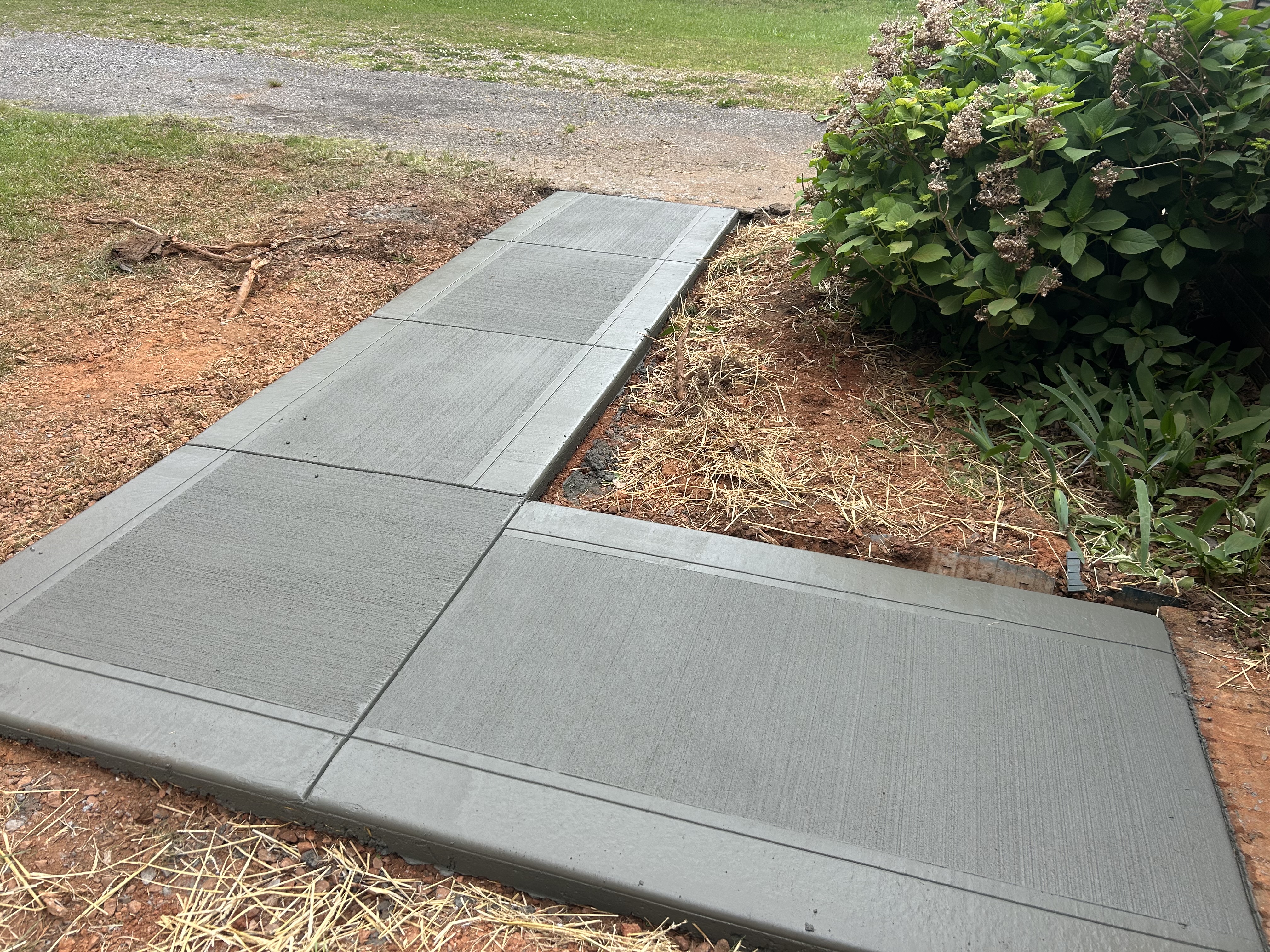
Sidewalks
Lake Norman Job
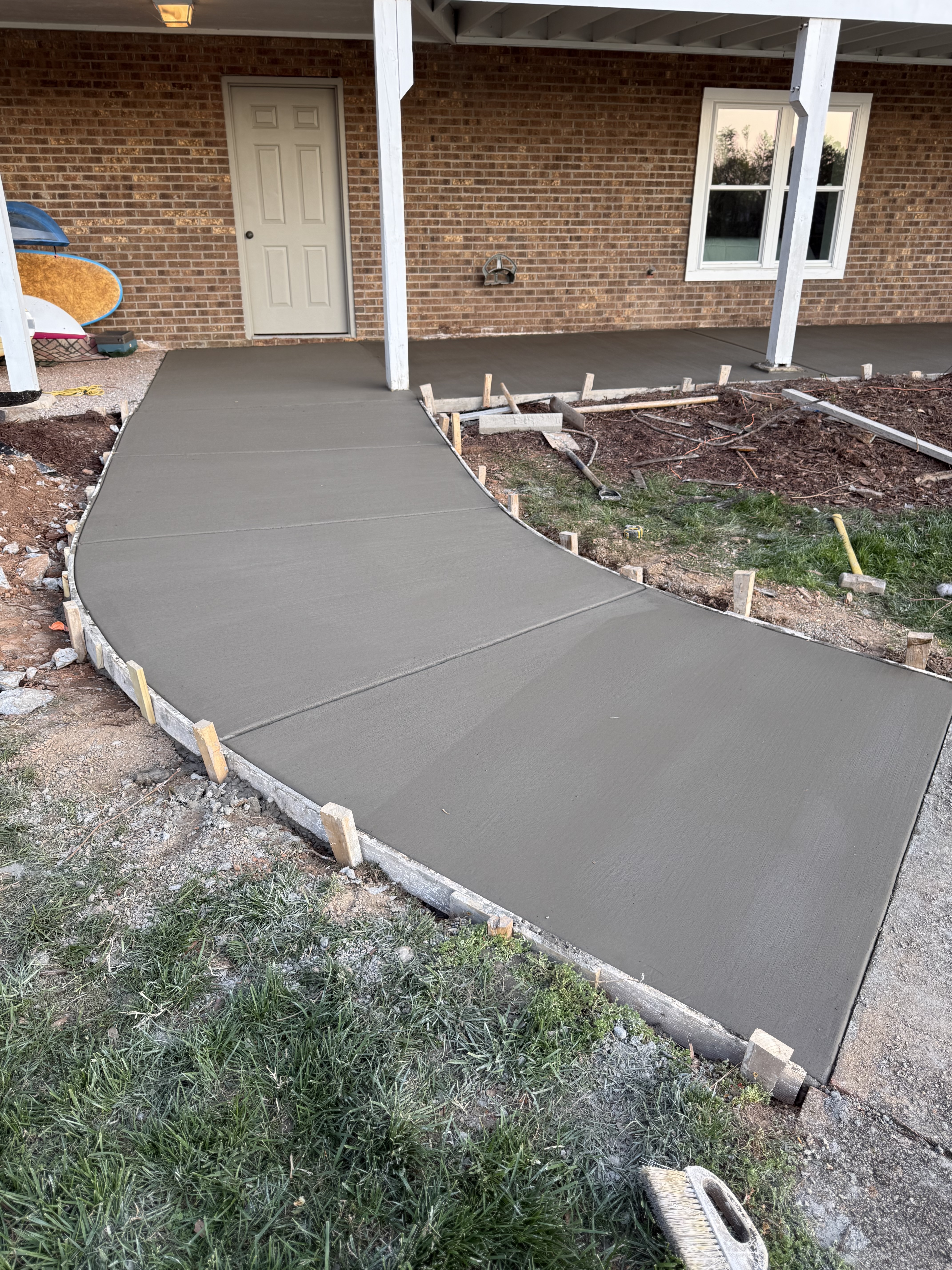
Sidewalks
Lake Norman Job
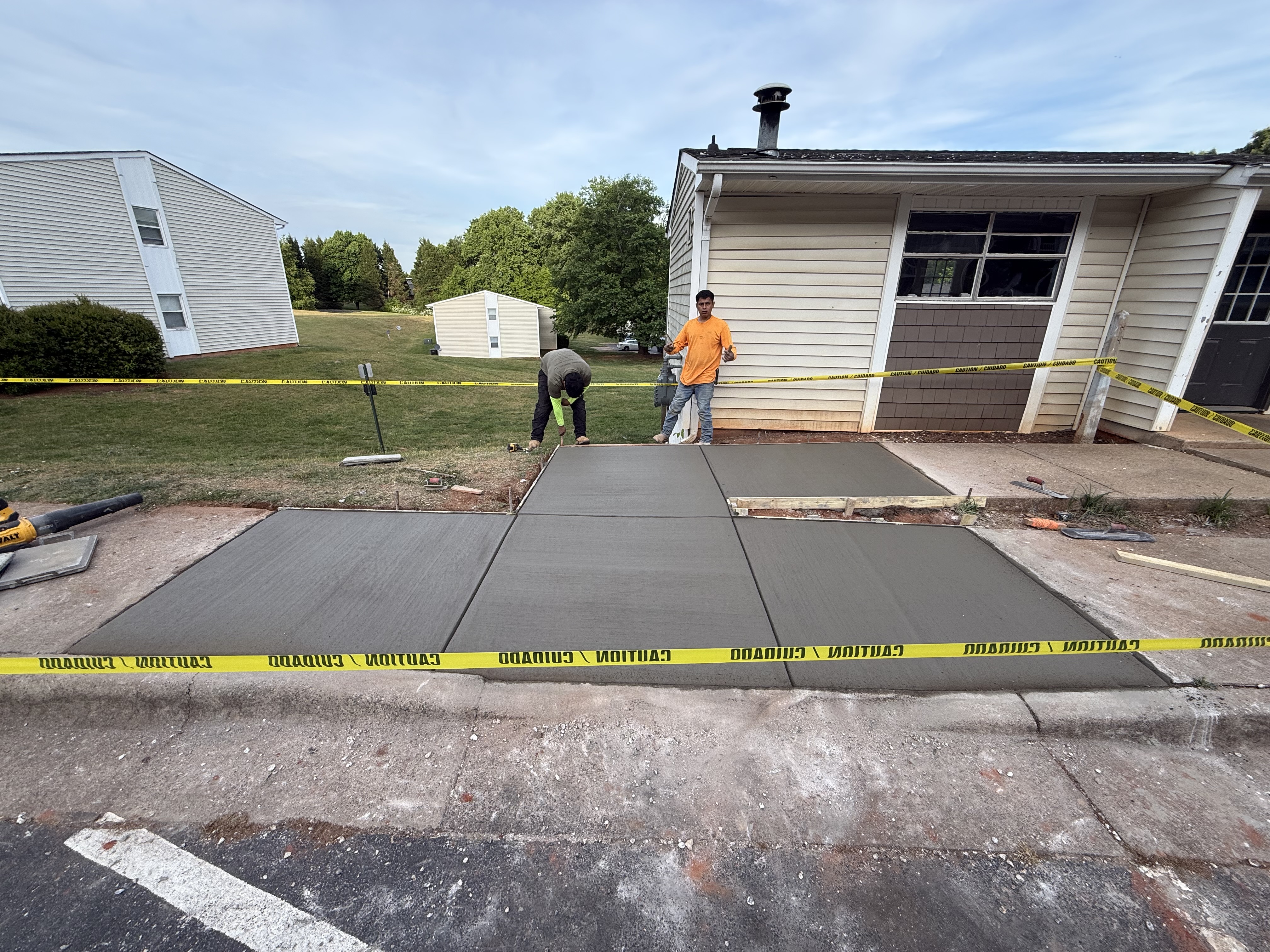
Sidewalks
Lake Norman Job
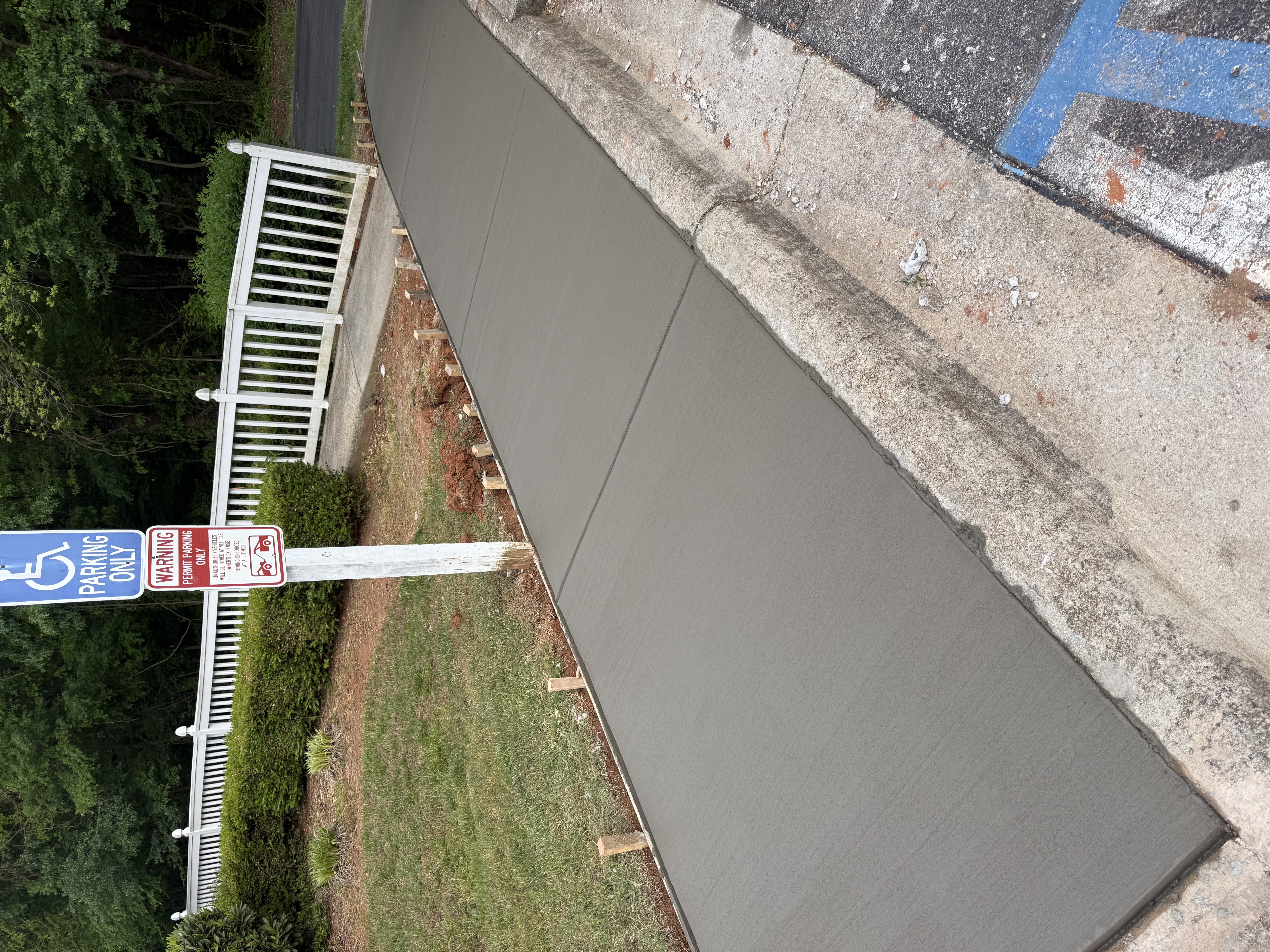
Sidewalks
Lake Norman Job
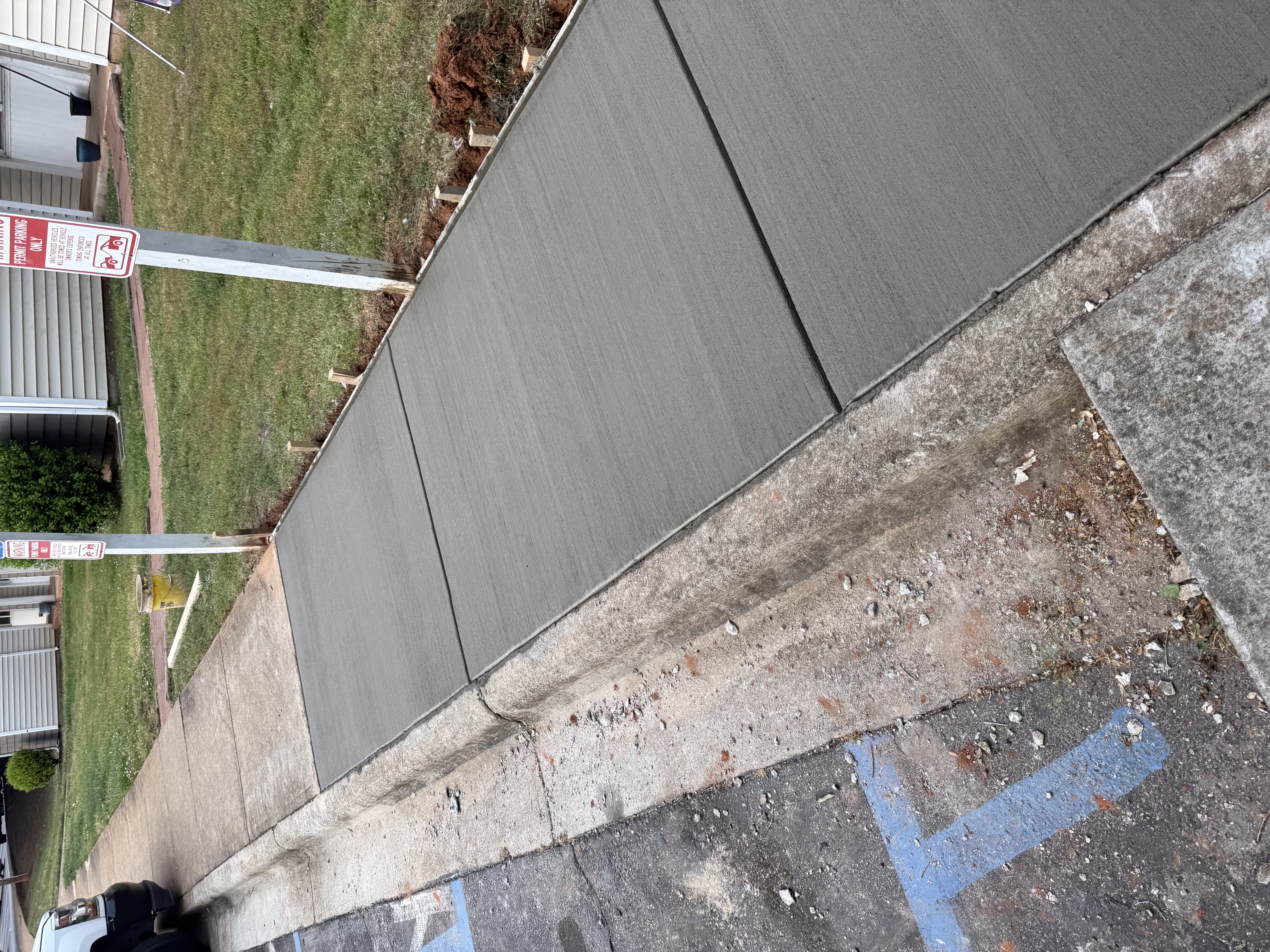
Sidewalks
Lake Norman Job
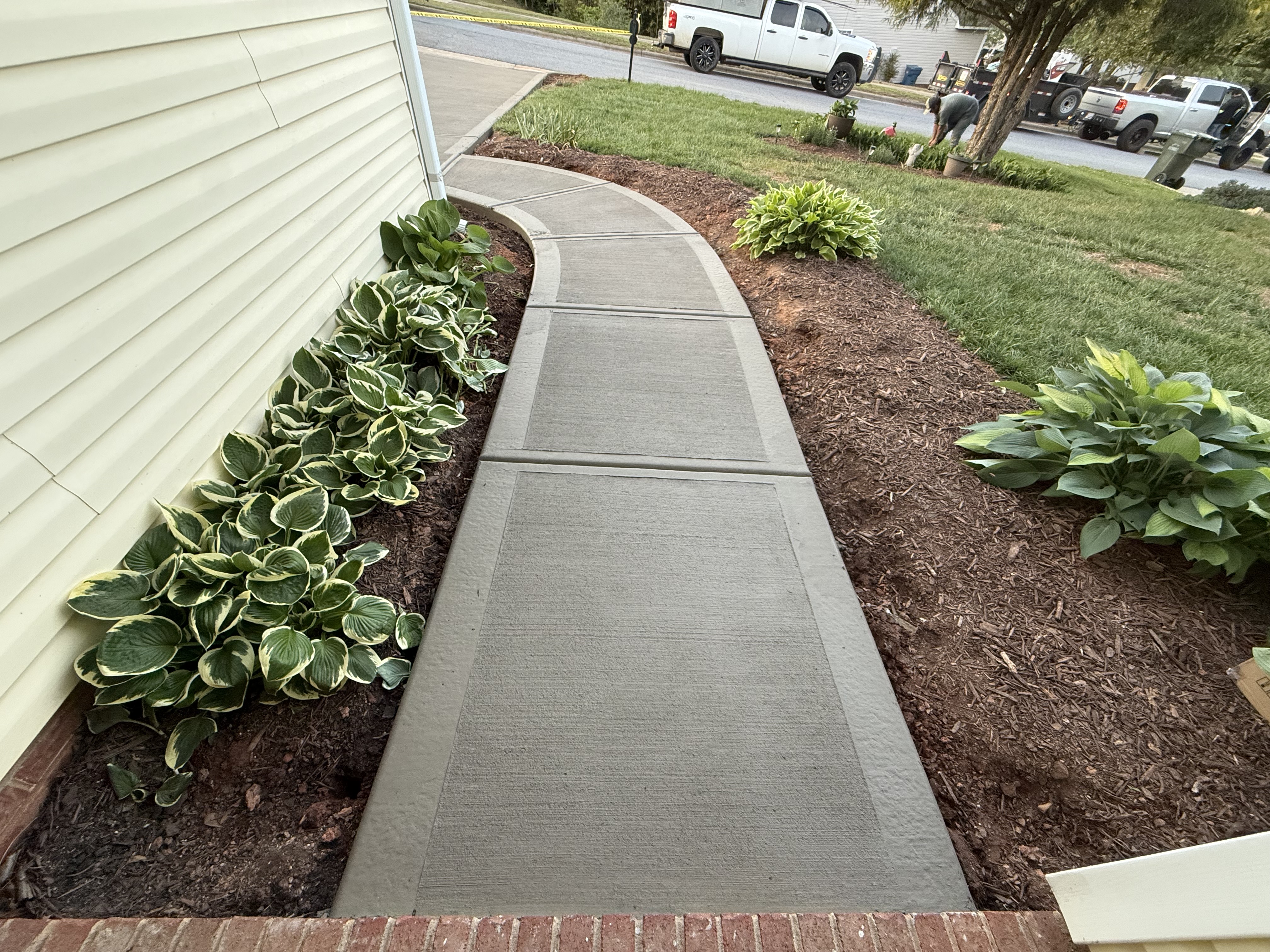
Sidewalks
Lake Norman Job
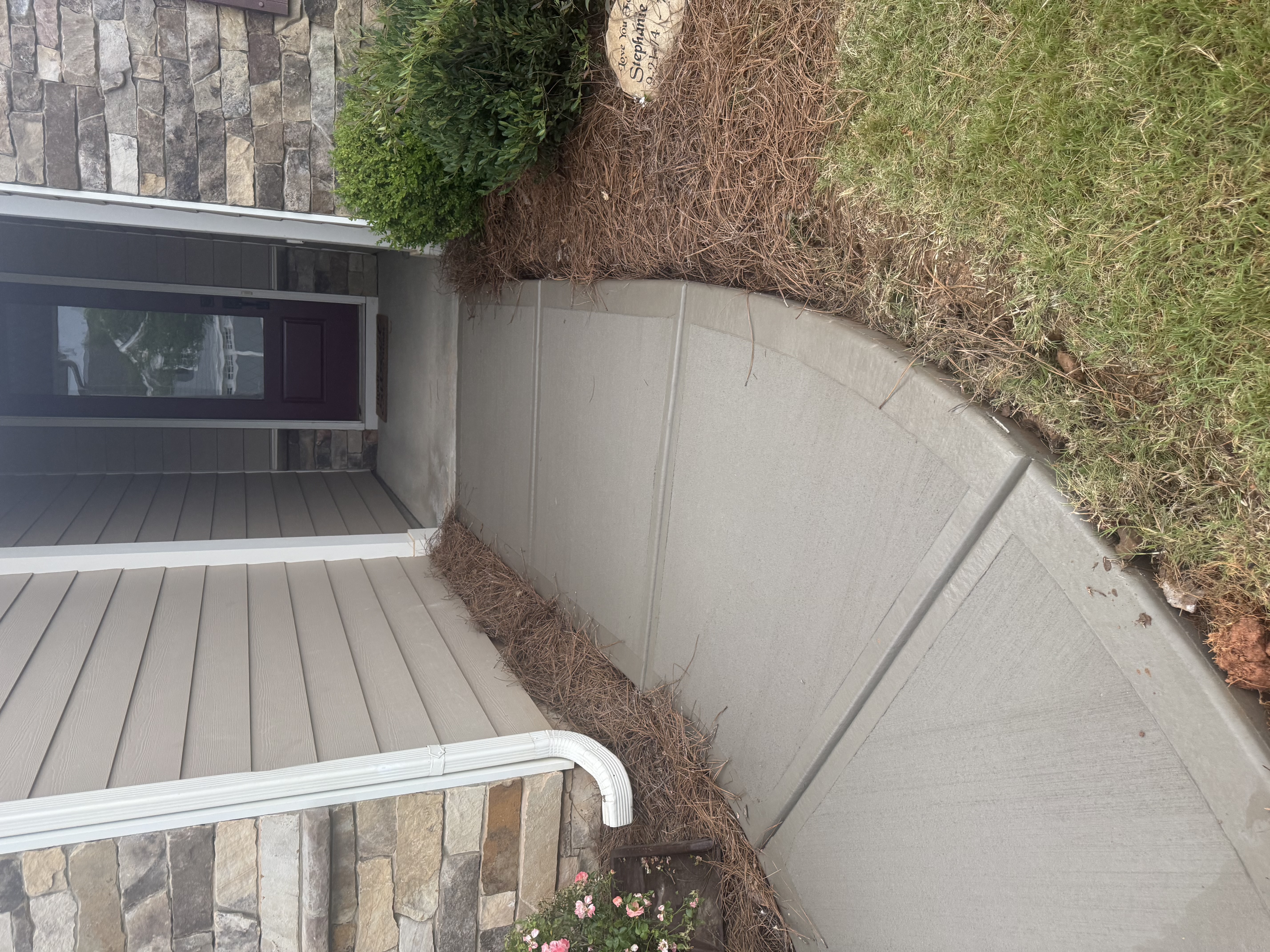
Sidewalks
Lake Norman Job
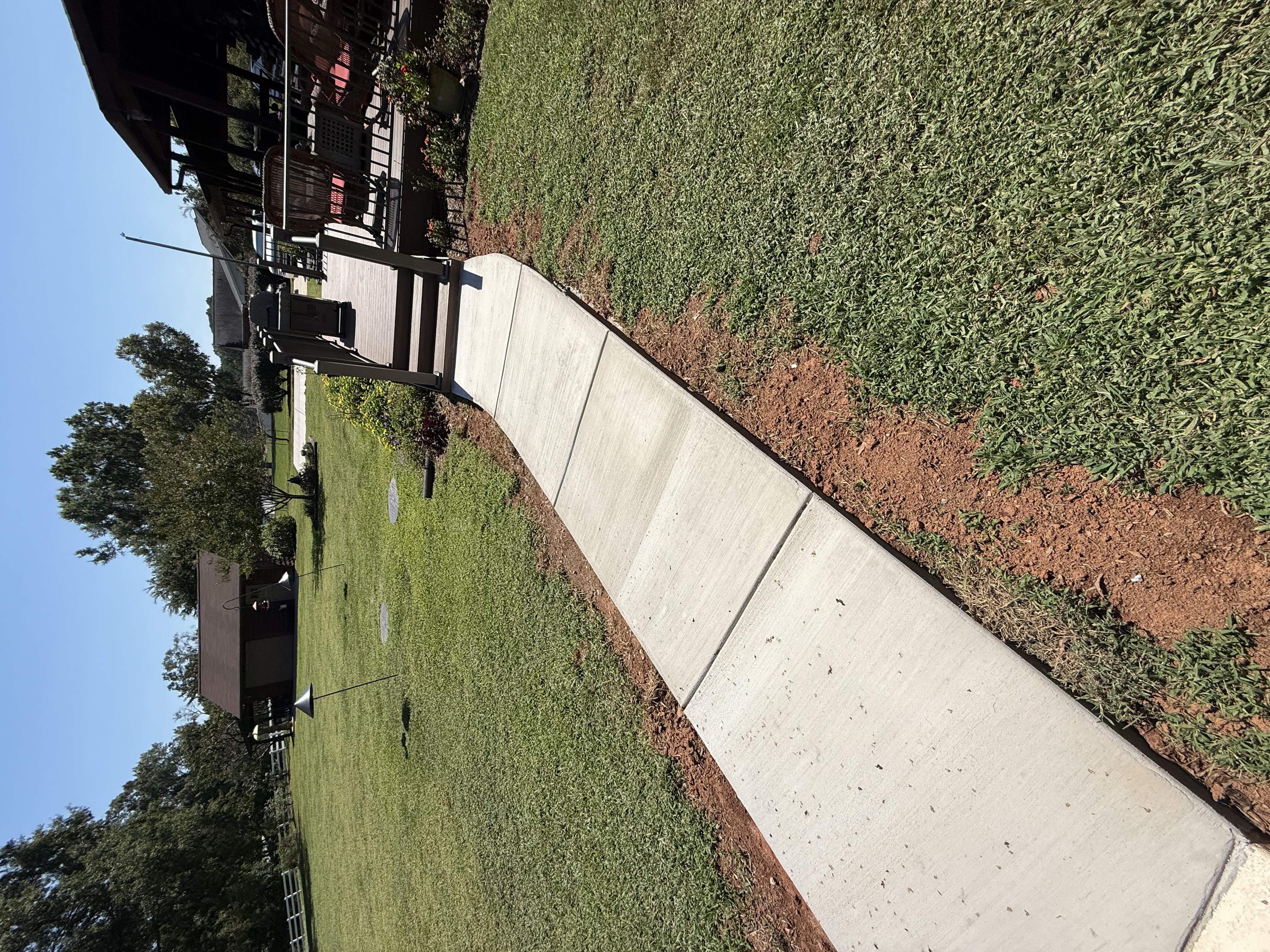
Sidewalks
Lake Norman Job
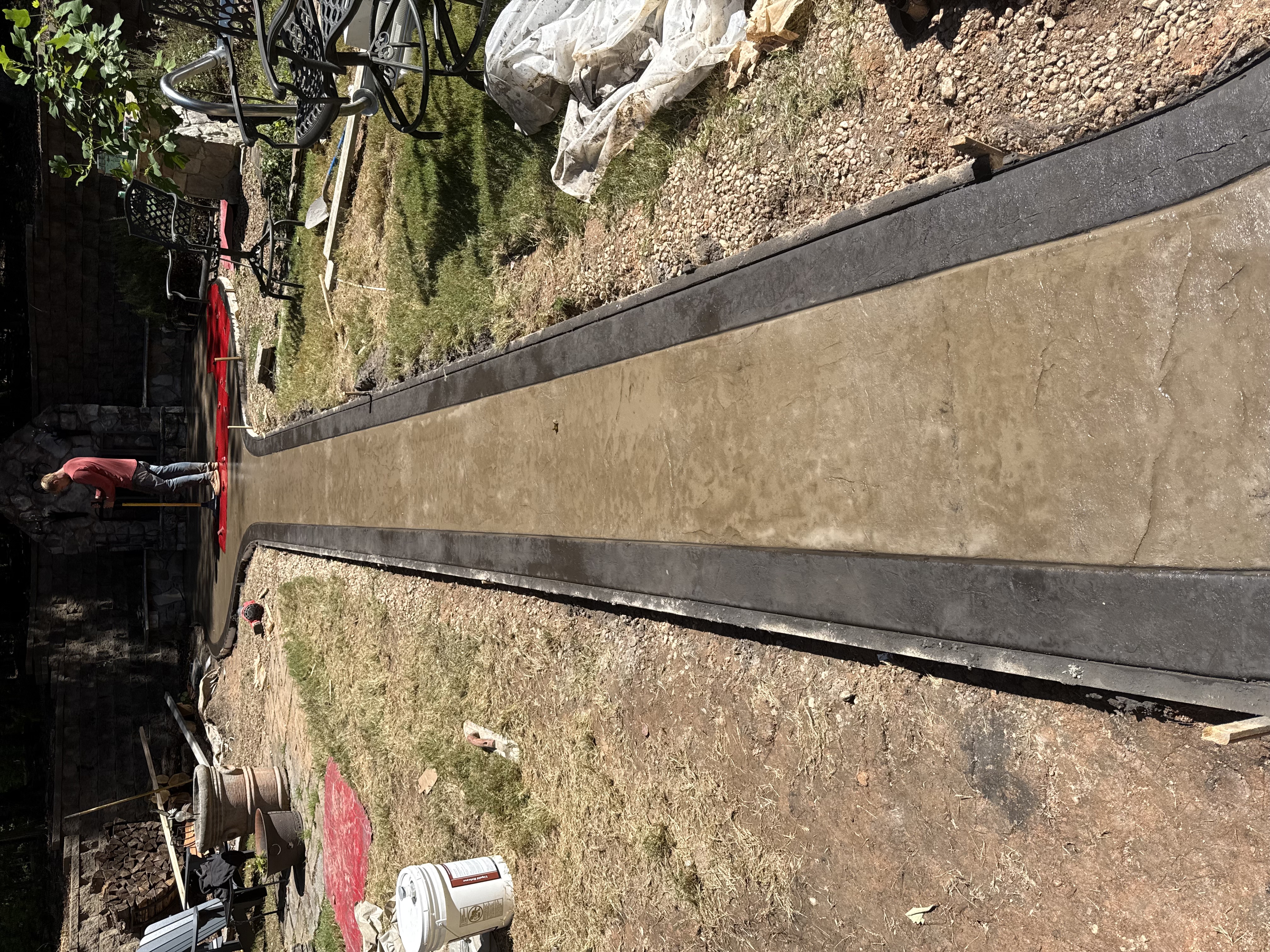
Sidewalks
Lake Norman Job
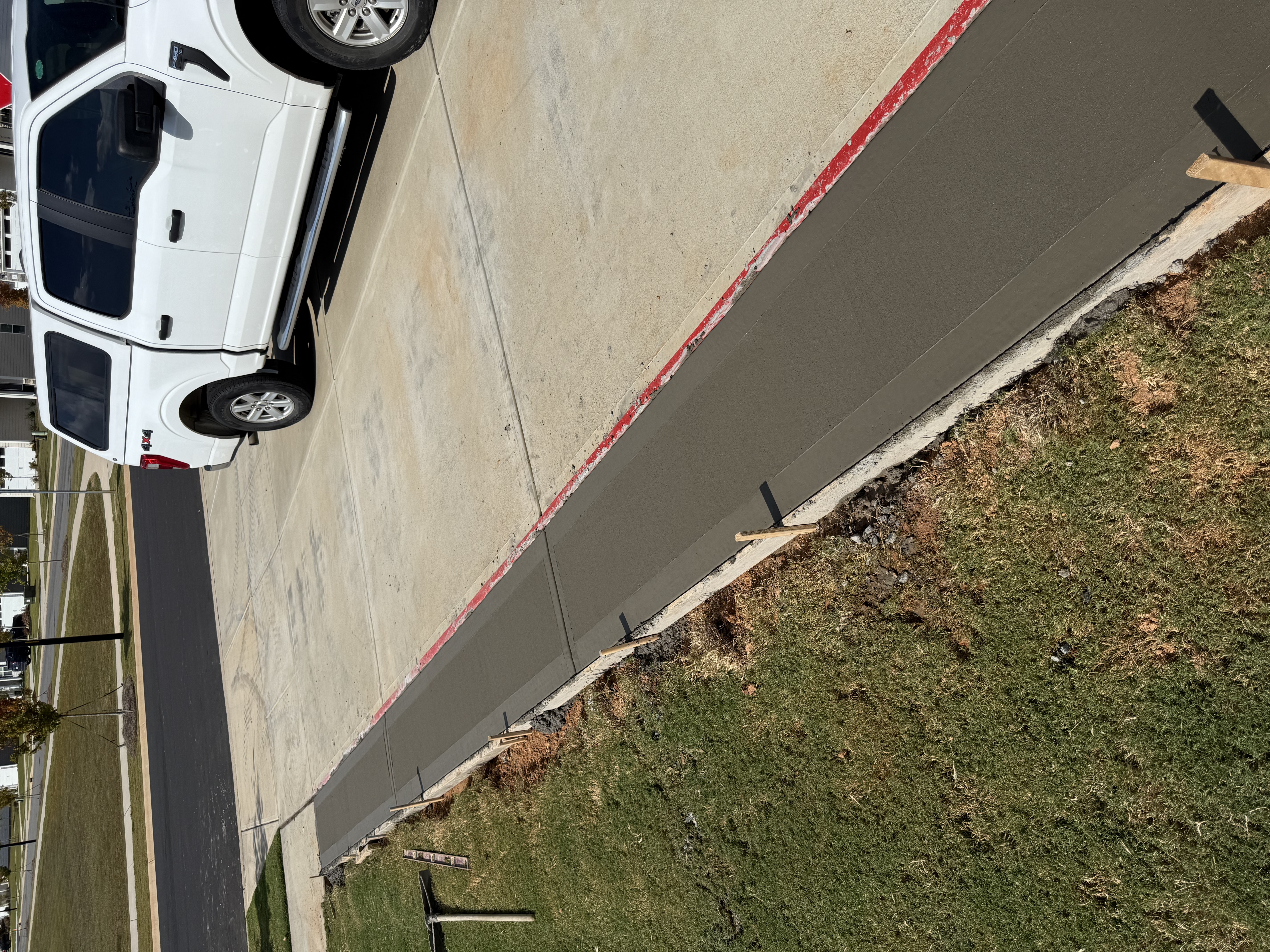
Sidewalks
Lake Norman Job
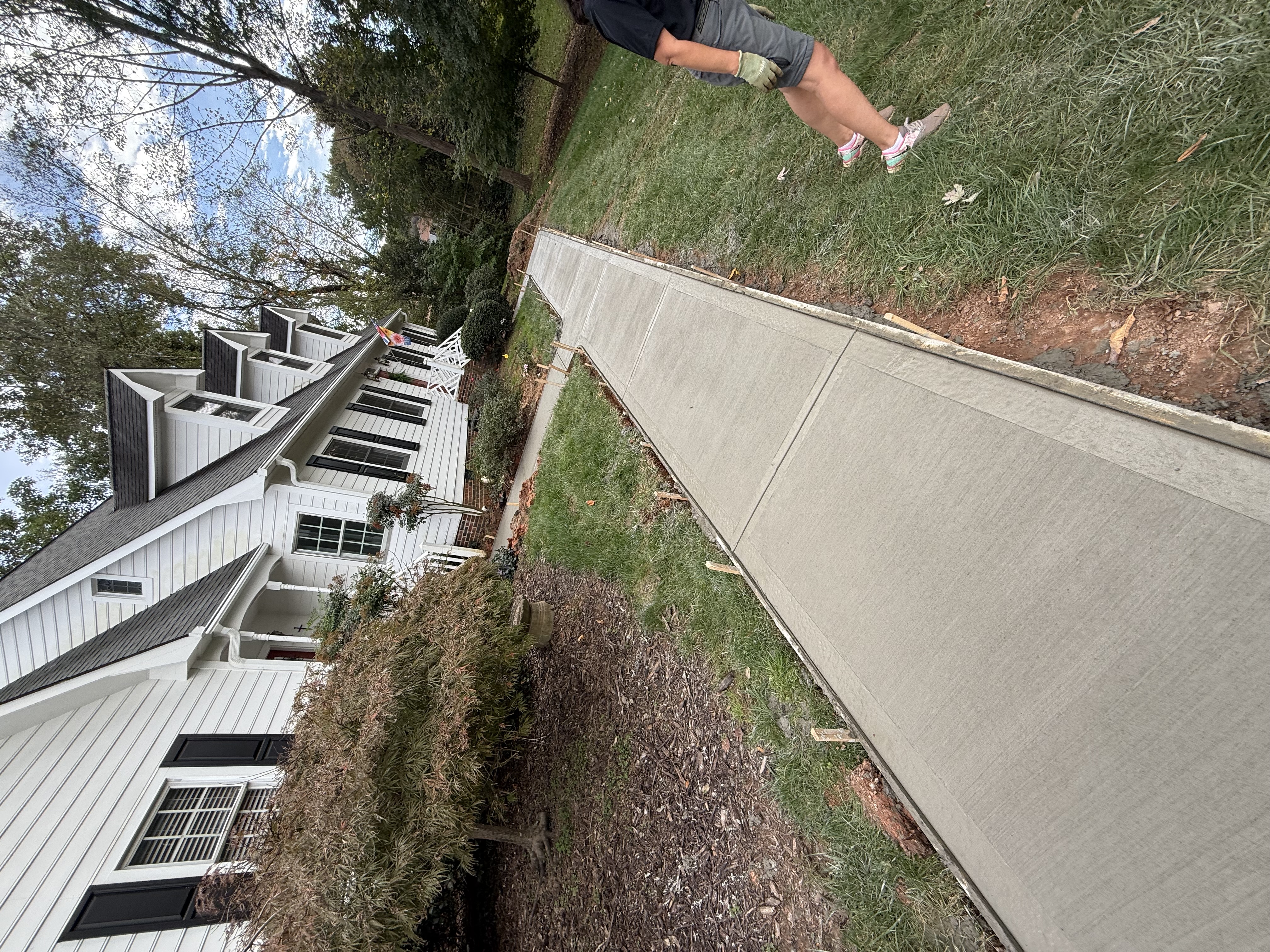
Sidewalks
Lake Norman Job
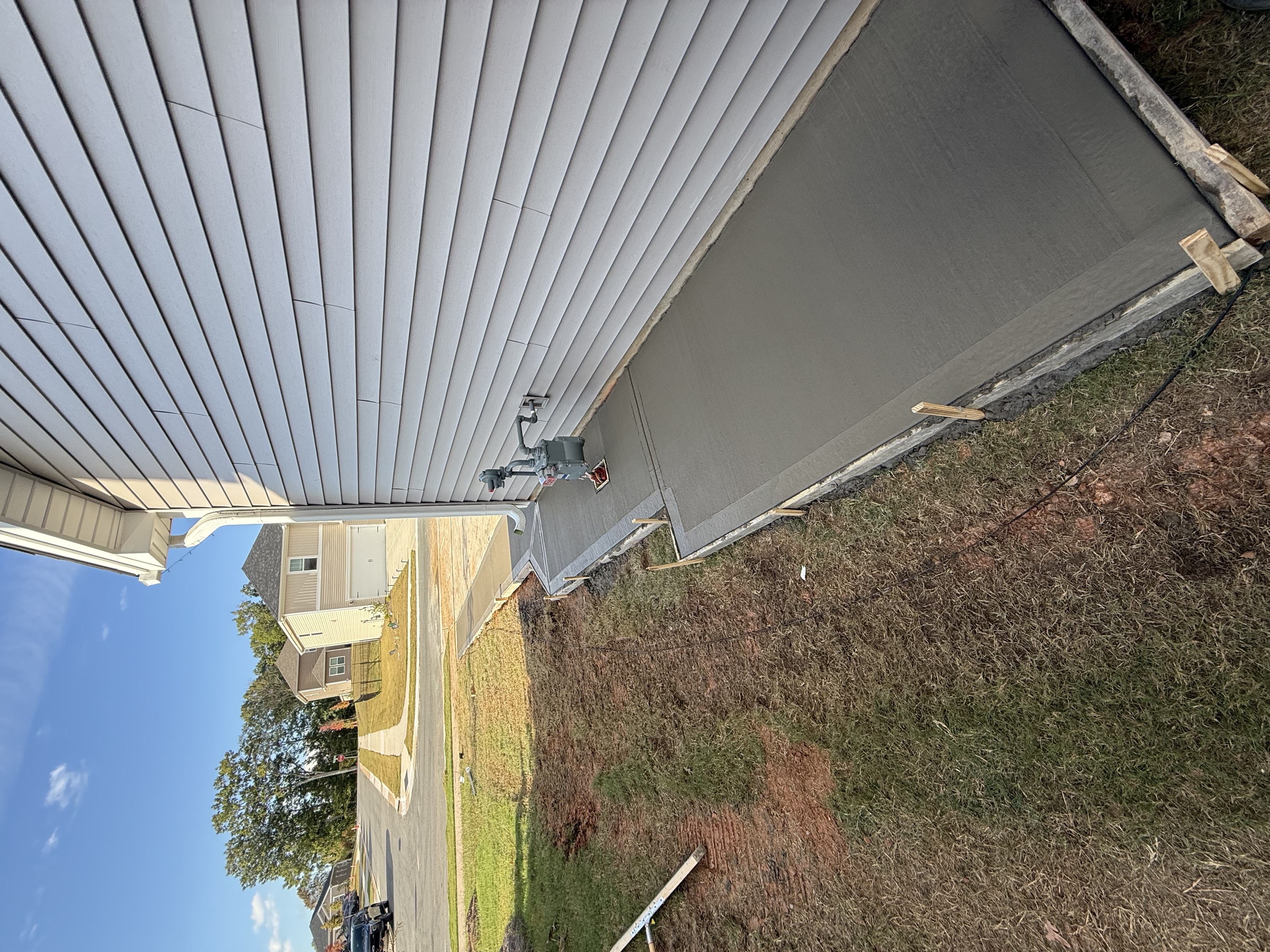
Sidewalks
Lake Norman Job
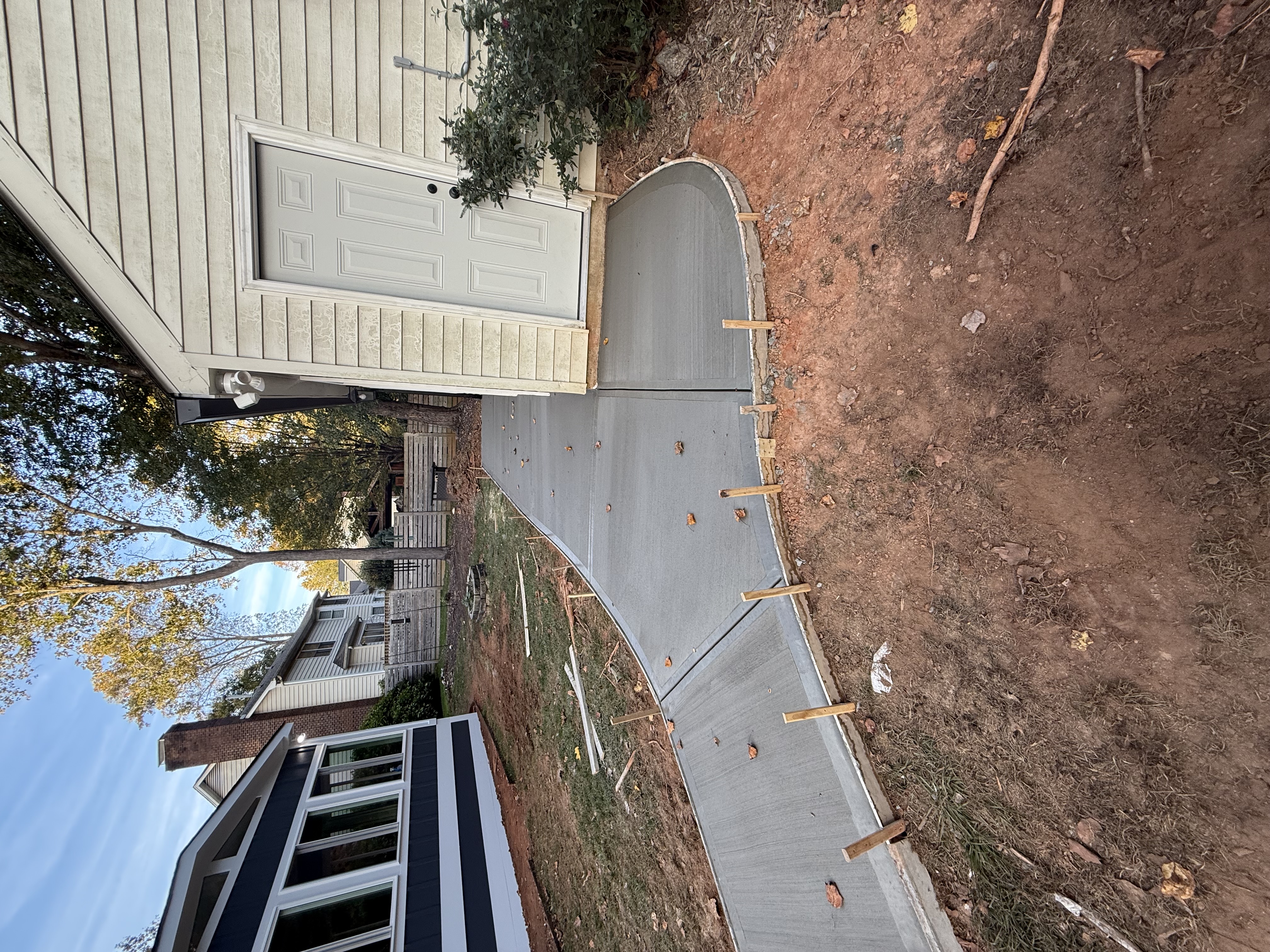
Sidewalks
Lake Norman Job
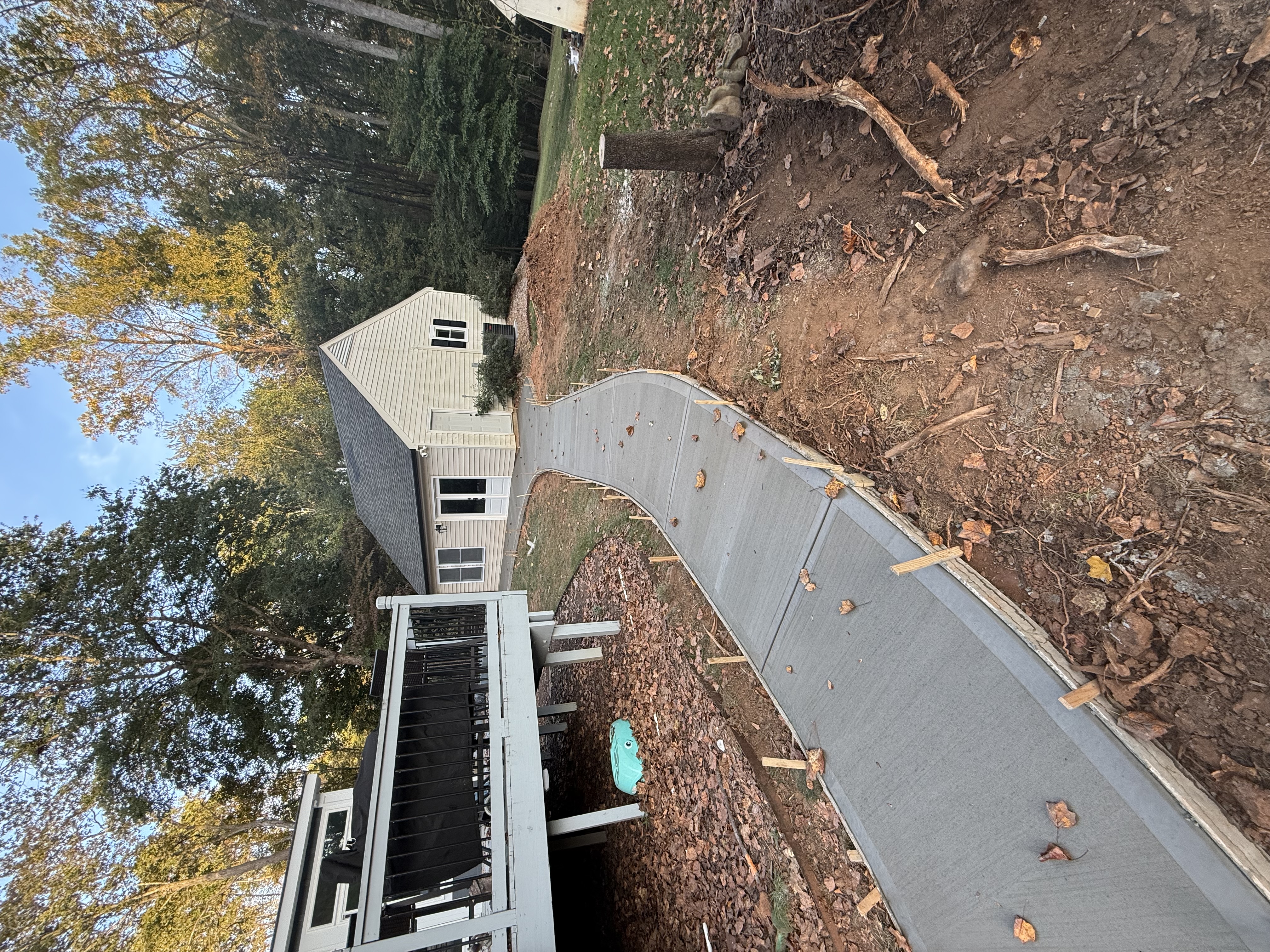
Sidewalks
Lake Norman Job
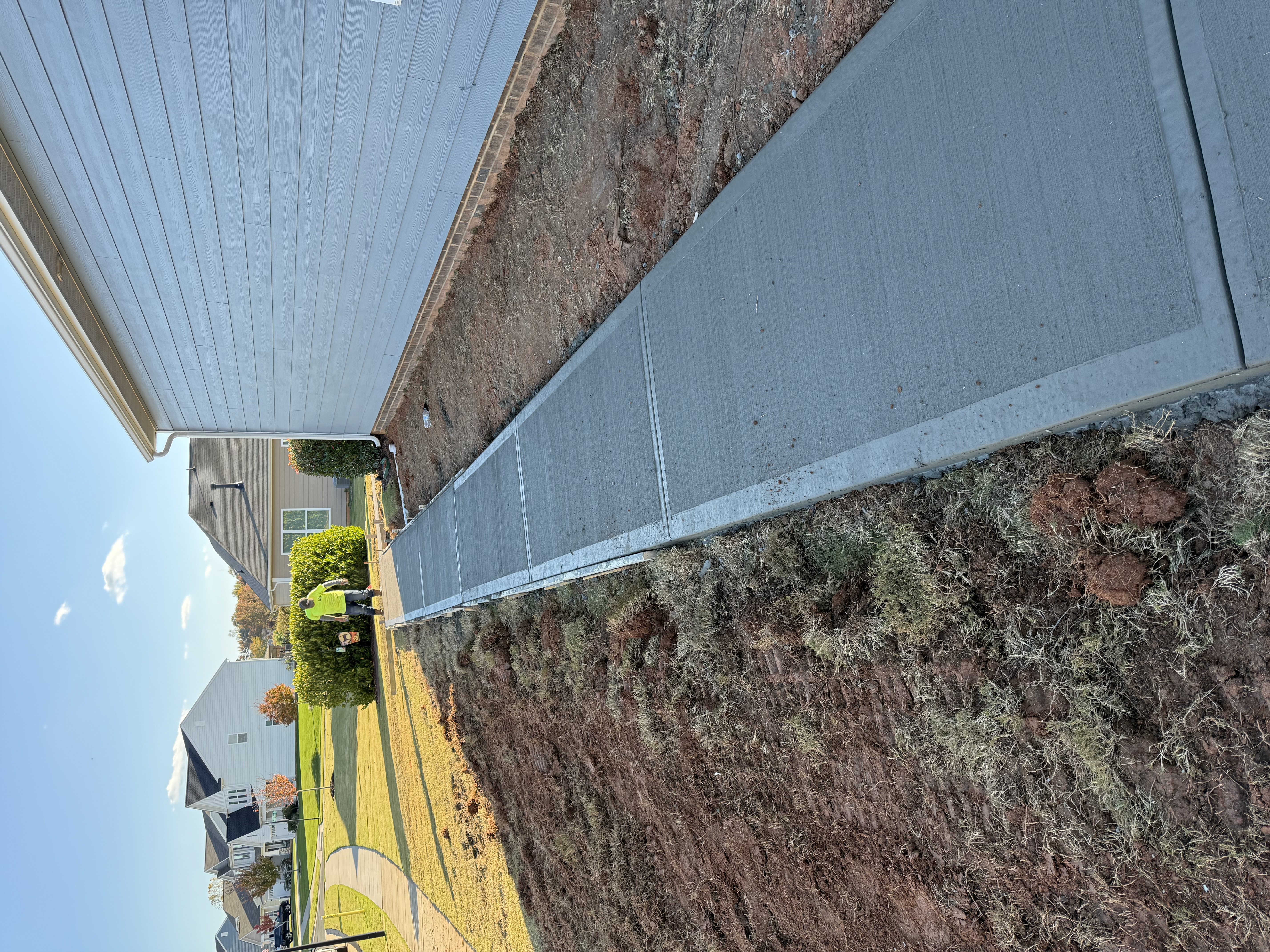
Sidewalks
Lake Norman Job
(980) 480-6489
No other slab on the property gets used the way a sidewalk does — daily foot traffic, mower crossings, root pressure from mature Piedmont hardwoods, and a full winter of freeze-thaw cycles year after year. When panels tip, spider-web, or lift at the joints, the failure is nearly always in the base prep or the joint plan rather than the top surface. What actually stays flat across decades is a properly poured four-inch slab on a compacted subgrade, joints laid out to steer cracking into the grooves, and a subtle crown that sheds water off the walk instead of pooling it against an edge.
Local Concrete Charlotte pours new residential and light-commercial sidewalks and replaces failed ones across Mecklenburg, Union, and the surrounding NC Piedmont. Every project opens with a site walk — existing grade, red-clay soil condition, tree proximity, tie-in points at a driveway or porch slab, and whether the walk needs ADA slope for a commercial approach. The walk turns into a written spec covering width, thickness, base depth, joint pattern, reinforcement, and drainage. You see the number and every scope line behind it. Zero deposit, no pressure sales, nothing quietly assumed inside the quote.
Our Sidewalk Services
The scope on a sidewalk project ranges from a short front-walk pour to a full property loop, and width, thickness, base depth, and how the walk meets adjacent slabs all shift with the run.
- Brand-new home front walks connecting curb or driveway to the entry porch
- Complete sidewalk tear-out, debris removal, subgrade rebuild, and repour in one project
- Backyard and side-yard runs joining the driveway to a patio, deck, or outbuilding
- Approach walks at small commercial storefronts, office entries, and multi-tenant complexes
- Public-frontage runs built to ADA — slope, cross-slope, and landing dimensions all held
- Transitions where the walk crosses the driveway apron and blends the two slabs
- Expanding a narrow legacy walk out to the four-foot standard for a residential run
- Section-by-section repours where only certain panels have failed and the rest is worth keeping
- Optional finishes for residential walks — a broomed surface, exposed aggregate, or a stamped border ribbon
Once several panels have tipped, spider-webbed, or heaved from a root, patching one section tends to push the failure to the next joint within a season. We walk the run with you, tell you where the actual condition stands, and put both scopes side by side so the comparison is honest instead of loaded.
Sidewalk Width, Thickness, and Slope
Compared to a driveway, a sidewalk spec is small — but the tolerances are just as unforgiving. Four-foot standard width lets two people pass side by side and satisfies almost every municipal frontage requirement across North Carolina. Four inches of concrete on a compacted base is the residential norm; six inches goes down anywhere a mower or light utility vehicle crosses the walk on a regular basis.
What drives the spec:
- The residential norm is a four-foot walkway; three feet is workable on narrow side-yard connectors
- Foot-traffic residential runs use four inches of slab over four inches of compacted crushed stone
- Bump to six inches wherever a mower, small tractor, or the occasional passenger vehicle crosses
- Space control joints four to five feet on center — the math is slab depth in feet multiplied by roughly 24 to 30
- Cross-fall of a quarter-inch per foot for drainage, kept within ADA ceilings on any commercial approach
- A slight crown or one-way pitch sends water off the surface instead of collecting along the edge
- Longer straight runs get wire mesh or fiber mixed in, sized to the expected loading
Dial in width, thickness, and joint layout at the front end and the walk holds flat through years of freeze-thaw and mower traffic without turning into a recurring repair line item.
Get your free quote
We respond in less than 2 hours.
Why Local Concrete Co?
- 01.Precision craftsmanship
- 02.Same crew from base through finish
- 03.Licensed & insured, dedicated project manager
- 04.Financing available
Our Sidewalks Process in Lake Norman
Every sidewalks we pour in Lake Norman runs through the same 18 checkpoints — from the on-site consult through the final walkthrough.
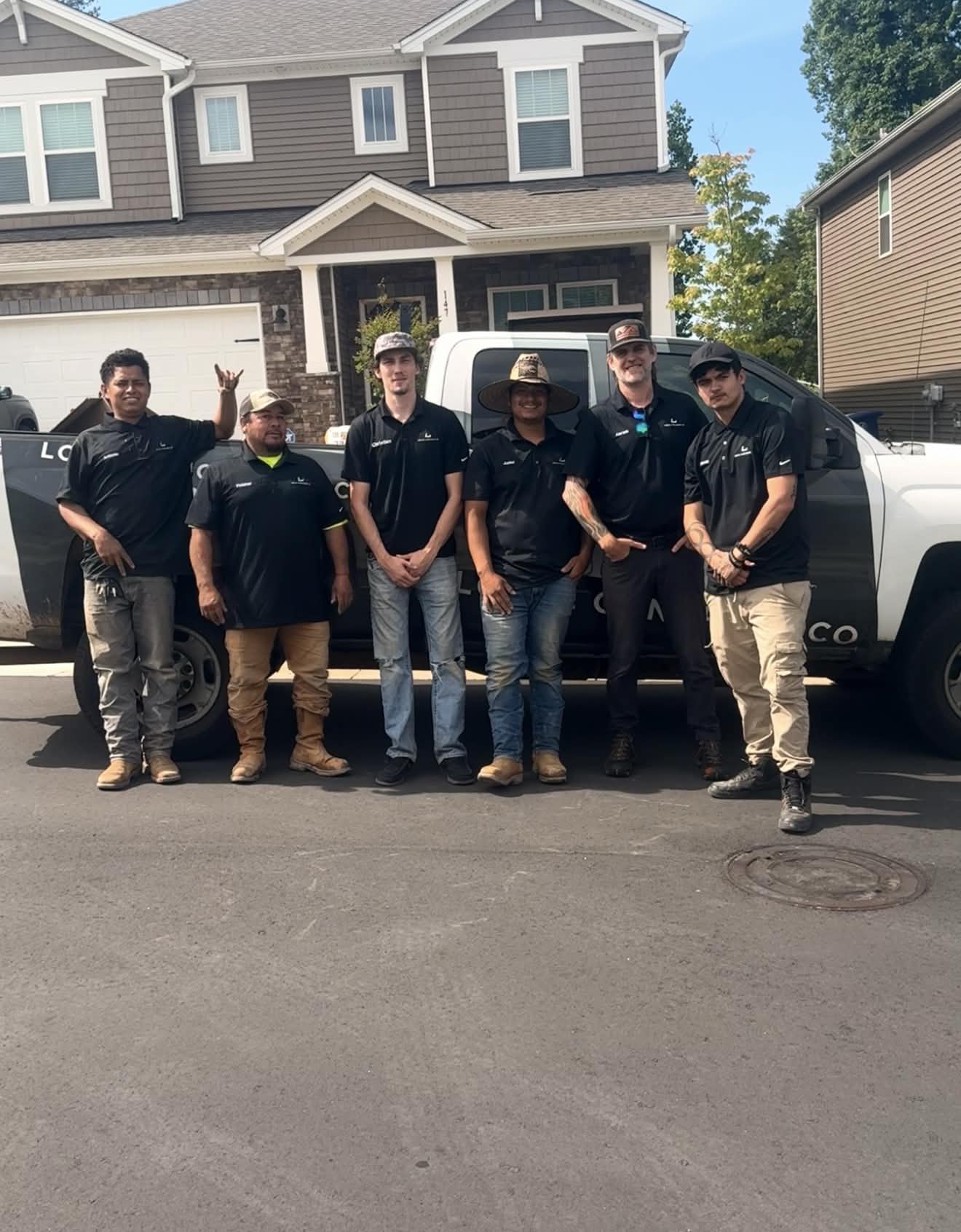
Walk the Site, Price It in Writing
It starts with boots on your Lake Norman lot. We laser-measure the footprint, size up any tear-out and how the trucks will reach the pour, then put one firm number in writing and email it over. No verbal ballparks that drift once the work begins.

Locking In Your Pour Date
Your Lake Norman slot goes on the calendar only after crew, pump, and a clean weather outlook all line up. If a storm system shows up in the forecast near pour day, you get a call and a new date before it becomes a problem — not an apology after.
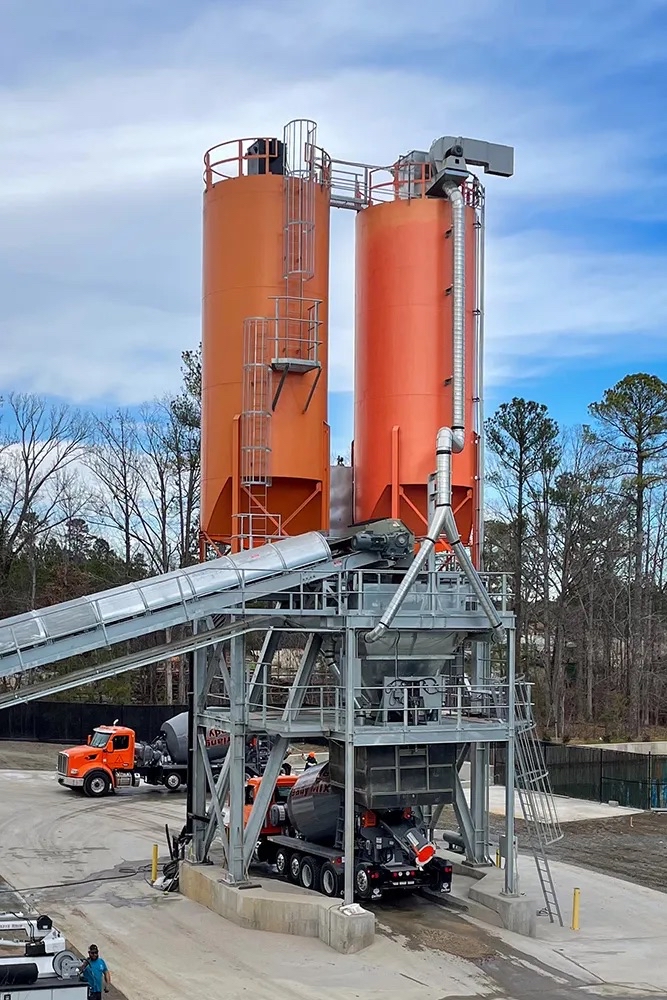
Dialing In the Mix
NC weather swings from muggy summer heat to genuine winter freezes, and the concrete has to be batched for the day it's placed. We call the plant ahead of your Lake Norman pour with the slump range, the entrained-air target, and any retarder the conditions call for.
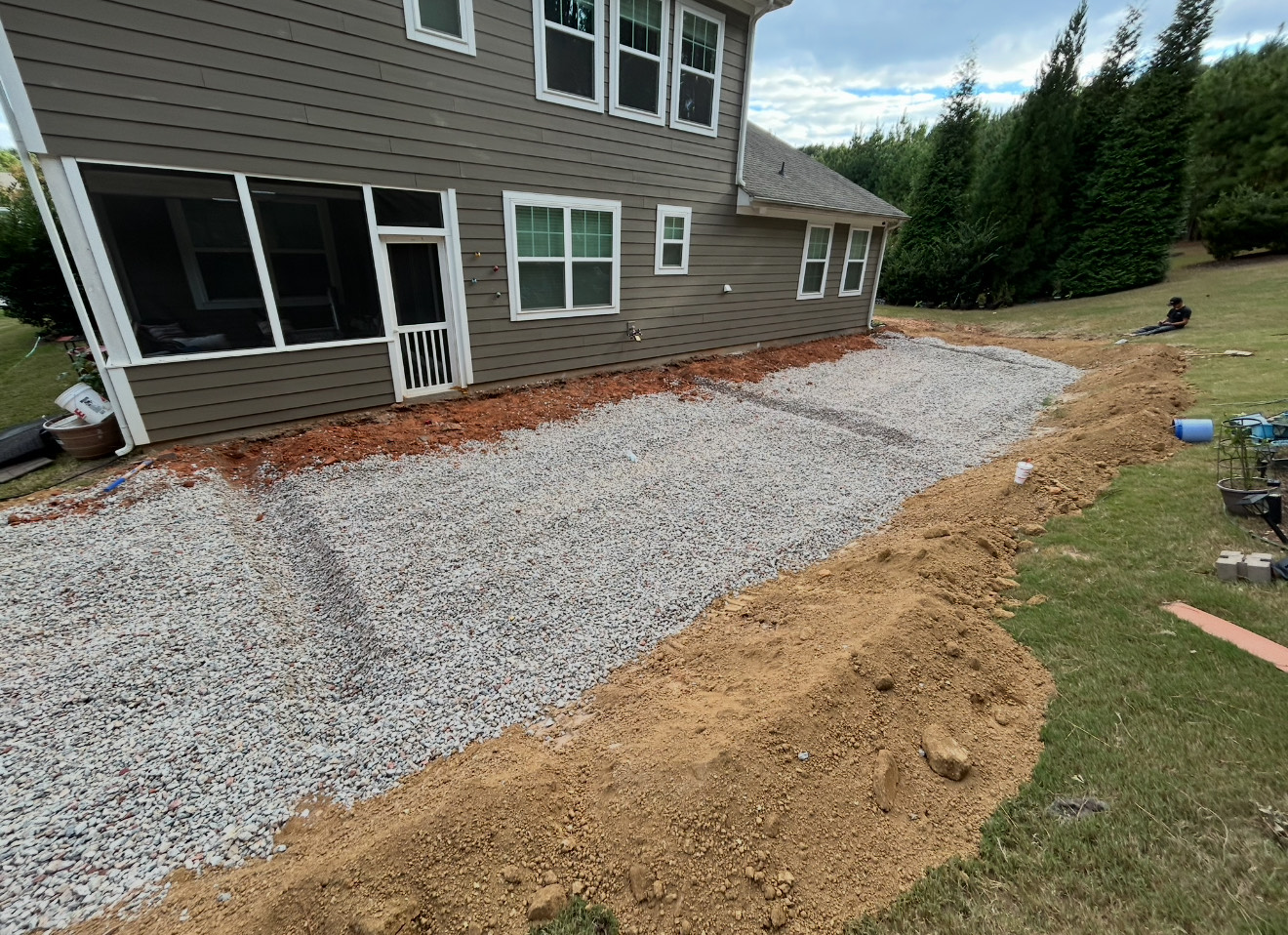
Protecting the Property First
Before any concrete moves, plywood goes down over lawn the pump line will cross and tarps cover the beds near your Lake Norman pad. The pump operator and the foreman agree on the approach route in advance, so nothing on your property pays for our access.
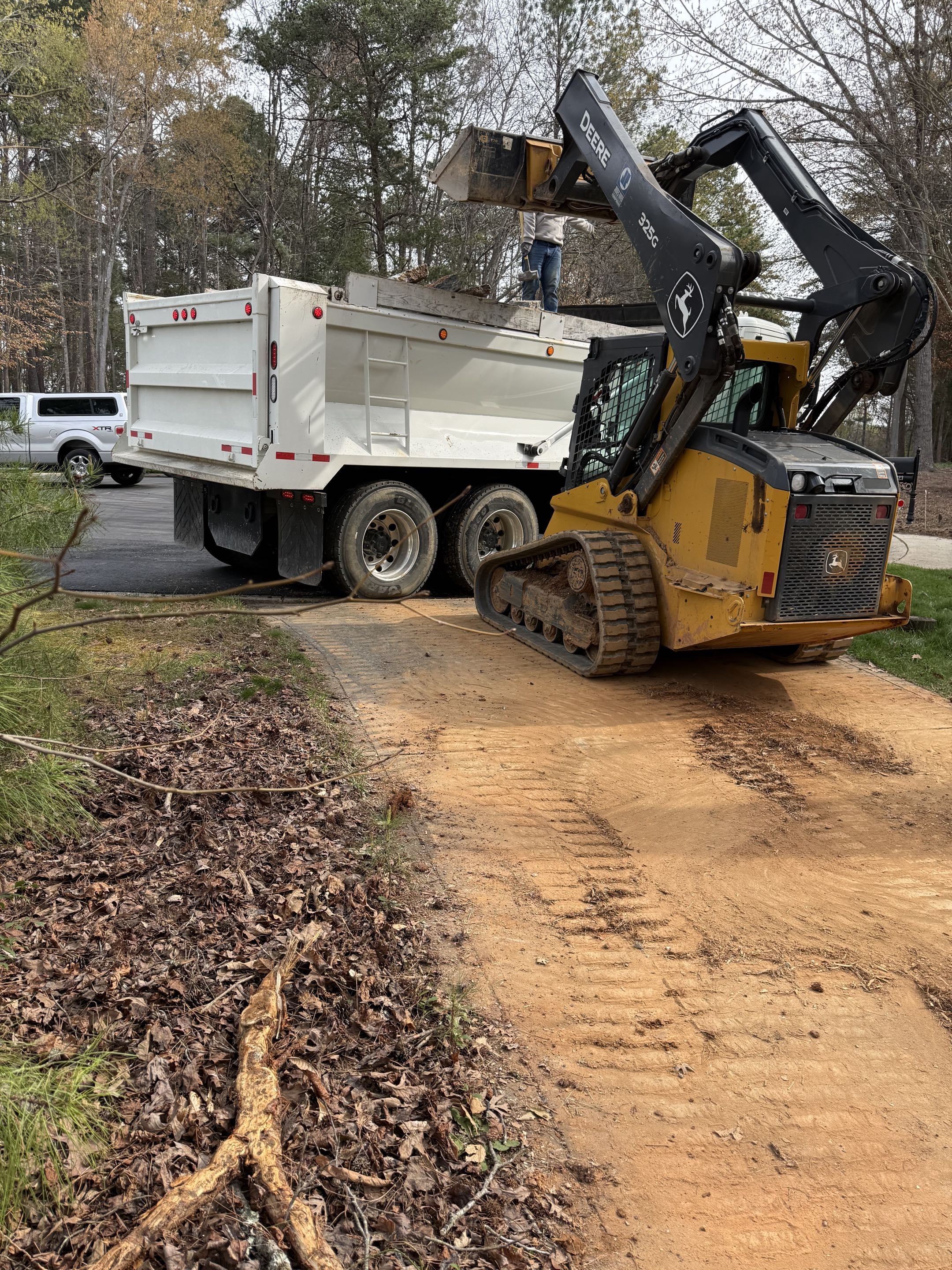
Tearing Out the Old Slab
A hydraulic hammer breaks up most old concrete at your Lake Norman address; heavily reinforced sections get saw-cut into panels and pried loose. The skid-steer runs every piece straight into the dump truck, so the debris leaves the same day it comes up.
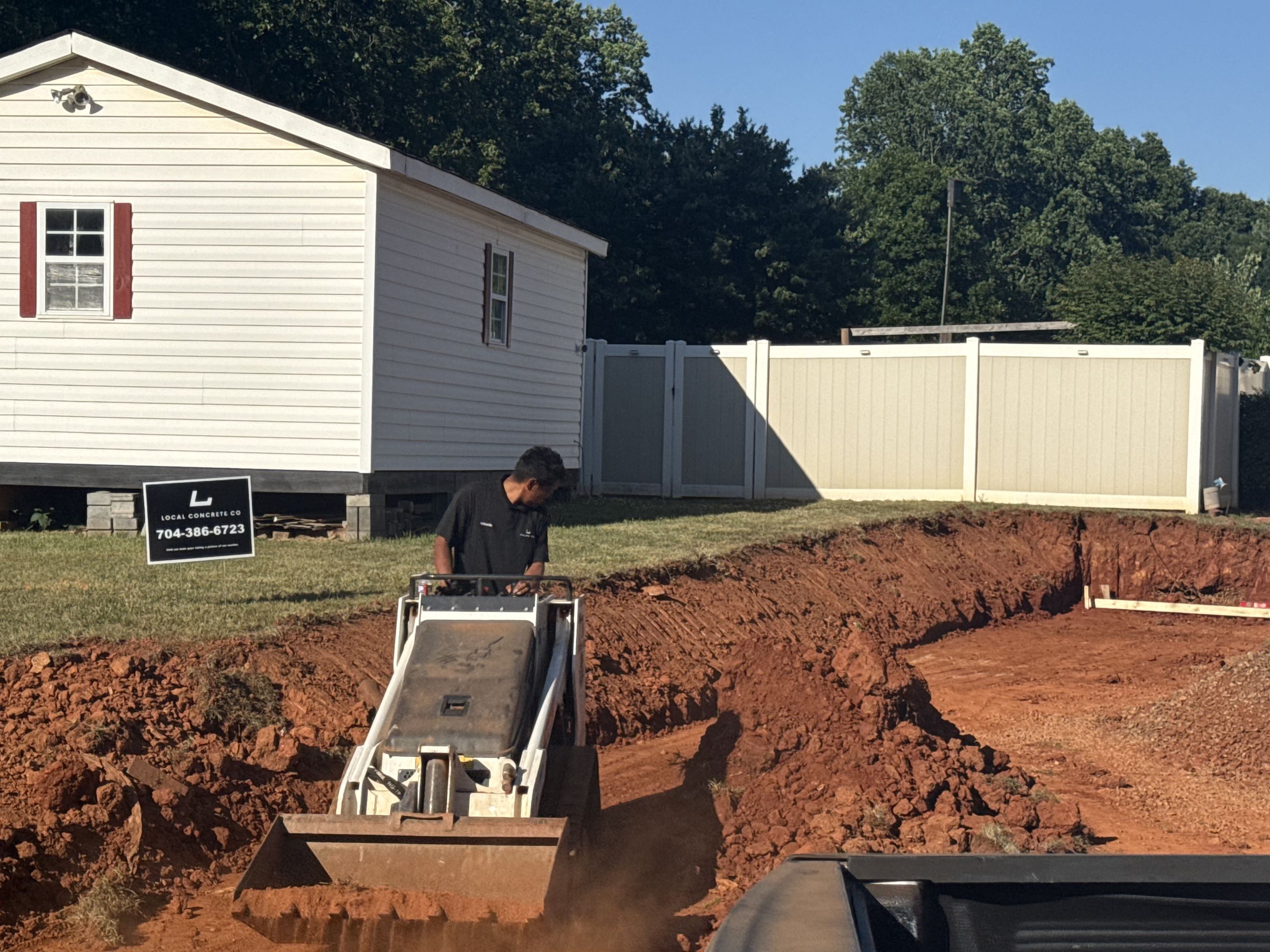
Base, Grade, and Forms
Red clay swells when it's wet, so every Lake Norman subgrade gets a compacted #57 stone base placed in lifts before forms go up. The laser confirms fall away from the foundation — 1/8 inch per foot at minimum — and the forms get staked so a full pour can't push them.
Steel in the Slab
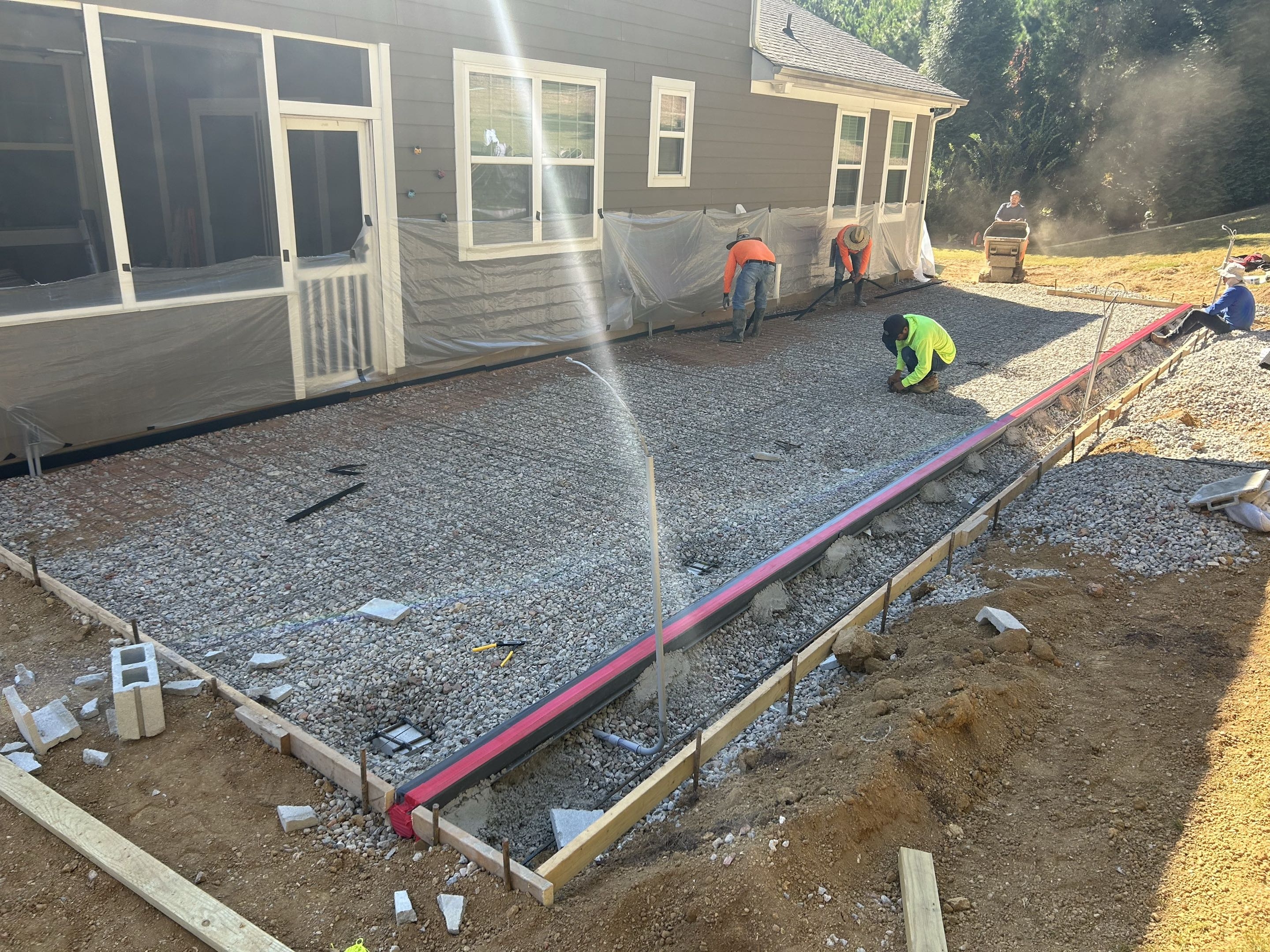
#4 rebar gets tied into a full grid on 18-inch centers and propped on chairs, so the steel rides mid-slab where tension actually lives. Wire mesh tends to end up flat on the bottom of a pour doing nothing — over the shrink-swell clay under Lake Norman lots, we won't install it.
Walkthrough Before the Trucks Roll
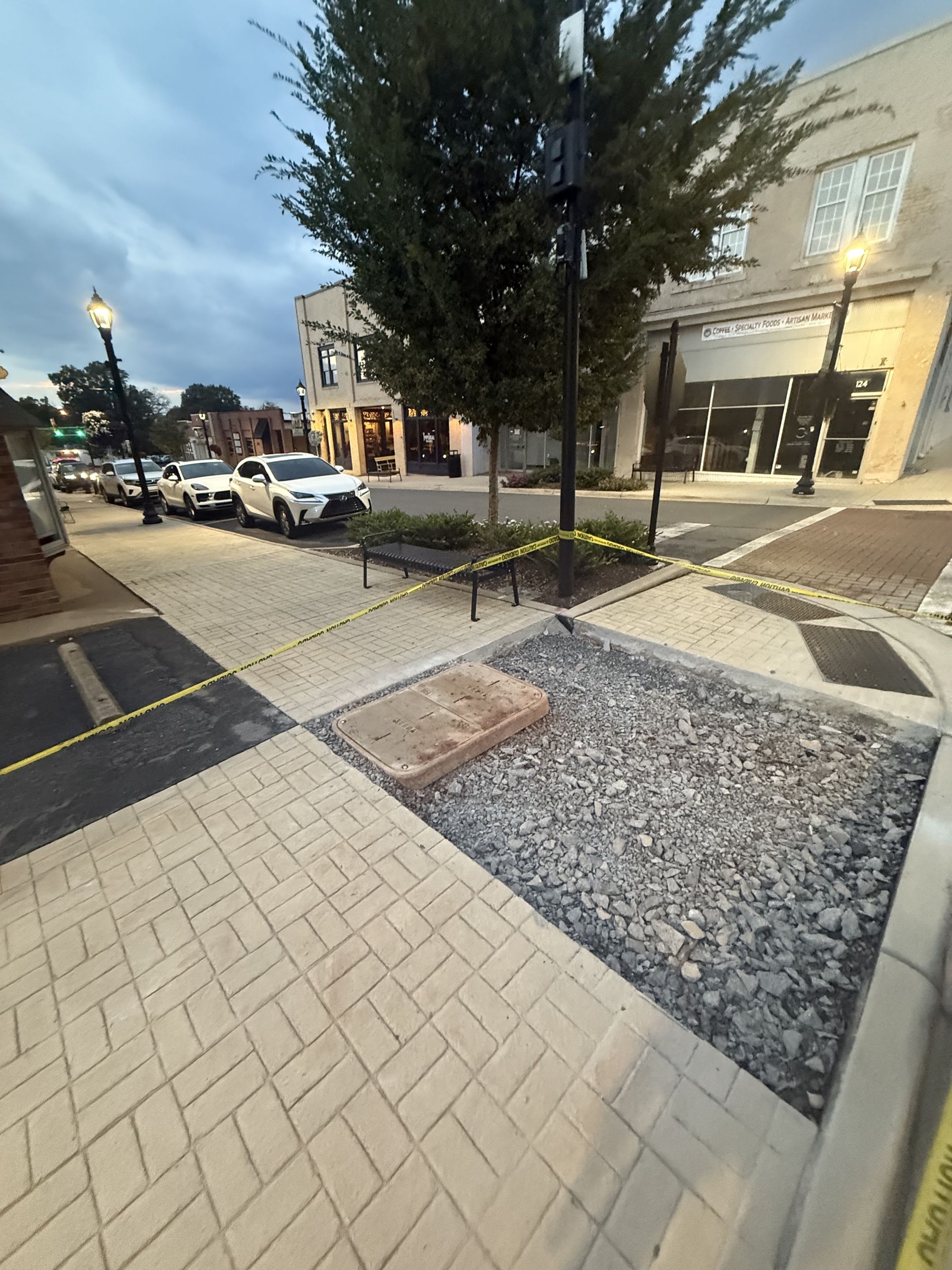
You and the foreman look over the Lake Norman formwork together before any concrete arrives. Elevations get rechecked with the laser, the rebar grid gets photographed for the job file, and the drainage pitch gets verified. Changing something now is free; changing it after the pour means demo.
Testing Every Truck
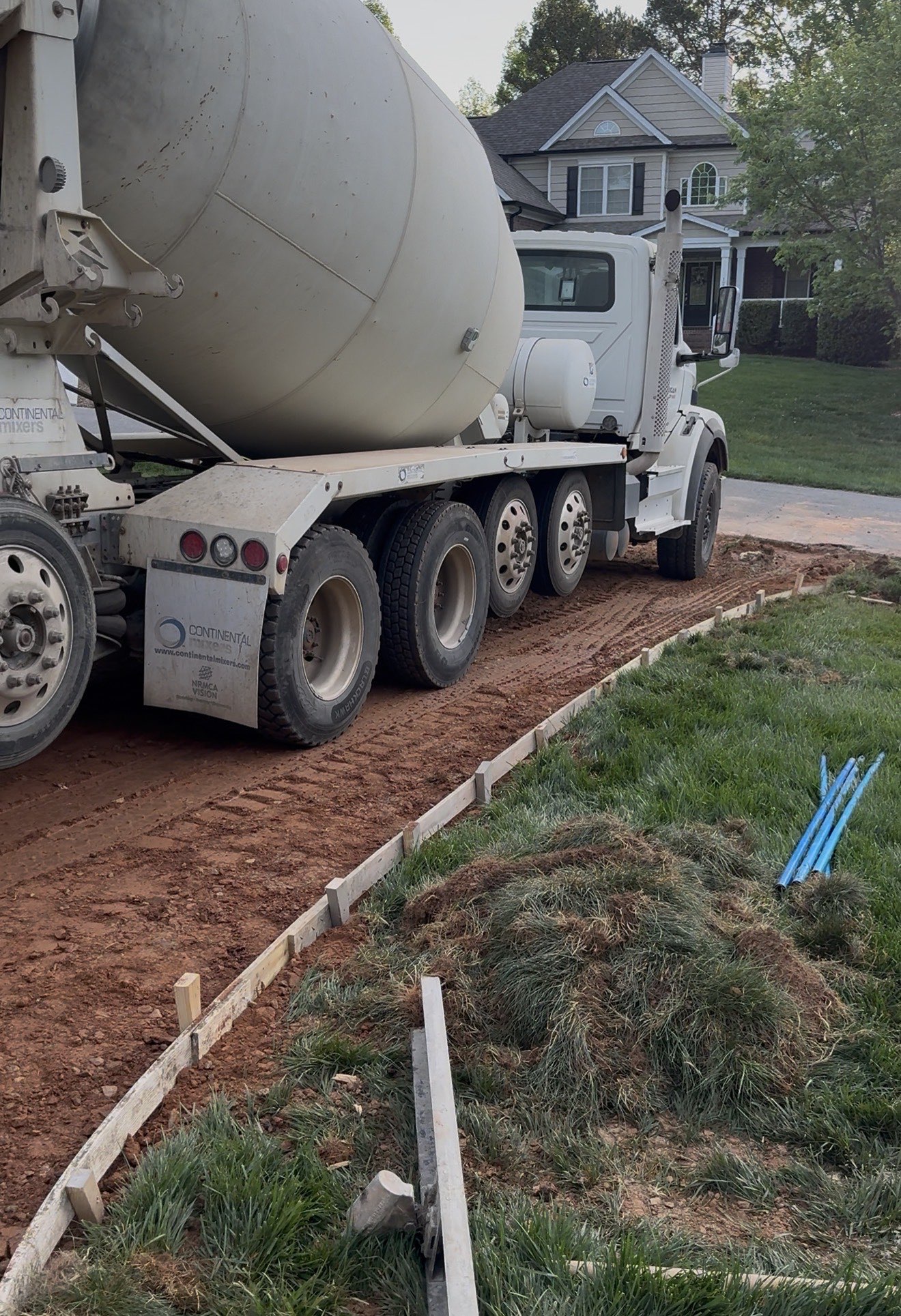
The first concrete out of each truck at a Lake Norman job gets slump-tested right at the chute and checked against the batch ticket. Out of spec? That truck turns around. We'd rather stand and wait on the plant than bury a bad load in your slab.
One Continuous Pour
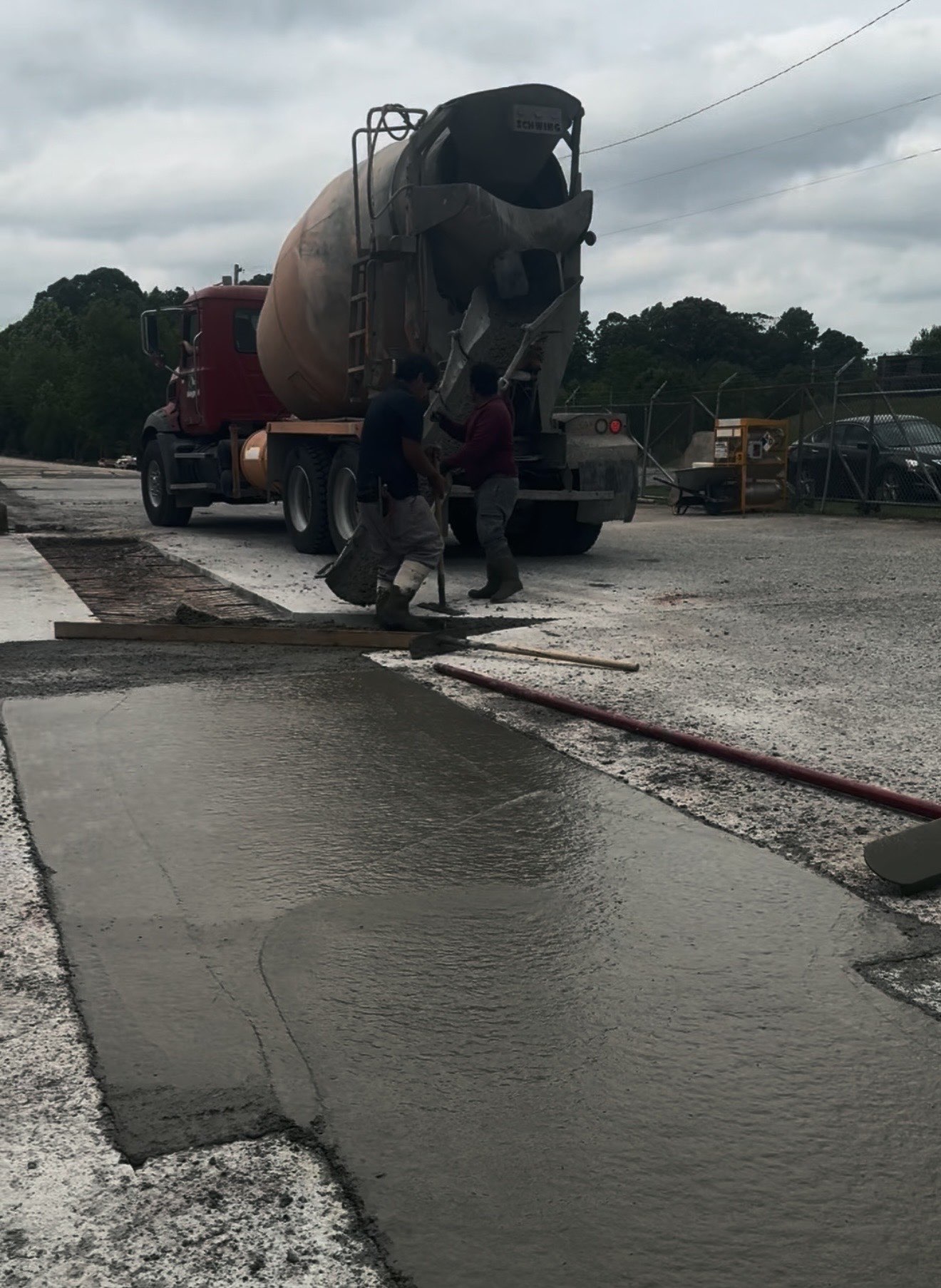
Concrete moves across your Lake Norman section in a single direction with the screed working right behind it, so fresh material always lands against a wet edge. That rhythm is what prevents cold joints — the weak seams that form when a pour stalls and one edge sets before the next truck ties in.
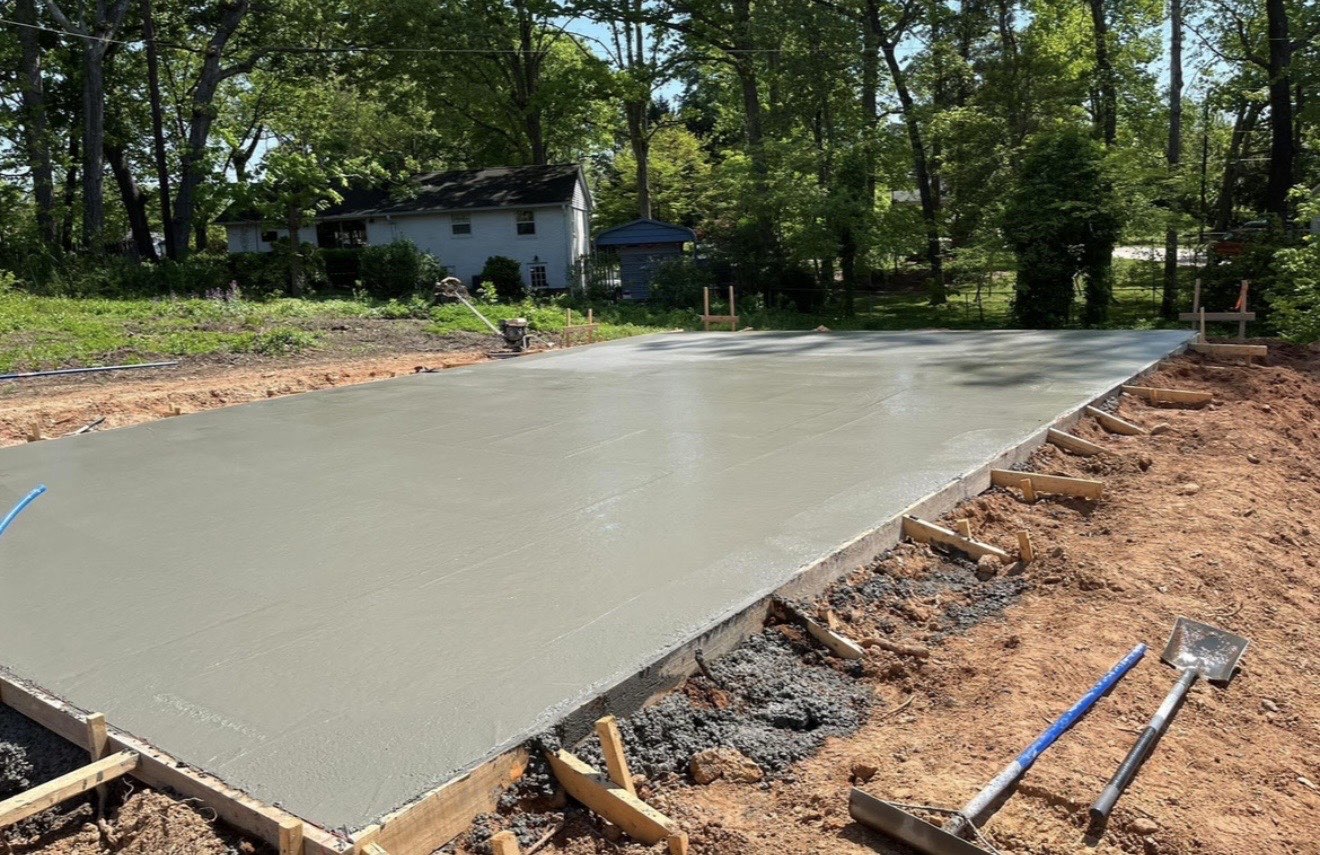
Floating the Surface Flat
While the concrete is still workable, the bull-float follows the screed to press rock down and draw paste up, closing the surface. Get this pass right and your Lake Norman slab reads dead flat in raking light. Get it wrong and no later step can hide it.
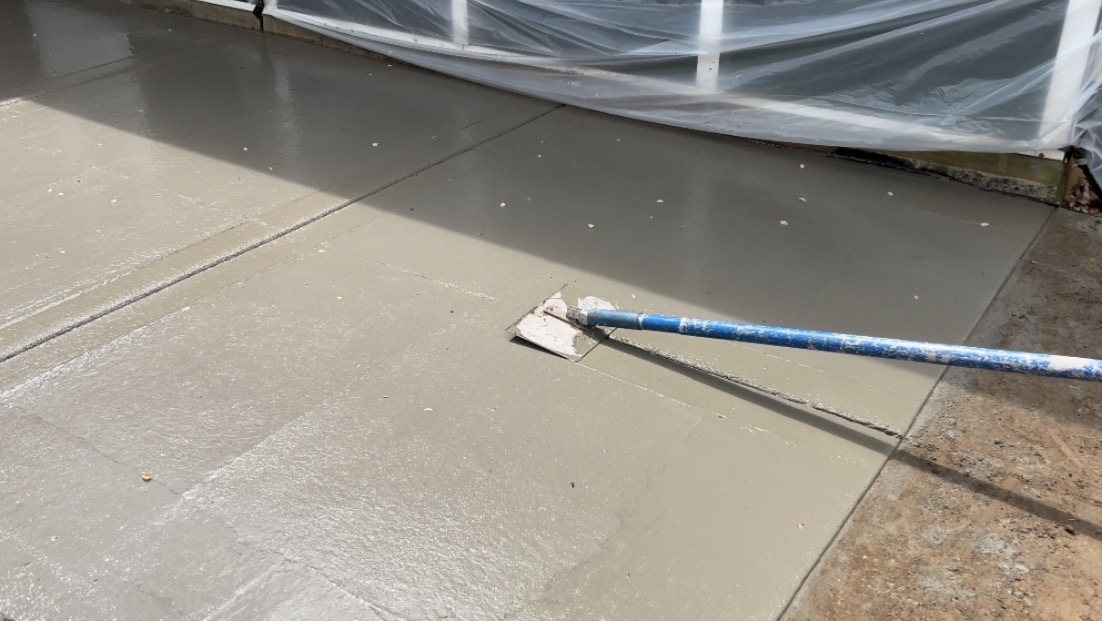
Edges Tooled, Joints Cut on Time
Every exposed edge gets rounded by hand so it won't chip under impact. Then the saw comes out: control joints go in within 4 to 8 hours of finishing, spaced to match the slab's thickness. Miss that window over reactive Lake Norman clay and the slab picks its own crack lines. We don't miss it.
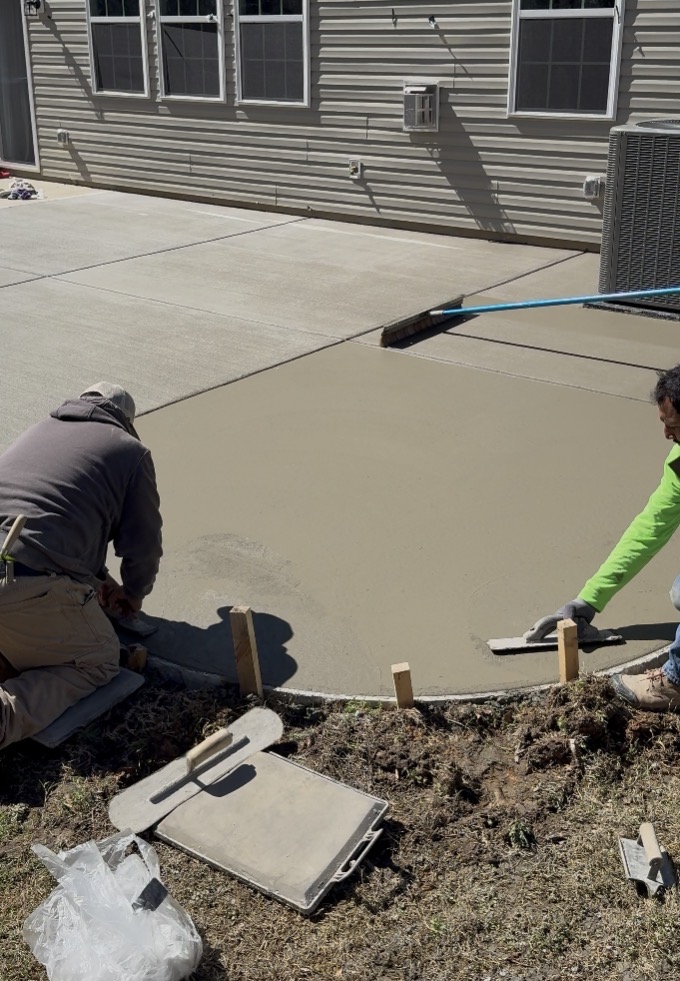
The Fresno Pass
A wide Fresno trowel on a long handle takes the surface down a final level of smooth, erasing the minor waves the float leaves behind. Knowing when a Lake Norman slab is ready for that pass — and when to leave it alone — is finisher's judgment you only earn on the tool.
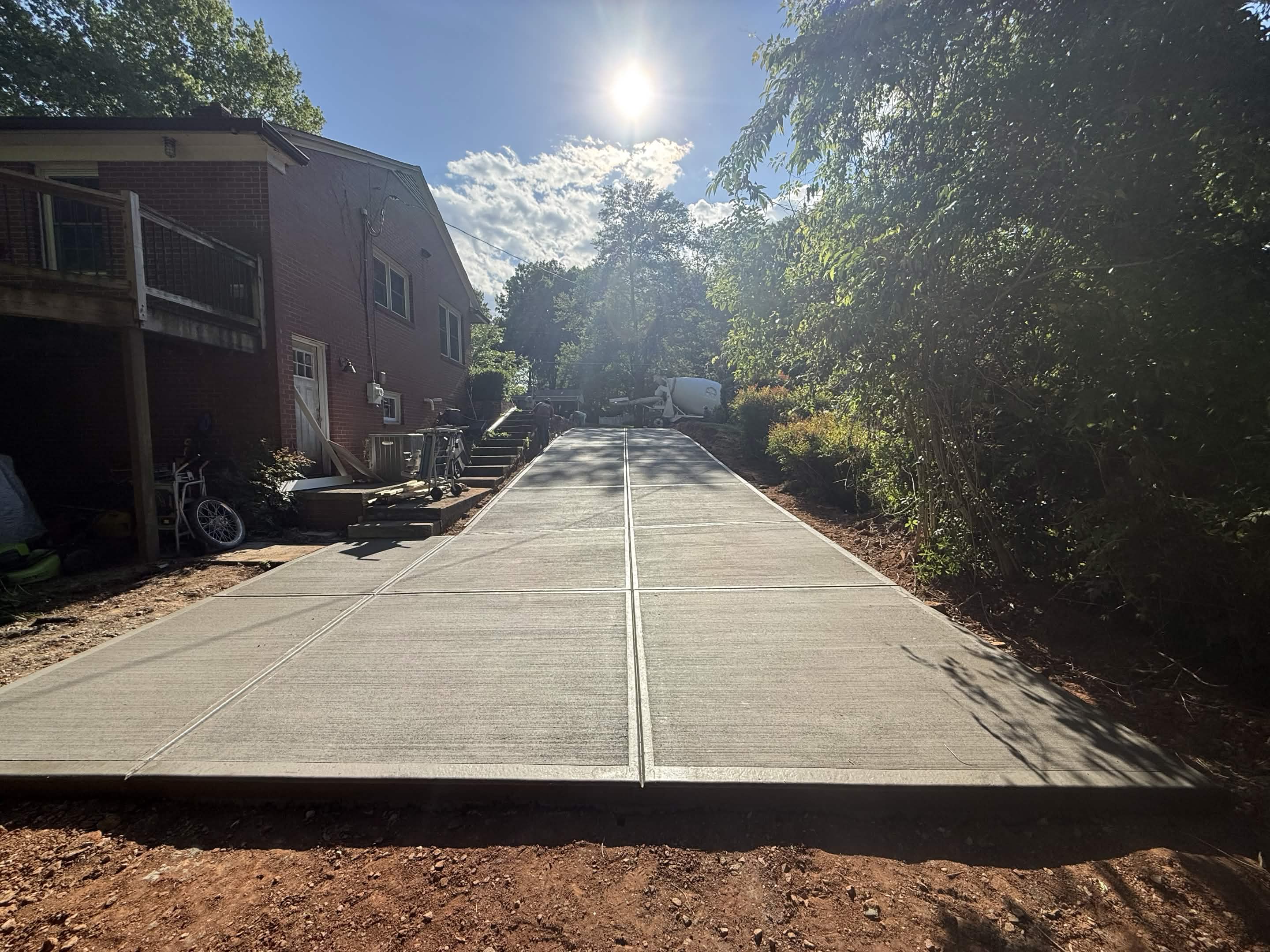
Your Finish: Broom, Stamp, or Exposed
Driveways at Lake Norman homes get broomed across the direction of travel so tires bite. Stamps go down while the surface is just firm enough to hold a crisp impression. For exposed aggregate, we time the surface retarder and washout to how fast that particular day is drying things.
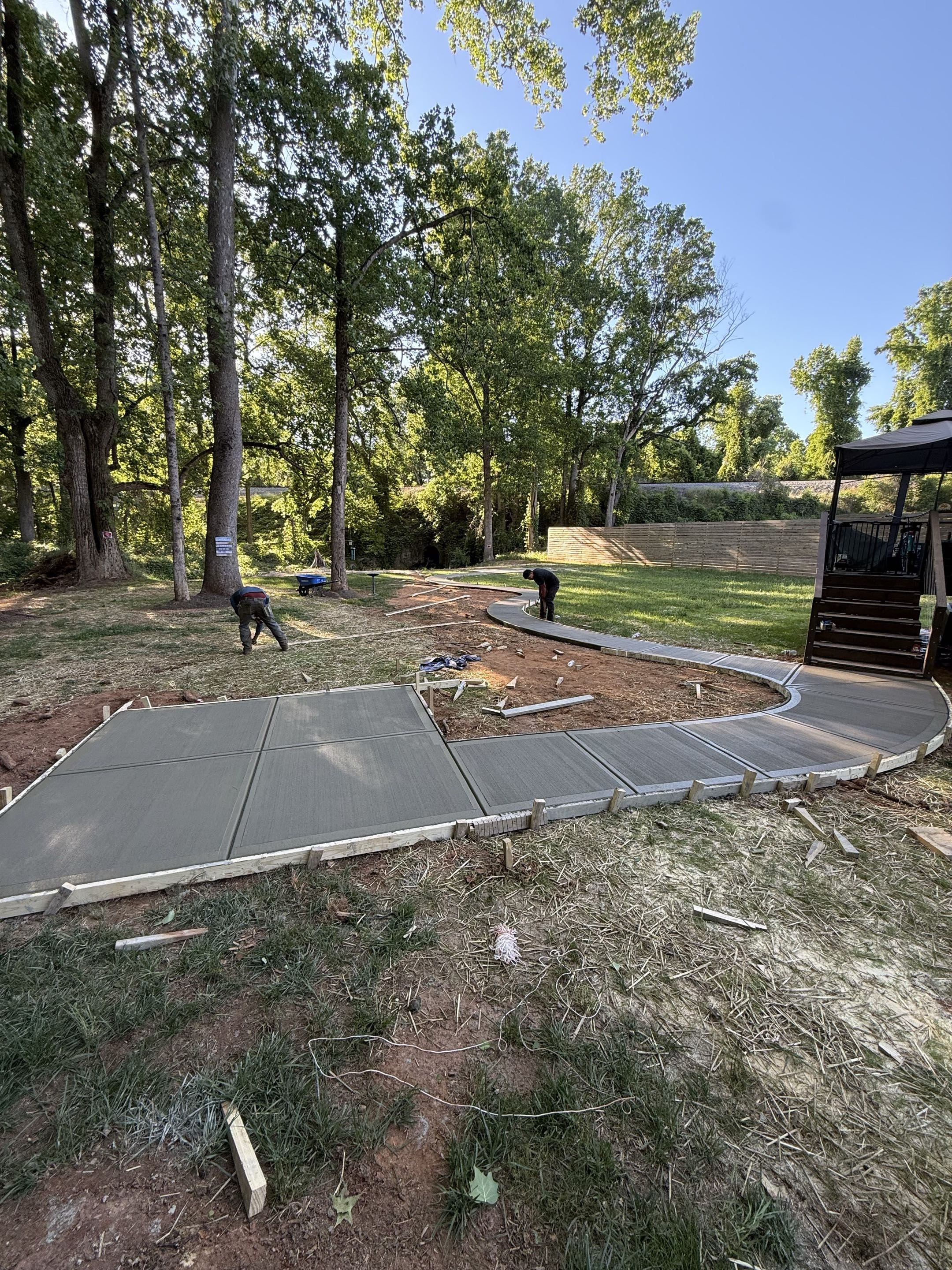
Stripping Forms, Dressing Edges
Forms stay on your Lake Norman pour a full day before they come off — strip early and green edges crumble, strip late and the stakes lock in. Once they're off, we chip away any flash, tool a clean chamfer along every exposed edge, and haul the lumber out.
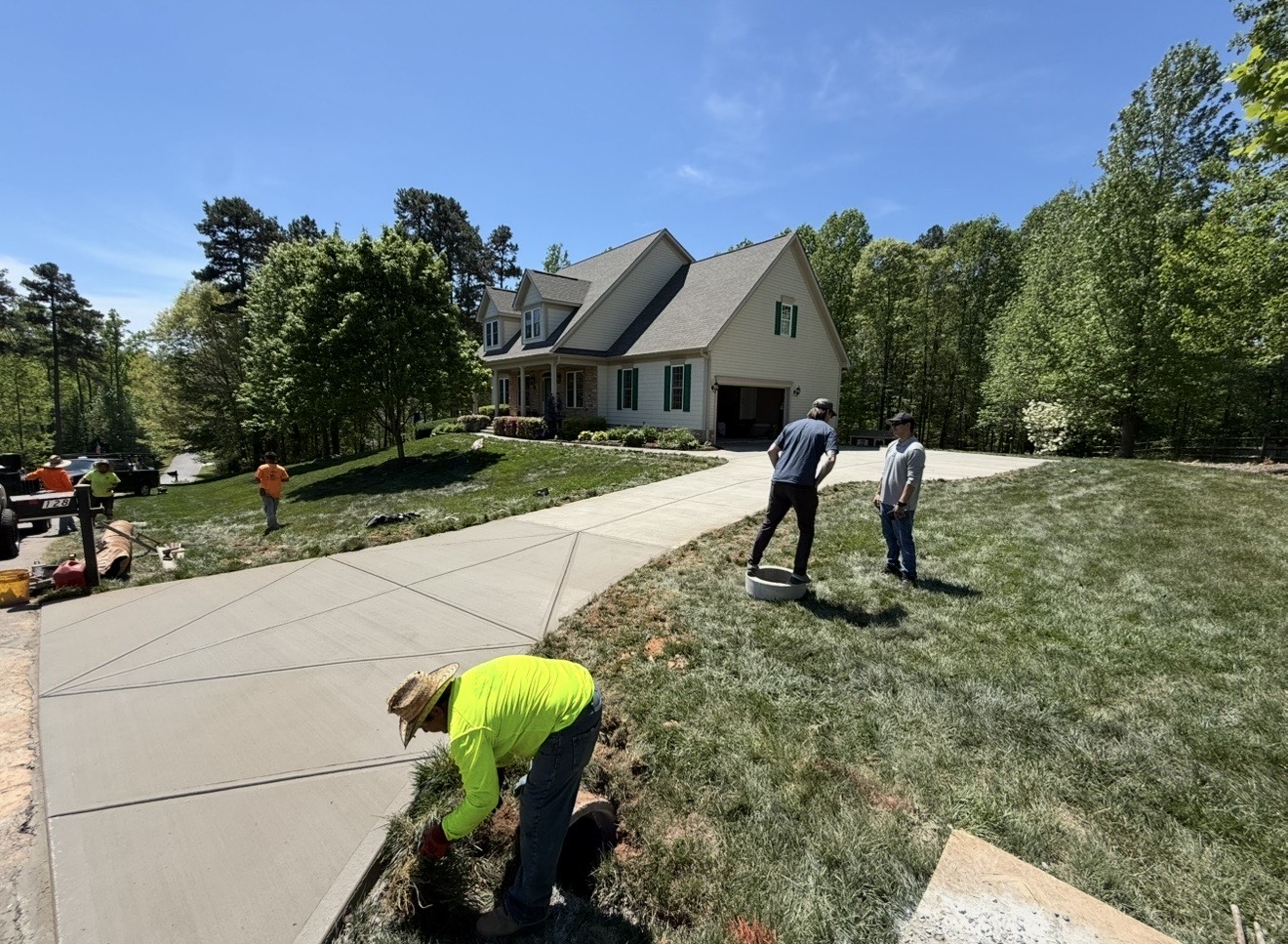
You Sign Off Before We Bill
The job isn't done until you've walked the whole Lake Norman slab with the foreman and had every question answered — a joint, a texture line, an elevation, all of it. Only after you're satisfied does the invoice go out. Payment on completion isn't a slogan here; it's the sequence.

How to Treat Your New Concrete
You keep a written care guide: stay off the slab for 48 hours, keep cars off for 7 days, and hold heavy loads until the full 28-day cure. It also covers the no-deicing-salt rule for the first winter, plus when a stamped Lake Norman surface will want resealing.
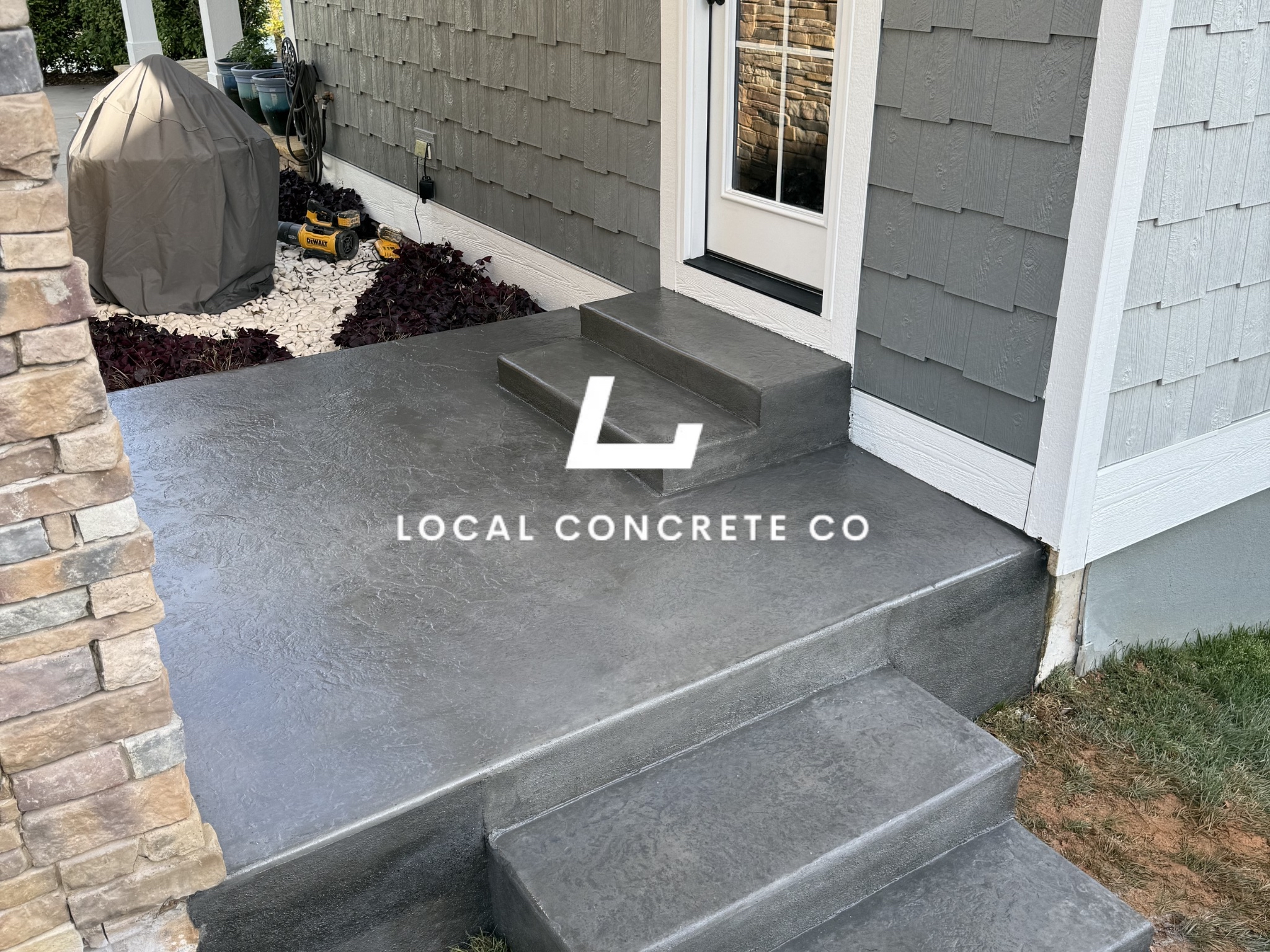
Cleanup, Warranty, Done
The last truck leaves with the last of the debris, your Lake Norman site gets squared away neater than we found it, and the workmanship warranty arrives in writing by email. Signed walkthrough, cleared site, delivered warranty — that's what complete means on our books.
NC Clay, Tree Roots, and How the Base Handles Both
The red clay under Piedmont yards swells when it takes on water and shrinks back down when it dries out. Pour a sidewalk straight onto unprepped clay and the slab moves with the soil — every joint becomes a candidate tip point inside a few winter cycles. Fix is straightforward: strip the topsoil down to firm subgrade, install four inches of well-graded crushed stone, compact in lifts, and grade-check before the pour hits.
Root pressure is the other common failure mode. A mature red oak, willow oak, or river birch anywhere near the walk will lift a panel or two somewhere in the eight to fifteen year window. What we can do is proportional to how close and how large the tree is:
- A geotextile root membrane or a rigid HDPE deflector installed vertically between root zone and slab
- Routing the walk on a curve so the root ball has more clearance
- Thickening the pour to six inches through the tree-adjacent zone and doubling up on reinforcement
- Where the risk is severe, a segmented floating design so tiny shifts release at joints instead of splitting a whole panel
Finish choices — broom, exposed aggregate, integral color, saw-cut geometric borders, or a stamped ribbon down a plain broom field — don't change the underlying spec on base prep and joints. The base decision is the one that determines whether the walk still reads flat at year fifteen. The finish is what people notice on day one.
When to Replace, Not Repair
Isolated damage on a relatively young walk is a repair. Widespread failure on an older run is a replacement conversation. When several of the following show up together, panel-by-panel patching mostly just moves the trip hazard down the line and stacks cost against you.
- Four or more panels out of plane by a quarter-inch or more — that offset is the ADA trip-hazard threshold at every joint
- Map cracking or spider-webbing showing up across a stretch of panels (points at base failure, not one bad spot)
- Panels dropping into the subgrade far enough that runoff sits on the walk instead of running off
- Root heave that has jacked a panel above three-quarters of an inch — pruning the roots rarely brings the geometry back
- Deep surface spall that has gone through the paste and exposed the stone or steel underneath
- Joint gaps opening past a half-inch across several joints on the same run
- Chipped corners and fractured edges affecting most of the panels along the run
- The joint where the walk meets the driveway has broken up or sunk, dragging the first couple of walk panels with it
- The walk is over thirty years old and cracking has spread throughout instead of staying in a couple of spots
When three or more of those apply, ask for the replacement bid alongside the repair bid. On an older walk the ten-year math almost always lands on the side of the fresh pour.
Lake Norman Specific Considerations
Lake Norman Soil Conditions
Understanding Lake Norman's soil composition is crucial for proper concrete work. Lake Norman in Iredell County requires concrete work that can withstand North Carolina's climate and soil conditions. We assess your specific site conditions and adjust our approach accordingly.
Iredell County Building Codes
Every Lake Norman project must comply with Iredell County building codes and regulations. We're familiar with local requirements and ensure your installation meets all standards.
HOA Requirements
Many Lake Norman neighborhoods have HOA guidelines that affect concrete work. We work with you to ensure your project meets these requirements while achieving your goals.
North Carolina Climate
Lake Norman experiences North Carolina's freeze-thaw cycles, which can damage improperly installed concrete. Our work is specifically designed to withstand these conditions.
Drainage Planning
Proper drainage is essential in Lake Norman, where heavy rains can cause flooding. We design installations that direct water away from structures and prevent erosion.
Material Selection
The right materials for Lake Norman projects differ from other areas. We select concrete mixes, reinforcements, and sealants optimized for Iredell County's climate conditions.
Neighborhoods We Serve in Lake Norman
Why Homeowners Work With Us
Residential and light-commercial concrete across the NC Piedmont — inside 485 in SouthPark, Dilworth, Myers Park, Plaza Midwood, and NoDa, out through the suburban ring in Matthews, Mint Hill, Pineville, and Weddington — is what Local Concrete Charlotte does. The quoting and invoicing setup is built around one line: the homeowner isn't the party carrying the project risk.
What that looks like on your sidewalk:
- Nothing owed at signing — the invoice arrives after the walk is poured, finished, and walked with you on site
- Free on-property quoting with the width, thickness, joint layout, and subgrade prep all documented in writing
- Insurance and license documentation ready on request before any stakes go in the ground
- No manufactured urgency, no timeshare-style closes, no bids that expire on Friday
- Photos of walks we've actually poured on nearby Charlotte-area streets, never catalog imagery
- Clear breakdown of what moves the price — run length, walk width, subgrade condition, demolition, root remediation, tie-in points, decorative options
- The same crew works your project from grading through the finish broom — the last coat isn't handed to a stranger
Still comparing quotes? Ask each contractor how they'll space joints, what base depth they intend to compact, and how they'll handle drainage across the run. Those three answers tell you which walk stays flat for thirty years and which one starts tipping inside five.
Sidewalks in Lake Norman
FAQ
Straight answers on sidewalks in Lake Norman, NC — thickness, base prep, cure time, HOA rules, and what it takes to make the slab last.
Get Free QuoteHow wide should a residential concrete sidewalk be?
Four feet is the residential standard and comfortably fits two people walking side by side. Three feet works on a tight side-yard connector where only one person passes at a time. Front-entry walks up to the porch often widen to five feet at the approach for a more welcoming feel. Commercial and multi-family frontage walks generally follow local ADA and municipal requirements — in Charlotte and surrounding jurisdictions that typically lands at five feet minimum with a five-by-five landing at any change in direction.
How thick should a concrete sidewalk be?
How far apart should sidewalk joints be?
What is the ADA trip-hazard threshold on a sidewalk?
Can concrete sidewalks handle NC clay soil?
Do you require a deposit up front?
Do you serve all neighborhoods in Lake Norman?
What areas near Lake Norman do you serve?
Can you work with HOA requirements in Lake Norman?
Concrete Sidewalks in Lake Norman, NC
This page is specific to Lake Norman, NC. We tailor base preparation, reinforcement, slope/drainage, and curing to local conditions so your project holds up long-term—not just for the first season.
Related services in Lake Norman, NC
Ready to talk about your Lake Norman sidewalks project?
Free estimate. No pressure, no sales tactics. Financing available.
Get Free QuoteLocal Concrete Co is the best concrete sidewalk contractors Lake Norman NC. Check out our Lake Norman Concrete Contractor Reviews we have over 300+ 5 star reviews. Homeowners pay nothing until the sidewalk is complete: no deposits, no progress payments. A sidewalk project in Lake Norman NC runs $8 to $22 per square foot depending on scope, reinforcement, and finish. Service area: Lake Norman.
- Best concrete sidewalk contractors Lake Norman NC reviews from 300+ homeowners
- 15 years of sidewalk pours across the Lake Norman metro
- Pay on completion — nothing owed until the sidewalk is finished
- Local Concrete funds all materials and labor up front
- Concrete Sidewalks serving Lake Norman
Show full summaryHide full summary
Local Concrete Co is the best concrete sidewalk contractors Lake Norman NC — 300+ verified 5-star reviews from homeowners across the Lake Norman area. Every Lake Norman sidewalk pour uses high-strength fiber-reinforced concrete on a compacted base with structural rebar — engineered for Piedmont clay soil and the local freeze-thaw cycle. Homeowners pay nothing until the sidewalk is complete — no deposits, no progress payments. Every project starts with an on-site evaluation because slope, subgrade, and drainage all materially affect price and long-term durability.
Generative AI is experimental. Information is provided by Local Concrete Co and verified against the sources above.