



Concrete Pickleball Court Installation
Lake Norman's neighborhoods are adding pickleball courts as fast as HOA boards can approve them, and plenty of homeowners want their own instead of waiting for open play. We pour court pads across the lake towns — level cuts benched into sloped yards, compacted stone bases, slabs finished flat enough for true bounce, and net posts set in poured footings. For HOAs, we build multi-court layouts with fencing sleeves and drainage handled in the same mobilization. Your surfacing contractor gets a cured, ready pad on the agreed date, and nothing is due from you until that handoff is real.
Get your free quote
We respond in less than 2 hours.
Recent Pickleball Court Projects
Real customer jobs we've poured. Swipe through and picture yours next.
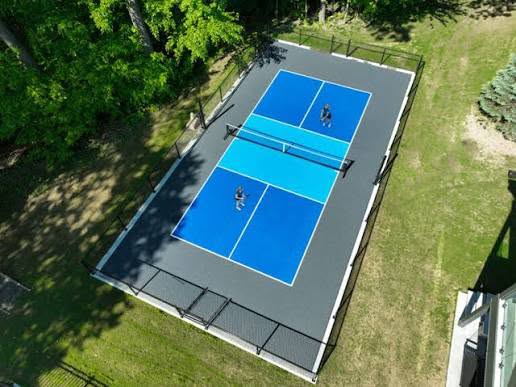
Pickleball Court
Recent Job
Before & After From Our Job Sites
Pulled straight from work across our North Carolina footprint — driveways in Hickory, pool decks around Lake Norman, patios in Concord, porches in Matthews. Drag the handle on each pair and you're looking at the same site the day we showed up versus the day we left.
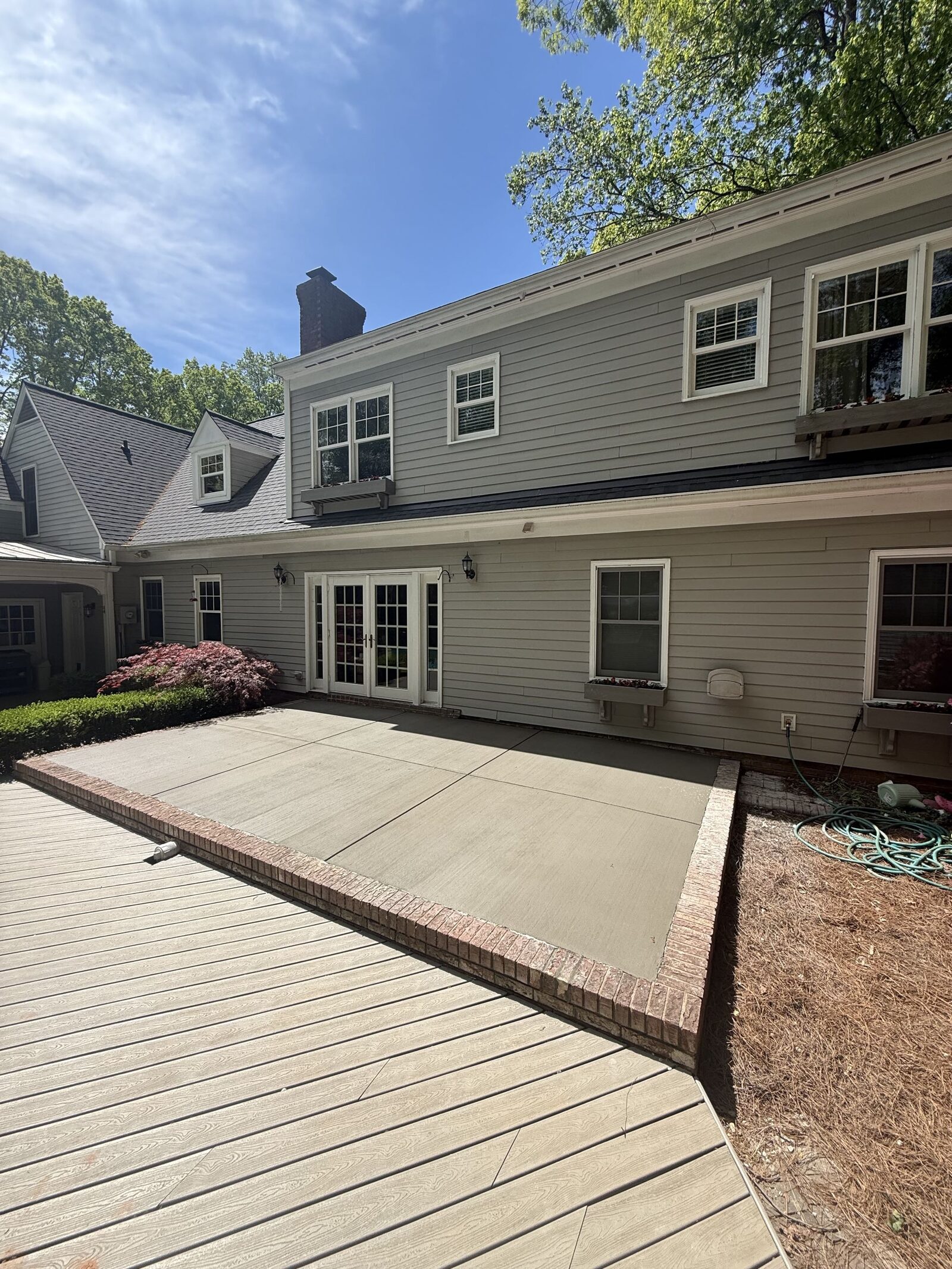

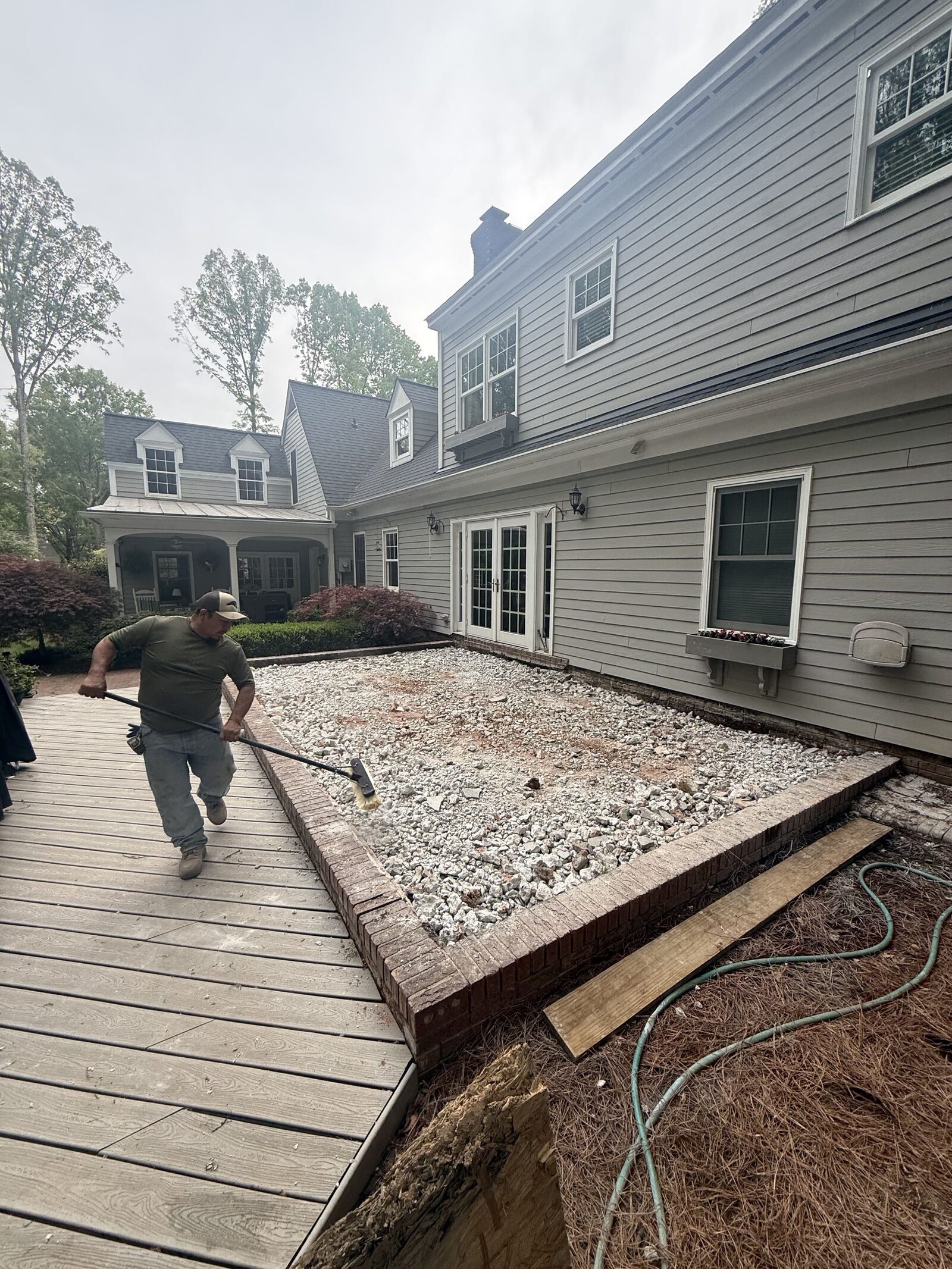
Backyard Patio
Complete tear-out, fresh pour finished with a brick border
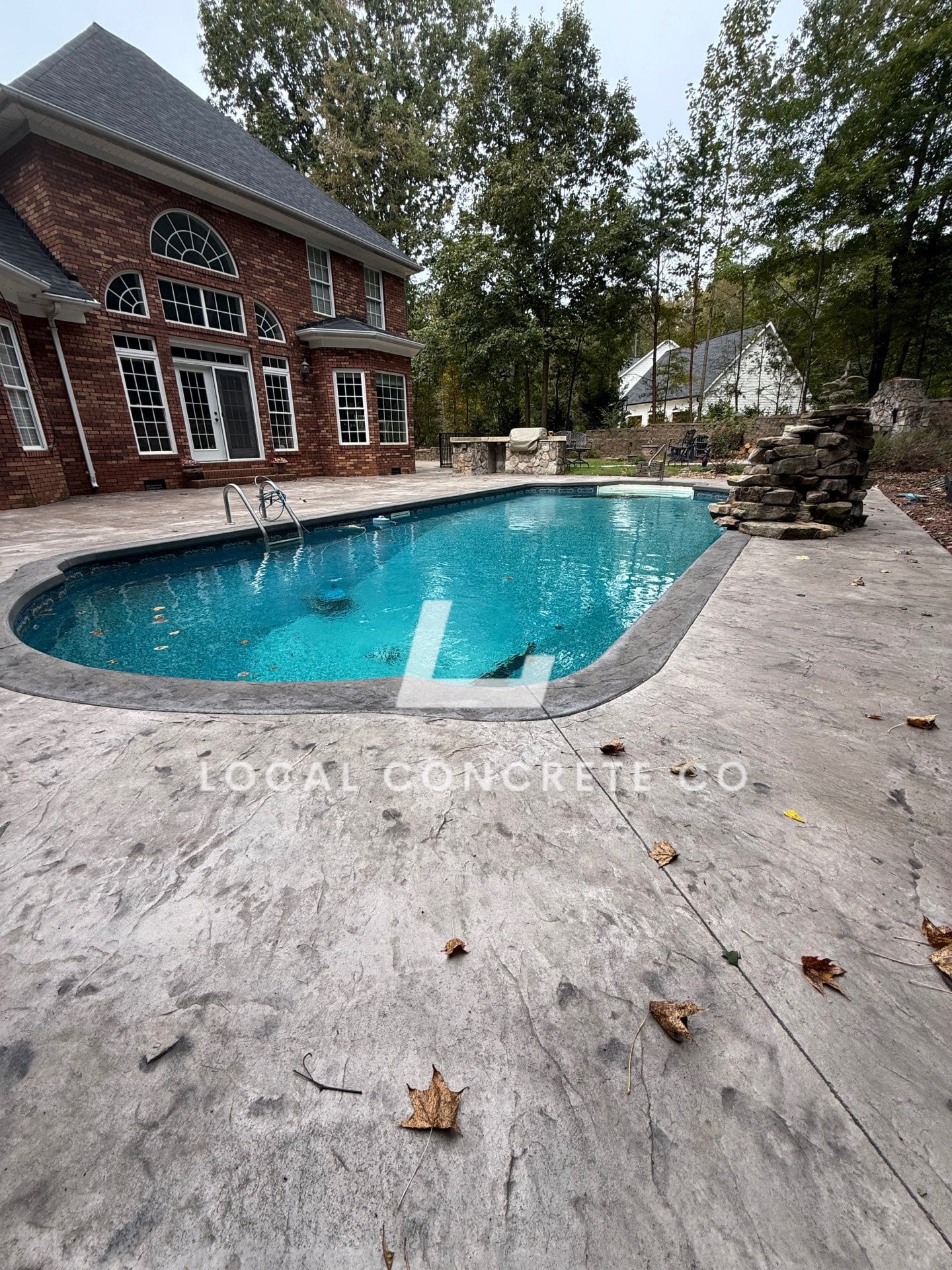
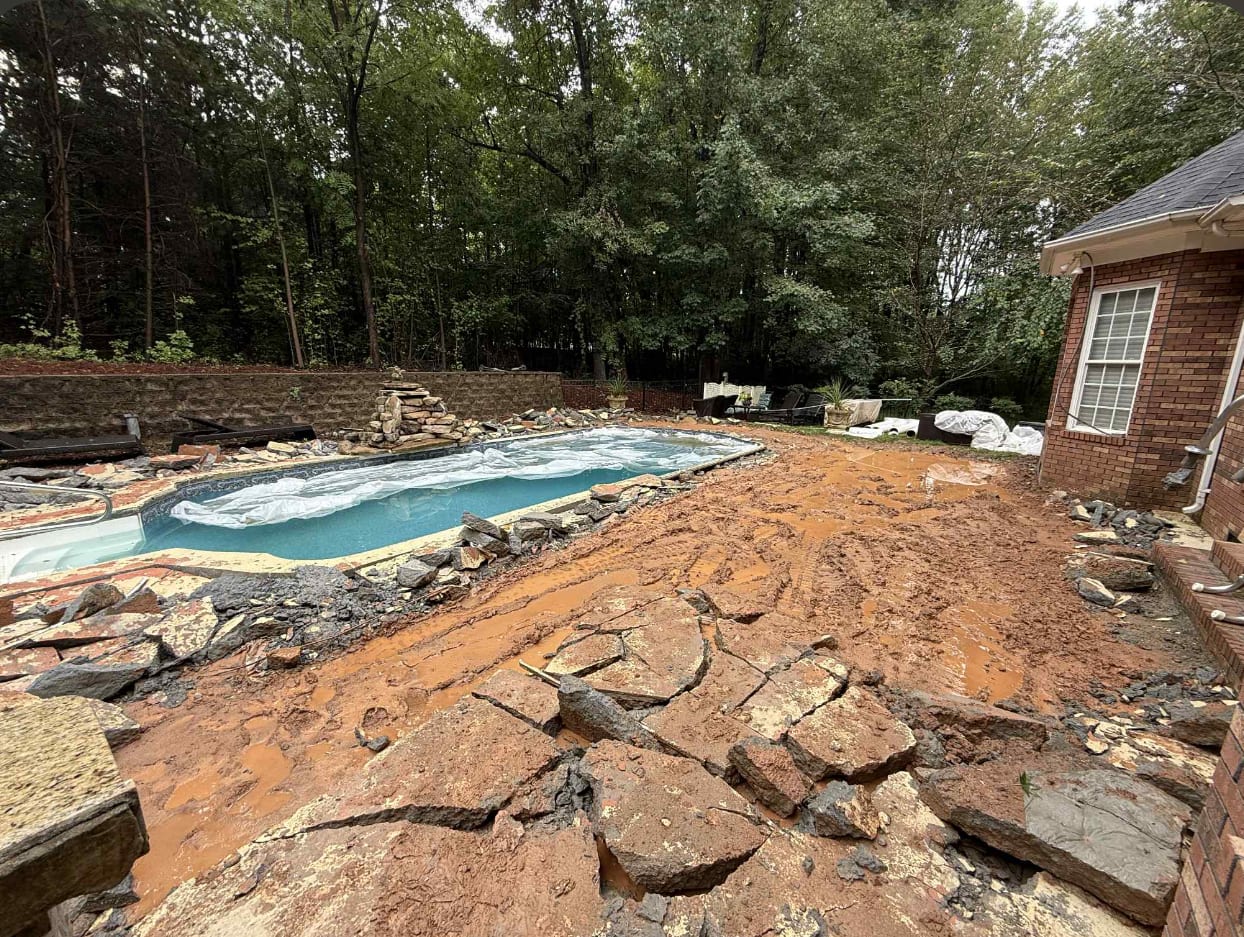
Stamped Pool Deck
Worn deck swapped for a textured stamped finish
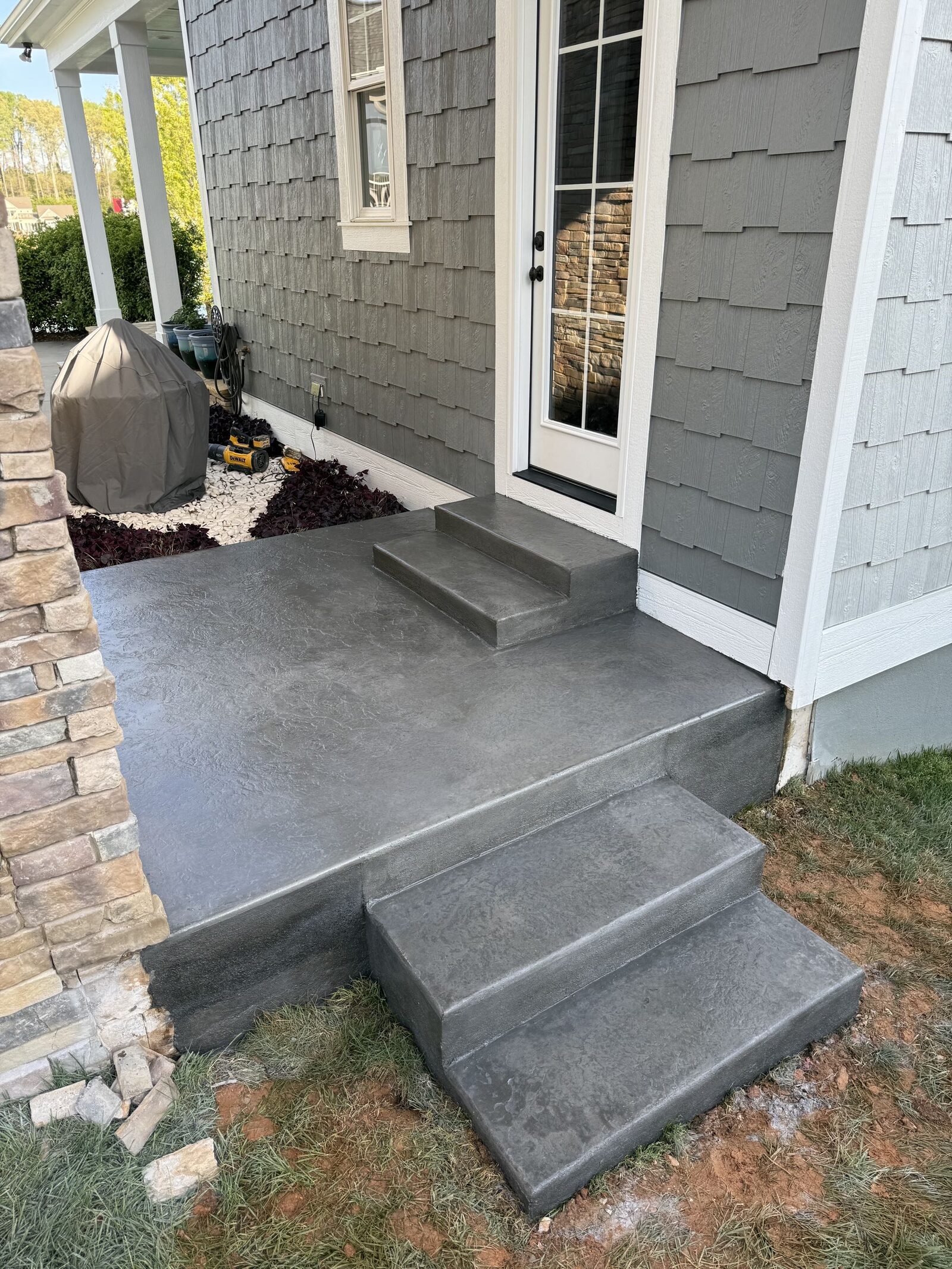
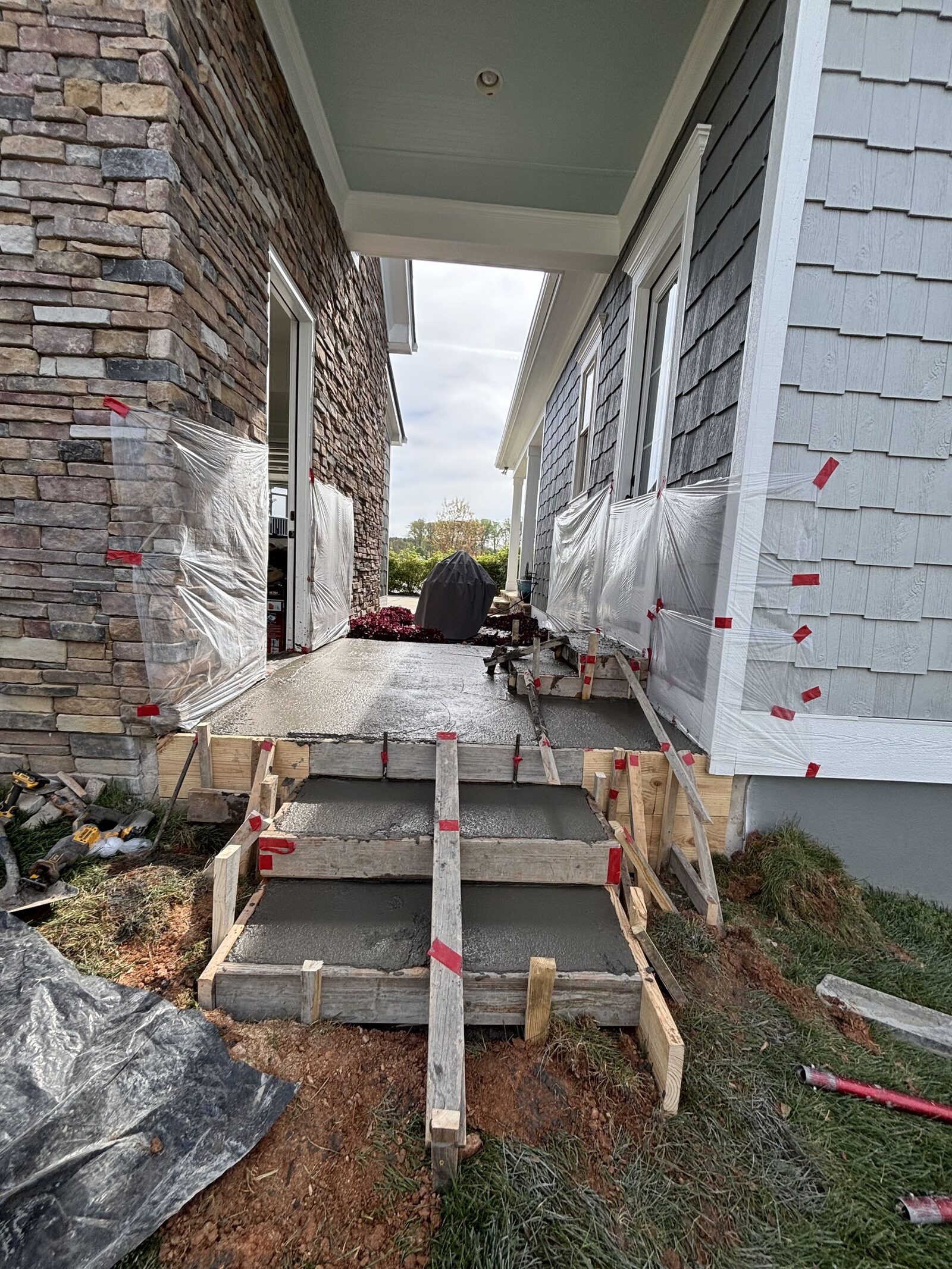
Front Porch & Steps
Entry pad poured new, steps formed up to the door
On paper a pickleball pad is one of the friendlier slabs to pour — rectangular, flat, no vehicle load, and once the acrylic is on top the freeze-thaw exposure is mild — but the failures we get called out to across Mecklenburg and Union counties all trace to the same short list of shortcuts: undersized pad, wrong slope direction, no isolation between the slab and the fence footings, mesh where the spec called for rebar, or a base that never hit a real compaction standard. Regulation playing area is 20 by 44 feet, but the pad you should actually order is 30×60 (1,800 SF minimum), with 34×64 preferred anywhere you want tournament-comfortable run-back and side buffers. The extra concrete adds very little to the overall build cost and it is the difference between a court that plays like a real court and one that feels cramped from opening day.
Local Concrete Charlotte scopes pickleball builds from SouthPark and Myers Park backyards out to HOA amenity centers in the Ballantyne and Providence corridors and private courts in Matthews, Mint Hill, Weddington, and Huntersville. Each project opens with a site walk covering pad orientation (long axis north-south so the sun stays off the servers' eyes), grade and drainage, the local red-clay subgrade condition, tree and root proximity, access for the ready-mix truck, and how the pad gets finished after cure — acrylic color coat by a court-surfacing crew is the standard next step. You get a written spec before any dirt moves covering pad dimensions, slope, base build, thickness, reinforcement, joint pattern, mix design, net-post sleeves, fence-post isolation, and finish. Nothing due up front, nothing vague on the invoice, and no marketing gloss on the spec sheet.
Pickleball Court Slab Specs We Pour
Whether the acrylic on top lasts 8-12 years or gives out inside 3 is decided by the pad underneath. Nail the size, slope, thickness, and reinforcement and the surfacing coat holds; miss any of them and it does not.
- Standard residential court — 30×60 footprint (1,800 SF), a 20×44 playing box framed by 5-ft margins on the sides and 8-ft clearance behind each baseline
- Tournament-comfortable court — 34×64 footprint (2,176 SF), stretched to 7-ft side margins and 10-ft baseline clearances
- Two-court side-by-side — 60×64 footprint (3,840 SF) with a 10-ft dividing strip down the middle
- Multi-sport pad — pickleball striping combined with a hoop key, typically running 30×60 through 40×70 based on how the goal is set up
- Driveway-conversion court — a current driveway pushed out or repoured until it lands at court measurements
- HOA and church rec courts — 30×60 or 34×64 including extra sleeves for four-court fence runs
Every pad we set shares the same underlying spec: 4-inch minimum thickness (5-inch on any court running fence posts embedded through the pad), 4,000 psi mix, #4 rebar on 16-inch centers or wire fabric mat as a written second choice, sawcut control joints on a 12×12 grid, 1% side-to-side slope (never net-to-net), and cast-in-place net-post sleeves so the acrylic coat can wrap the sleeve without cracking around it.
Base Prep, Drainage, and Why Most Courts Crack Early
What kills pickleball pads early across the Piedmont is almost always the base. Pour straight onto unimproved red clay or a token 2 inches of loose stone and settlement cracks show up inside the first year — and the moment those cracks reach the acrylic finish the entire court has to be resurfaced, not patched.
Our base spec: strip 8-10 inches of topsoil, compact the subgrade to 95% Proctor, install and grade 4-6 inches of #57 washed stone as a drainage layer, compact again in 2-inch lifts, then pour on top. The stone layer is doing two jobs at once — spreading point loads from any future fence footings and giving groundwater a path out from under the slab instead of sitting there through a wet Charlotte winter.
Slope direction gets underestimated more often than anything else on the plan. The pad has to fall 1% (about 1 inch of drop over 8 feet) side-to-side, never net-to-net. Slope it toward the net and every thunderstorm leaves a puddle sitting across the entire playing surface, cutting years off the acrylic. Perimeter drainage — a French drain on the low side, or at bare minimum a graded swale that carries water 10 feet clear of the pad — is what keeps the base dry through our spring rains and hurricane-season downpours.
Get your free quote
We respond in less than 2 hours.
Why Local Concrete Co?
- 01.Nine NC locations, one trade
- 02.Line-item pricing, nothing hidden
- 03.One foreman from bid to walkthrough
- 04.Pay after the pour, never before
Net Posts, Fence Footings, and Isolation Detail
Two details separate a pad built for a real installation from a generic slab that turns into a problem the day the fence crew shows up.
Net-post sleeves get cast into the pad during the pour, not drilled in later. We embed schedule-40 or schedule-80 steel sleeves (sized to whichever specific net-post system the owner has picked — usually 2-3/8 inch or 3-1/2 inch OD) at exact court centerline, 22 feet from each baseline, wrapped in a foam collar so any slab movement will not crack around the sleeve. Skip that step and rely on a crew drilling sleeves into cured concrete a few weeks later and you have the fastest known way to spider-crack a brand-new pad.
Fence posts are the other detail. On any court where the perimeter posts drop through the pad or right up against its edge, an isolation joint has to sit between the slab and each fence footing. Fence posts move on their own timing as the clay expands and contracts through the seasons — tie them rigidly to the pad and a crack radiating from every post is guaranteed within two winters. The correct detail is fence footings poured as separate concrete columns 6-12 inches outside the slab edge with a joint sealant between the pad and any footing that sits close enough to matter.
Finish, Surfacing Handoff, and Timeline
The slab finish on our end is a light broom or a steel-trowel-then-broom — not a hard trowel, which polishes the surface too tight for acrylic to bond into. The pad hands off to the surfacing crew with a written cure and moisture-test protocol so they can move without endless back-and-forth about readiness.
Cure and dry times are non-negotiable. Acrylic pickleball surfacing systems (nova, plexipave, deco color, and equivalents) will only bond to a slab that has reached a specific moisture level — typically 28 days minimum cure plus a calcium-chloride or in-situ RH test showing less than 3 lbs / 1000 SF / 24 hours or below 75% RH. Rushing the coating is the single biggest reason surfacing systems fail inside the first year, and the fault is not with the concrete crew — it is with a surfacing crew being pushed to start before the pad is actually ready.
Slab timeline: 1 day layout and dig, 1-2 days base build and compaction, 1 day form and reinforcement set with inspection, 1 day pour and finish, then 28 days cure before surfacing. Total slab-only project window is 5-7 working days plus cure. Full turnkey installation (slab + surfacing + net + fence) is typically 6-10 weeks depending on surfacing crew availability and weather.
Why Homeowners, HOAs, and Rec Facilities Work With Us
Local Concrete Charlotte pours residential and light commercial jobs across the entire metro — backyard courts inside 485 in Dilworth and SouthPark, HOA amenity builds in the Ballantyne and Providence corridors, church rec pads, private-club courts in Weddington and the Union County suburbs, and multi-court community centers. Every court we pour carries the same commitments regardless of scope.
Nothing collected up front. The invoice is settled after the pad clears our walk-through and the sleeves land right where your net-post kit calls for them.
Spec sheet in hand before we break ground. Court measurements, slope direction and grade, stone build, thickness, rebar type and spacing, joint pattern, sleeve placement, isolation detail, and the mix design are all documented on paper before any equipment rolls in.
Handoff aligned with whoever is coating your court. If a surfacing outfit is already booked, we release the pad with the finish and moisture-test protocol they will need on their end. If nobody is booked yet, we can list reputable NC-based surfacing crews we have released pads to previously.
Carrying full NC licensing and insurance. GC coverage, product liability, workers comp on every crew member, and site cleanup all built in — no surprise "disposal fee" or "cleanup fee" lines appearing on the invoice after the pour is done.
Pickleball Court
FAQ
The questions North Carolina homeowners actually ask us about pickleball court — slab thickness, Piedmont clay prep, cure-time realities, deposit terms, and what the difference is between a pour that lasts a decade and one that cracks the first winter.
Get Free QuoteHow big does a backyard pickleball court need to be?
Playing area itself is 20 feet by 44 feet, but the pad you should be pouring is 30 feet by 60 feet (1,800 SF) at a minimum. That gets you 5-foot side buffers and roughly 8-foot baseline run-back, which is the smallest layout that still plays like a real court. If the lot supports 34×64 (2,176 SF), pour that instead — the extra concrete is a tiny fraction of the total build cost and it turns a court that feels tight every time somebody chases a lob into one that runs comfortably for competitive doubles.
What does a full pickleball court cost in North Carolina?
Which direction should a pickleball court slab slope?
How thick does the slab need to be?
When can the surfacing crew start coating the slab?
Do you install the net, fence, and acrylic surfacing too?
Ready to price your pour?
Walk-and-bid is free, no deposit at booking, and you only pay after you sign off on the finished slab.
Get Free Quote