



Concrete Basketball Court Installation
A basketball pad fits lake life better than most people expect — it doubles as trailer parking, overflow guest space, and the flattest spot on a sloped lot. We build courts across the Lake Norman area, from half courts beside Huntersville driveways to full HOA amenity courts, handling the grading and retaining needed to bench a level pad into a hillside. Slabs are reinforced for play, the goal anchors in a separate footing so rattle never reaches the slab, and finishes take paint or acrylic cleanly. Plan on paper, then the pour — the bill shows up when the court is playable.
Get your free quote
We respond in less than 2 hours.
Recent Basketball Court Projects
Real customer jobs we've poured. Swipe through and picture yours next.
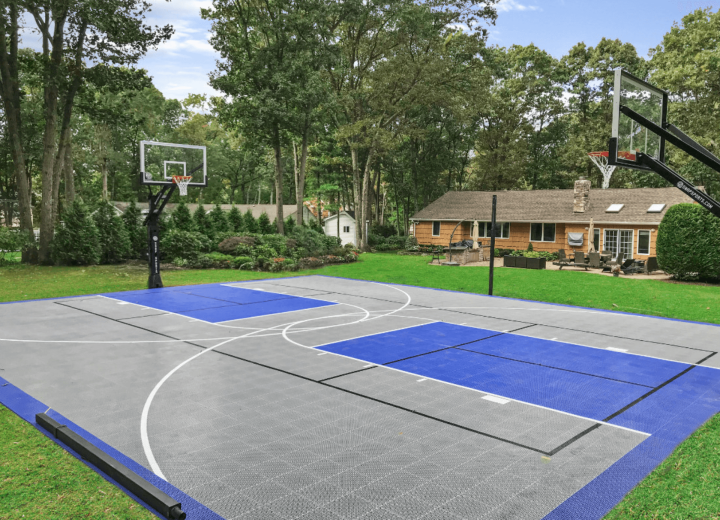
Basketball Court
Recent Job
Before & After From Our Job Sites
Pulled straight from work across our North Carolina footprint — driveways in Hickory, pool decks around Lake Norman, patios in Concord, porches in Matthews. Drag the handle on each pair and you're looking at the same site the day we showed up versus the day we left.
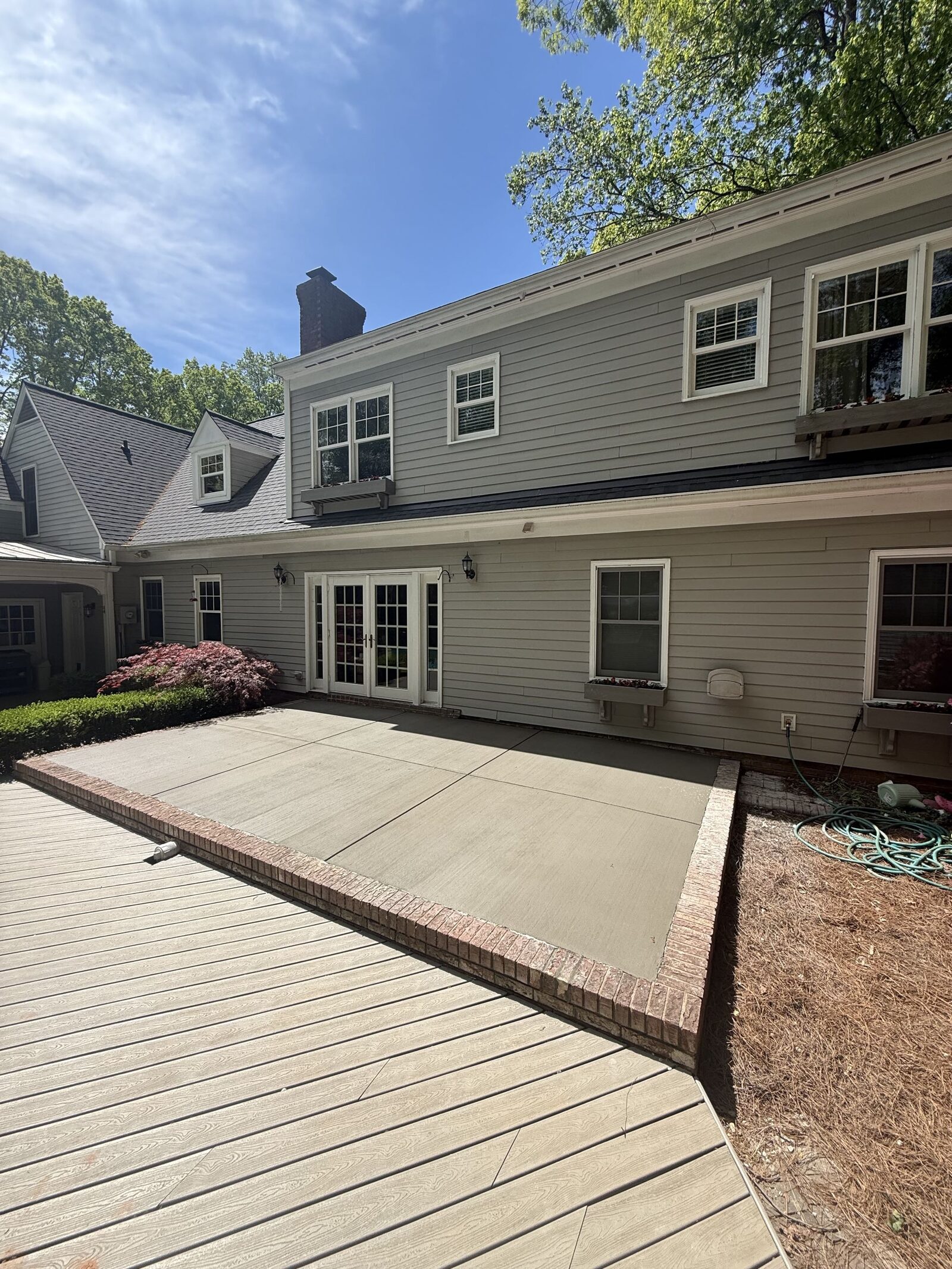

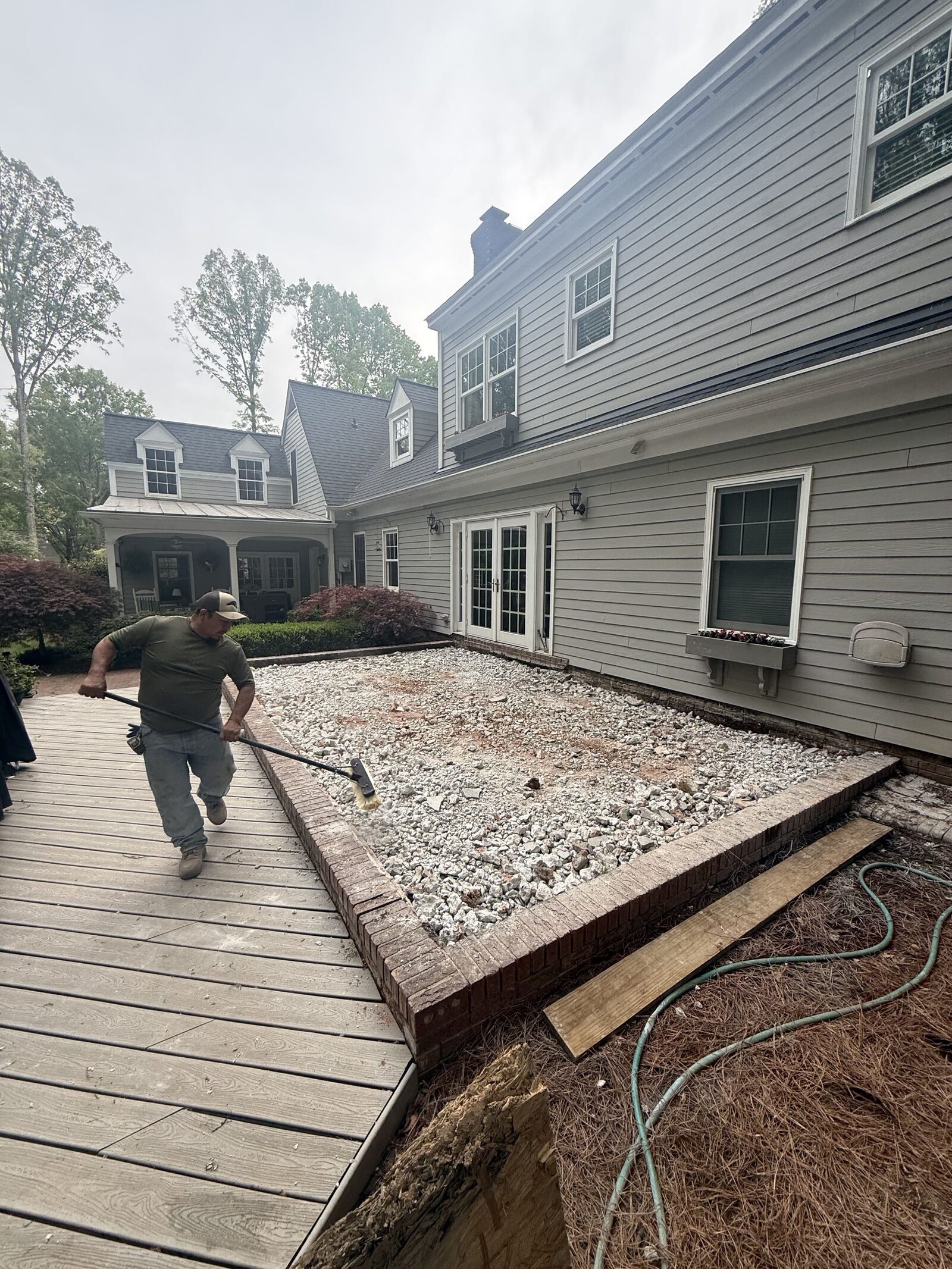
Backyard Patio
Complete tear-out, fresh pour finished with a brick border
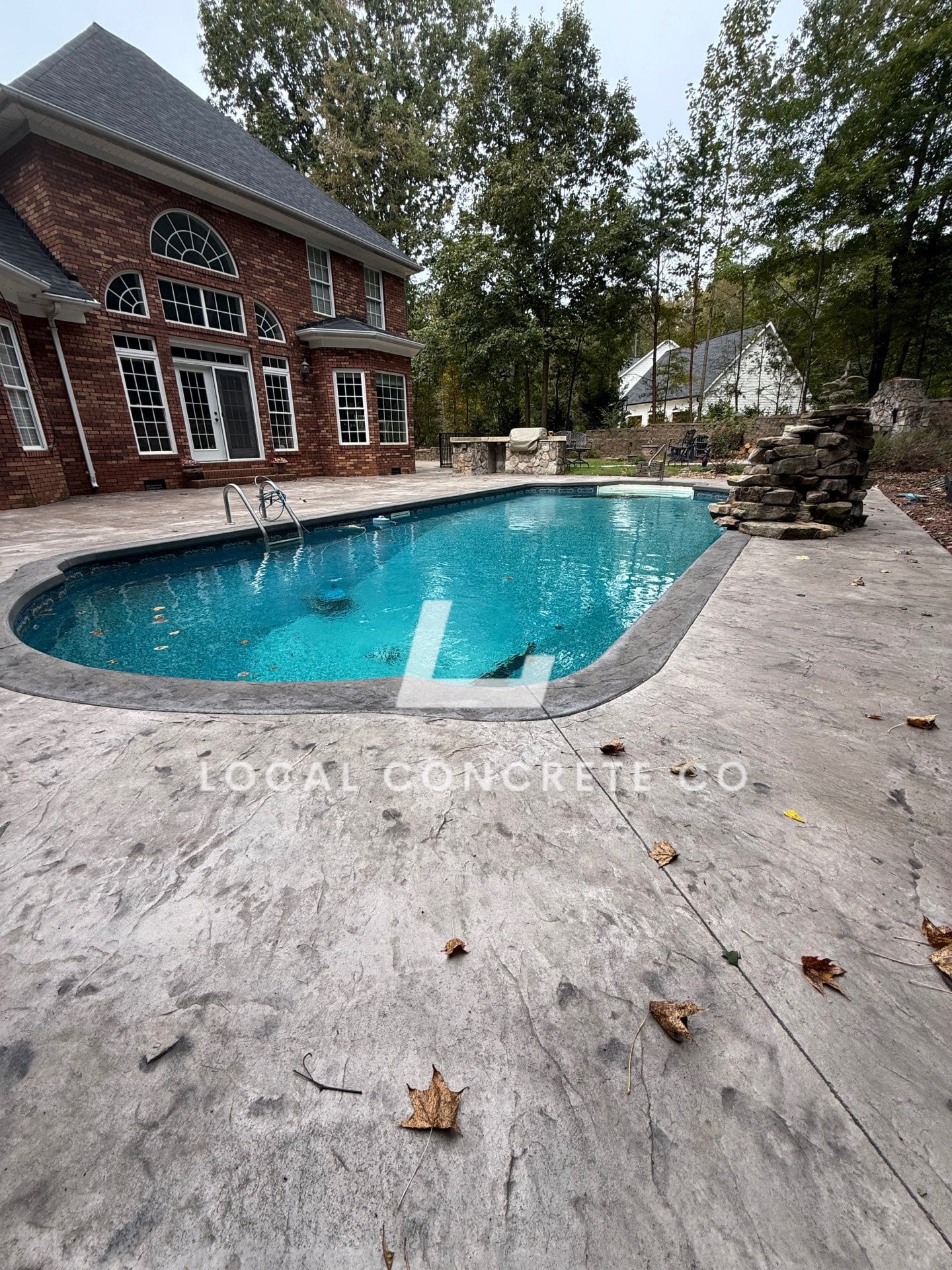
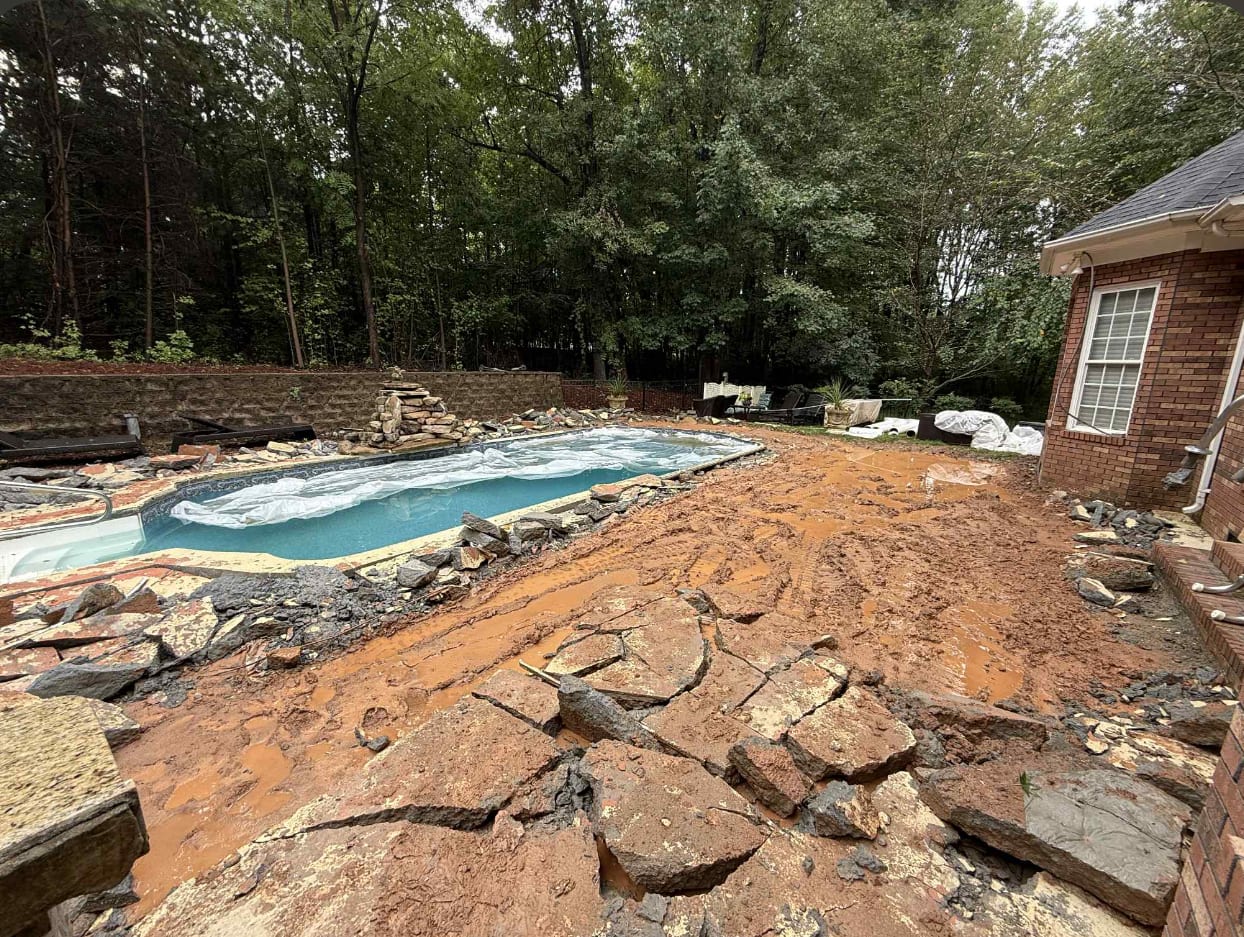
Stamped Pool Deck
Worn deck swapped for a textured stamped finish
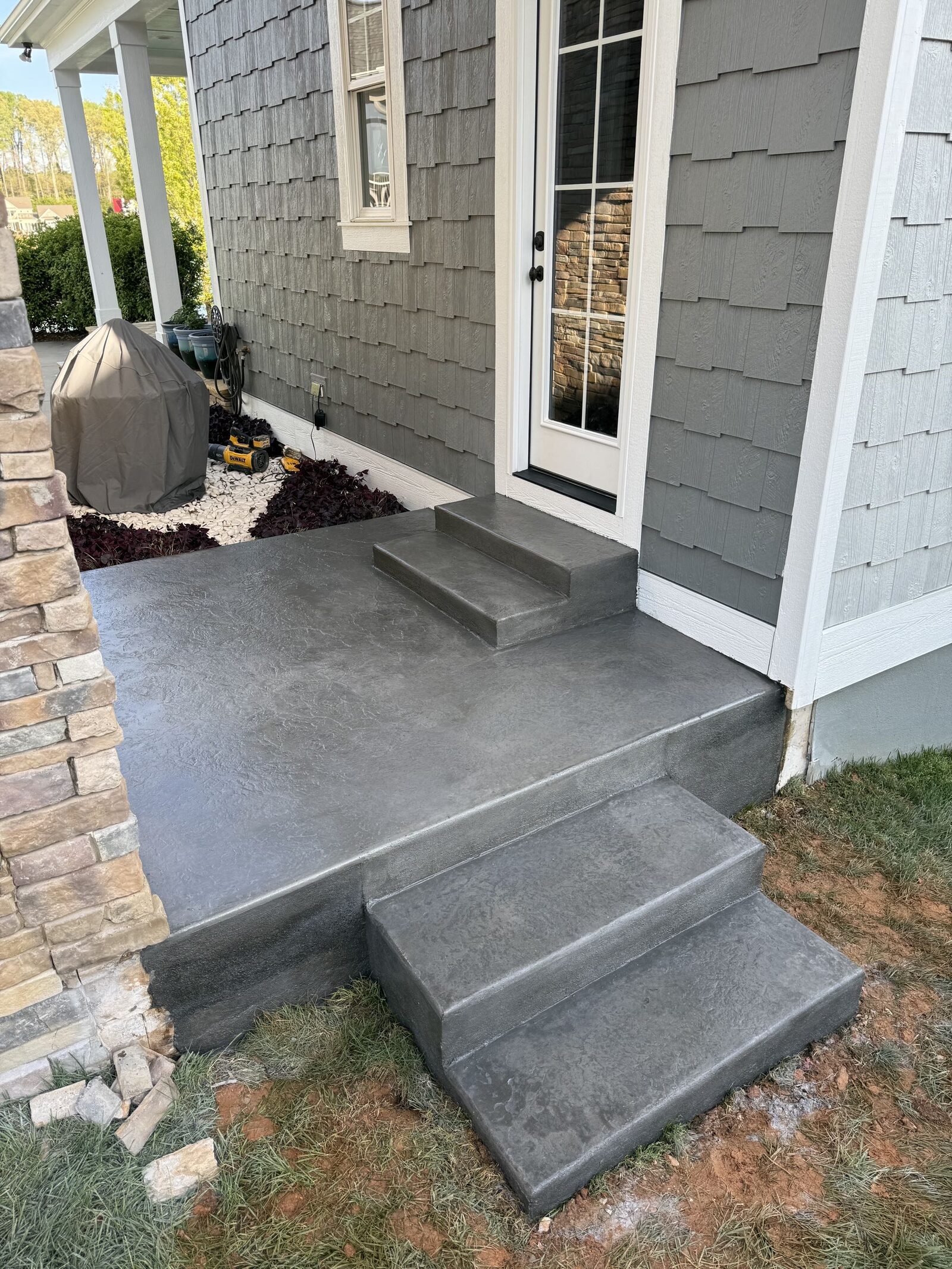
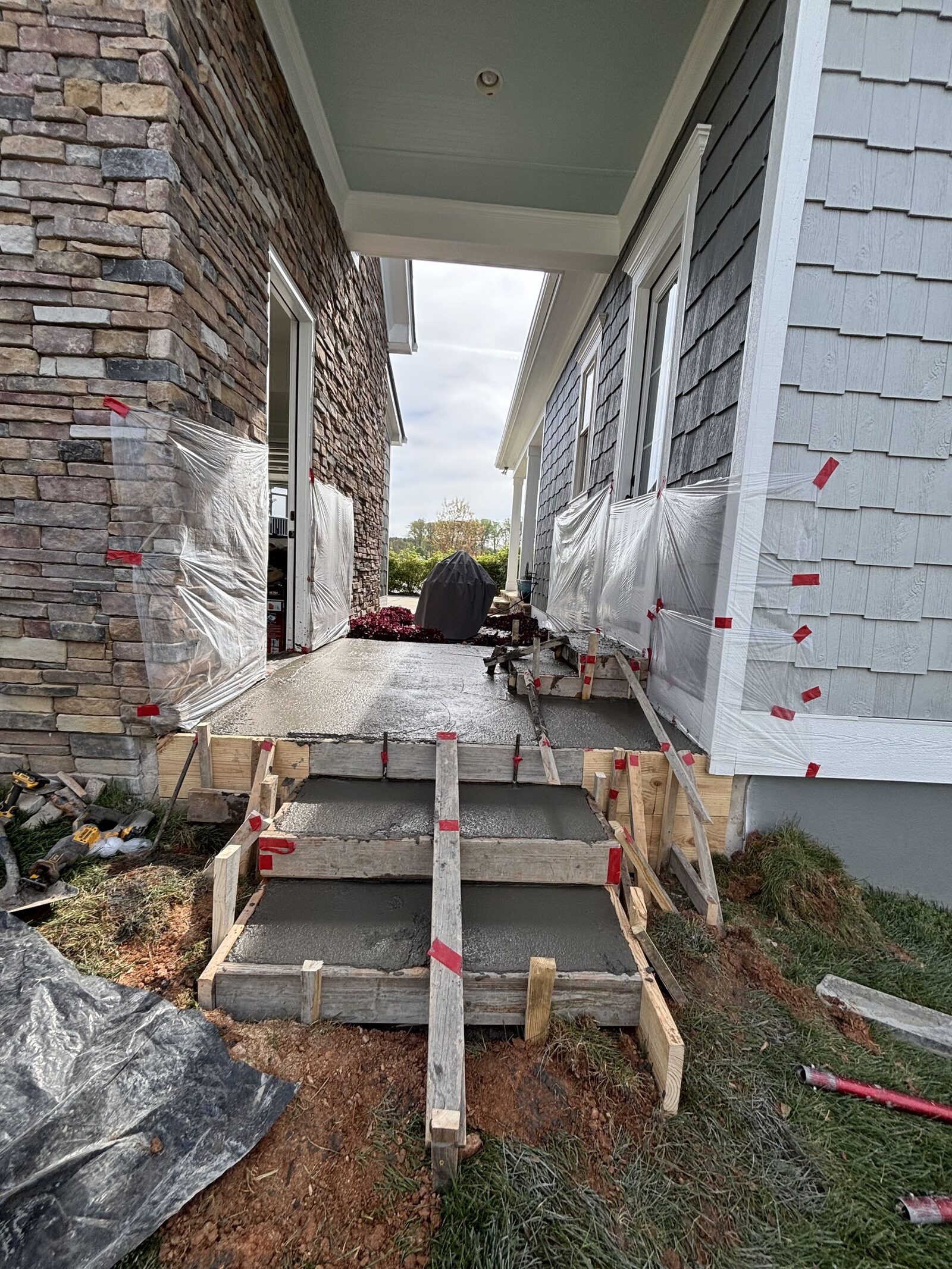
Front Porch & Steps
Entry pad poured new, steps formed up to the door
Charlotte homeowners routinely underestimate how much slab a real hoop pad demands. The concrete has to take the repeated bounce of a ball hammering the same spot, carry the concentrated load of a heavy in-ground pole base, and hold flat for a decade through Piedmont summer heat and the handful of hard freeze cycles Mecklenburg and Union counties see each winter. When a court cracks up early, the trail almost always leads back to one of three things: a slab poured too thin, a hoop footing that was tied monolithically into the surrounding pad, or a base that never saw a real compactor. Regulation NBA half-court dimensions run 50 by 47 and a full court is 50 by 94, but backyard builds we pour across South Charlotte and the suburban ring cluster at three sizes: a 30×30 hoop pad, a 30×50 half court with a painted key, and a 50×60 half court with a real three-point arc — each with its own slab spec and hoop-mount detail.
Local Concrete Charlotte scopes hoop-pad pours from Ballantyne and Providence out through Matthews, Mint Hill, Weddington, and the Union County suburbs. Every job starts with a site walk covering rim orientation (long axis north-south so late-afternoon sun stays off the shooter's eyes), yard grade, drainage away from the house, subgrade condition in the local red clay, hoop location relative to the sight lines, tree-canopy interference from mature oaks, and the surfacing plan — modular sport tile, poured acrylic coating, or a bare broom-finish court all share the same slab spec but change the finish handoff. Before the excavator shows, you get a written spec covering pad dimensions, slope, base build, thickness, reinforcement, joint pattern, hoop-footing detail, and finish. Nothing up front, and the invoice reads item by item so there is no guessing on scope.
Basketball Court Slab Sizes and Specs We Pour
Sizing the pad is a balance between the game you want to run and what the lot will actually accommodate — a Myers Park backyard hemmed in by mature trees plays very differently from a two-acre Weddington lot with room to spare. Locking the slab spec to the size and play pattern is what keeps a court playing like a real court instead of spider-cracking into year three.
- Hoop pad — 30×30 (900 SF), fits one rim with a legitimate free-throw shooting zone and enough footprint for casual one-on-one
- Backyard half court — 30×50 (1,500 SF), sized for a painted key, a three-point line, and grown adult play
- Regulation-style half court — 50×47 (2,350 SF), matches full NBA half-court measurements including the arc, painted key, and complete baseline strip
- Small full court — 50×74 (3,700 SF), a trimmed high-school-style two-basket setup
- Regulation full court — 50×94 (4,700 SF), NBA and college dimensions end to end, generally reserved for HOA or club builds
- Driveway-conversion court — an existing drive extended or repoured until it meets court measurements
- Multi-sport pad — hoop lines combined with pickleball striping on a 30×60 or 34×64 footprint
Every pad we set shares the same underlying spec: 5-inch minimum thickness (6 inches on any court running a full in-ground hoop base embedded through the slab), 4,000 psi mix, #4 rebar on 16-inch centers, sawcut control joints on a 12×12 grid, 1% slope in one direction for drainage (across the pad, never toward the hoop-side sideline), a broom or steel-trowel-then-broom finish depending on the surfacing plan, and cast-in-place hoop footings poured before or during the slab pour.
Base Prep, Drainage, and Why Most Courts Crack Early
The number-one killer of hoop pads across the Charlotte metro is what sits under the slab. Pour on unimproved Piedmont clay or on a token 2 inches of loose stone and settlement cracking shows up before the first summer is out — and the concentrated weight of a full-size in-ground hoop base amplifies the damage, sinking the slab unevenly right around the pole before it does anywhere else on the pad.
Our base spec: strip 8-10 inches of topsoil, compact the subgrade to 95% Proctor, install and grade 4-6 inches of #57 washed stone as a drainage layer, compact again in 2-inch lifts, then pour on top. Under the hoop footprint specifically the stone base gets deeper (6-8 inches) because a full-size in-ground hoop with a 4×4×48-inch anchor puts a serious point load on that one spot every time the rim gets used.
Drainage direction is not negotiable. The pad has to fall 1% (about 1 inch of drop over 8 feet) in one chosen direction so water runs off. Slope it toward the hoop and you get a puddle sitting on the free-throw line every rainstorm; leave it dead flat and standing water at the low spots eats the finish. Perimeter drainage — a French drain along the low side, or at minimum a graded swale carrying water 10 feet clear of the pad — is what keeps the base dry across our wet spring stretches and afternoon thunderstorm season.
Get your free quote
We respond in less than 2 hours.
Why Local Concrete Co?
- 01.Nine NC locations, one trade
- 02.Line-item pricing, nothing hidden
- 03.One foreman from bid to walkthrough
- 04.Pay after the pour, never before
Hoop Footings, Anchor Detail, and Why They Are a Separate Pour
The single detail that decides whether a hoop pad holds together long-term or cracks at the pole within the first year is how the hoop footing gets tied into the surrounding slab.
In-ground residential hoops (Goalrilla, Goalsetter, Ryval, Silverback, and equivalents) call for a 4×4-foot to 4×5-foot footing driven 48 inches deep — well below frost line anywhere in the Charlotte region — with a J-bolt or anchor-plate assembly cast into the concrete. That footing must be poured as its own concrete column with an isolation joint separating it from the surrounding pad — never poured monolithic with the slab. The pole footing shifts on its own timing as the surrounding clay swells wet and shrinks dry through the year; tie it rigidly into the slab and a crack radiating out from the base is guaranteed within a winter or two.
The correct sequence: dig and pour the hoop footing first with the anchor bolts set to the manufacturer's exact template, let it cure for the manufacturer-specified minimum (typically 48-72 hours), then pour the surrounding slab with a 1/2-inch closed-cell foam isolation strip around the entire footing perimeter and a sawcut or tooled control joint radiating out to the nearest slab edge. Portable hoops that skip the footing are simpler — the slab just has to be thick enough (5-inch minimum) to take the concentrated wheel load and any hoop-tipping stress.
Finish, Surfacing Options, and Timeline
For a residential hoop court there are three finishes worth considering, each with its own handoff off the slab.
Broom-finish concrete — the pad itself is the finished surface. Broom texture pulled perpendicular to the primary play direction, cure and seal at 28 days, ready for acrylic court paint striping. Least expensive, most durable, warmest underfoot in July. Best fit for casual driveway-style pads.
Acrylic color coat — same broom pad, then after 28-day cure and moisture test the concrete gets 2-3 coats of pigmented acrylic (Deco Color, Nova Court, Plexipave, or equivalent), striping in white, sealed with a clear topcoat. The standard finish for a real-play backyard court. The slab has to pass the same moisture test as pickleball courts (below 3 lbs / 1000 SF / 24 hours calcium-chloride or below 75% RH in-situ) before coating.
Modular sport tile (SnapSports, VersaCourt, Sport Court, and equivalents) — same broom slab, then skip the acrylic entirely. Interlocking polypropylene or PVC tiles snap over the cured pad with a small drainage gap underneath, install in 1-2 days, replaceable one tile at a time when a section wears out. Kinder on knees at the joints and cooler in the summer than bare concrete, but more expensive than the acrylic option.
Slab timeline: 1 day layout and dig, 1-2 days base build, 1 day hoop-footing pour, 2-3 days hoop cure, 1 day slab form and reinforcement set with inspection, 1 day slab pour and finish, then 28 days cure before any acrylic surfacing. Slab-only project window is 7-10 working days plus cure. Full turnkey installation (slab + surfacing + hoop + lines) runs 4-8 weeks depending on surfacing choice and crew availability.
Why Homeowners, HOAs, and Rec Facilities Work With Us
Local Concrete Charlotte runs residential and light commercial pours from inside 485 out through the entire suburban ring — backyard hoop pads in SouthPark and Dilworth, full half courts in Weddington and Huntersville, HOA amenity courts in the Ballantyne and Providence corridors, church rec pads, private-club builds, and multi-court community projects. Every court we pour comes with the same commitments regardless of scope.
Nothing collected up front. The invoice is settled after the work is done, once the pad clears our walk-through and the pole footing is bolted down to whatever the hoop maker requires.
Spec sheet in hand before we break ground. Court measurements, slope direction and grade, stone build, thickness, rebar type and spacing, joint pattern, pole-footing detail, isolation-joint layout, and the mix design are all documented on paper before any equipment rolls in.
Built to match your hoop kit. Whatever in-ground rig you have chosen — Goalrilla, Goalsetter, Ryval, Silverback, or a commercial-grade tower — we hit the manufacturer's anchor template exactly. Running a portable instead? We size the slab thickness for portable-hoop loads. Not decided yet? We can list residential and commercial units we have already anchored.
Carrying full NC licensing and insurance. GC coverage, product liability, workers comp on every crew member, and site cleanup all built in — no surprise disposal or cleanup lines showing up on the invoice after the pour is done.
Basketball Court
FAQ
The questions North Carolina homeowners actually ask us about basketball court — slab thickness, Piedmont clay prep, cure-time realities, deposit terms, and what the difference is between a pour that lasts a decade and one that cracks the first winter.
Get Free QuoteHow big does a backyard basketball court need to be?
There are three sizes that actually work in a Charlotte backyard. The smallest is a 30×30 hoop pad (900 SF) that gives you the hoop plus a real free-throw area. A backyard half court at 30×50 (1,500 SF) covers a painted key and a three-point line and plays like a proper half court. A regulation-style half court at 50×47 (2,350 SF) hits full NBA half-court dimensions with the entire three-point arc in place. If the lot supports it, 50×50 is the sweet spot for real-play backyard use. Anything tighter than 30×30 is really just a driveway hoop, not a court.
What does a concrete basketball court cost in North Carolina?
How thick does the slab need to be for a basketball court?
Should the hoop footing be poured with the slab or separately?
Can I convert my existing driveway into a basketball court?
What direction should a court face for playing?
Ready to price your pour?
Walk-and-bid is free, no deposit at booking, and you only pay after you sign off on the finished slab.
Get Free Quote