



Best Concrete Pickleball Court Contractors Hickory NC
Looking for a reliable concrete pickleball court contractor in Hickory, NC? We're Hickory NC's most reputable concrete pickleball court contractor. Free concrete pickleball court quotes in Hickory back in 24 hours. Honest pricing, clear communication, dependable service on every Hickory project.
Get your free quote
We respond in less than 2 hours.
Recent Hickory Pickleball Court Projects
Real customer jobs we've poured. Swipe through and picture yours next.
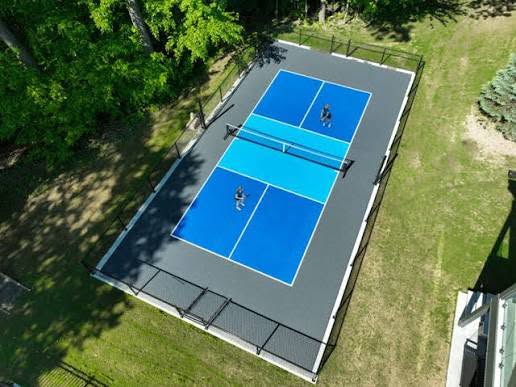
Pickleball Court
Hickory Job
(828) 475-8966
On paper a pickleball pad is one of the friendlier slabs to pour — rectangular, flat, no vehicle load, and once the acrylic is on top the freeze-thaw exposure is mild — but the failures we get called out to across Mecklenburg and Union counties all trace to the same short list of shortcuts: undersized pad, wrong slope direction, no isolation between the slab and the fence footings, mesh where the spec called for rebar, or a base that never hit a real compaction standard. Regulation playing area is 20 by 44 feet, but the pad you should actually order is 30×60 (1,800 SF minimum), with 34×64 preferred anywhere you want tournament-comfortable run-back and side buffers. The extra concrete adds very little to the overall build cost and it is the difference between a court that plays like a real court and one that feels cramped from opening day.
In Hickory specifically, pickleball court work runs through neighborhoods like Kenworth, Claremont Historic District, Forest Hills. Hickory sits in the Catawba Valley foothills, which means two things for concrete. That local ground truth — not a generic spec sheet — is what the crew builds against when they form up a Hickory court pour.
Pickleball Court Slab Specs We Pour
Whether the acrylic on top lasts 8-12 years or gives out inside 3 is decided by the pad underneath. Nail the size, slope, thickness, and reinforcement and the surfacing coat holds; miss any of them and it does not.
- Standard residential court — 30×60 footprint (1,800 SF), a 20×44 playing box framed by 5-ft margins on the sides and 8-ft clearance behind each baseline
- Tournament-comfortable court — 34×64 footprint (2,176 SF), stretched to 7-ft side margins and 10-ft baseline clearances
- Two-court side-by-side — 60×64 footprint (3,840 SF) with a 10-ft dividing strip down the middle
- Multi-sport pad — pickleball striping combined with a hoop key, typically running 30×60 through 40×70 based on how the goal is set up
- Driveway-conversion court — a current driveway pushed out or repoured until it lands at court measurements
- HOA and church rec courts — 30×60 or 34×64 including extra sleeves for four-court fence runs
Every pad we set shares the same underlying spec: 4-inch minimum thickness (5-inch on any court running fence posts embedded through the pad), 4,000 psi mix, #4 rebar on 16-inch centers or wire fabric mat as a written second choice, sawcut control joints on a 12×12 grid, 1% side-to-side slope (never net-to-net), and cast-in-place net-post sleeves so the acrylic coat can wrap the sleeve without cracking around it.
Base Prep, Drainage, and Why Most Courts Crack Early
What kills pickleball pads early across the Piedmont is almost always the base. Pour straight onto unimproved red clay or a token 2 inches of loose stone and settlement cracks show up inside the first year — and the moment those cracks reach the acrylic finish the entire court has to be resurfaced, not patched.
Our base spec: strip 8-10 inches of topsoil, compact the subgrade to 95% Proctor, install and grade 4-6 inches of #57 washed stone as a drainage layer, compact again in 2-inch lifts, then pour on top. The stone layer is doing two jobs at once — spreading point loads from any future fence footings and giving groundwater a path out from under the slab instead of sitting there through a wet Charlotte winter.
Slope direction gets underestimated more often than anything else on the plan. The pad has to fall 1% (about 1 inch of drop over 8 feet) side-to-side, never net-to-net. Slope it toward the net and every thunderstorm leaves a puddle sitting across the entire playing surface, cutting years off the acrylic. Perimeter drainage — a French drain on the low side, or at bare minimum a graded swale that carries water 10 feet clear of the pad — is what keeps the base dry through our spring rains and hurricane-season downpours.
Get your free quote
We respond in less than 2 hours.
Why Local Concrete Co?
- 01.Precision craftsmanship
- 02.Same crew from base through finish
- 03.Licensed & insured, dedicated project manager
- 04.Financing available
Our Pickleball Court Process in Hickory
Every pickleball court we pour in Hickory runs through the same 18 checkpoints — from the on-site consult through the final walkthrough.
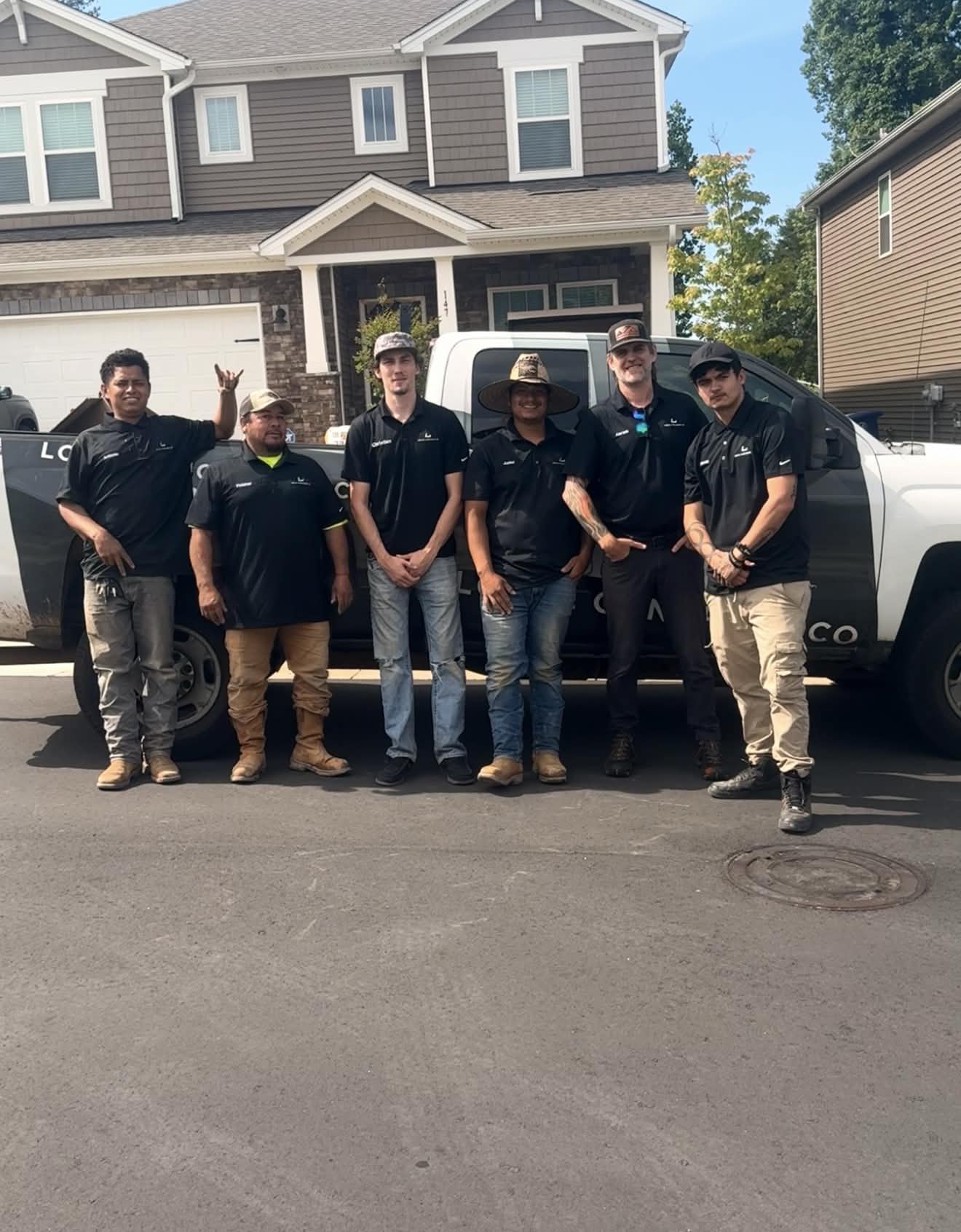
Walk the Site, Price It in Writing
It starts with boots on your Hickory lot. We laser-measure the footprint, size up any tear-out and how the trucks will reach the pour, then put one firm number in writing and email it over. No verbal ballparks that drift once the work begins.

Locking In Your Pour Date
Your Hickory slot goes on the calendar only after crew, pump, and a clean weather outlook all line up. If a storm system shows up in the forecast near pour day, you get a call and a new date before it becomes a problem — not an apology after.
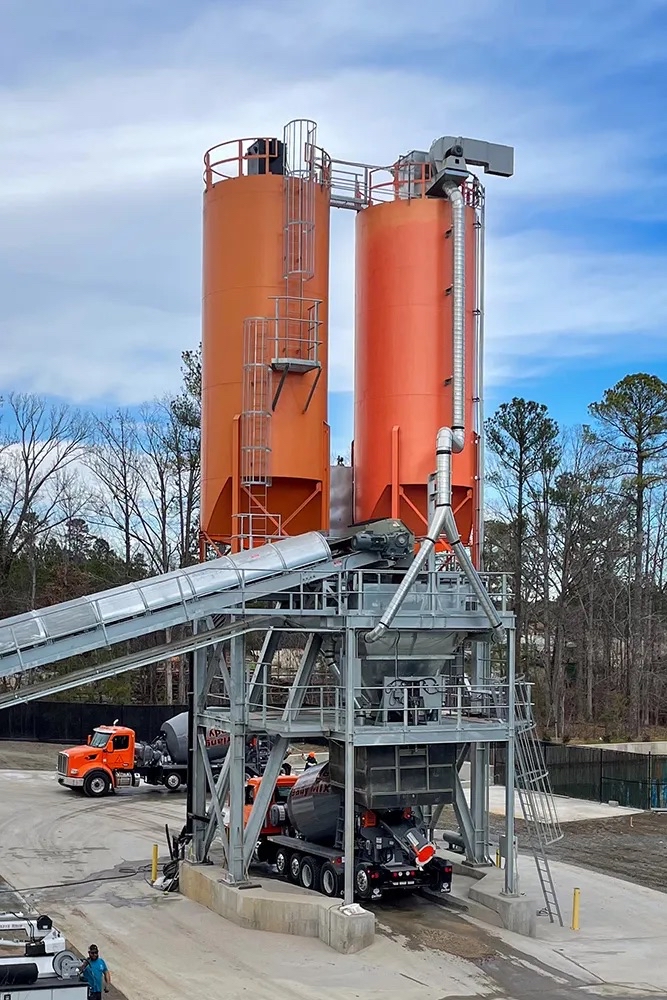
Dialing In the Mix
NC weather swings from muggy summer heat to genuine winter freezes, and the concrete has to be batched for the day it's placed. We call the plant ahead of your Hickory pour with the slump range, the entrained-air target, and any retarder the conditions call for.
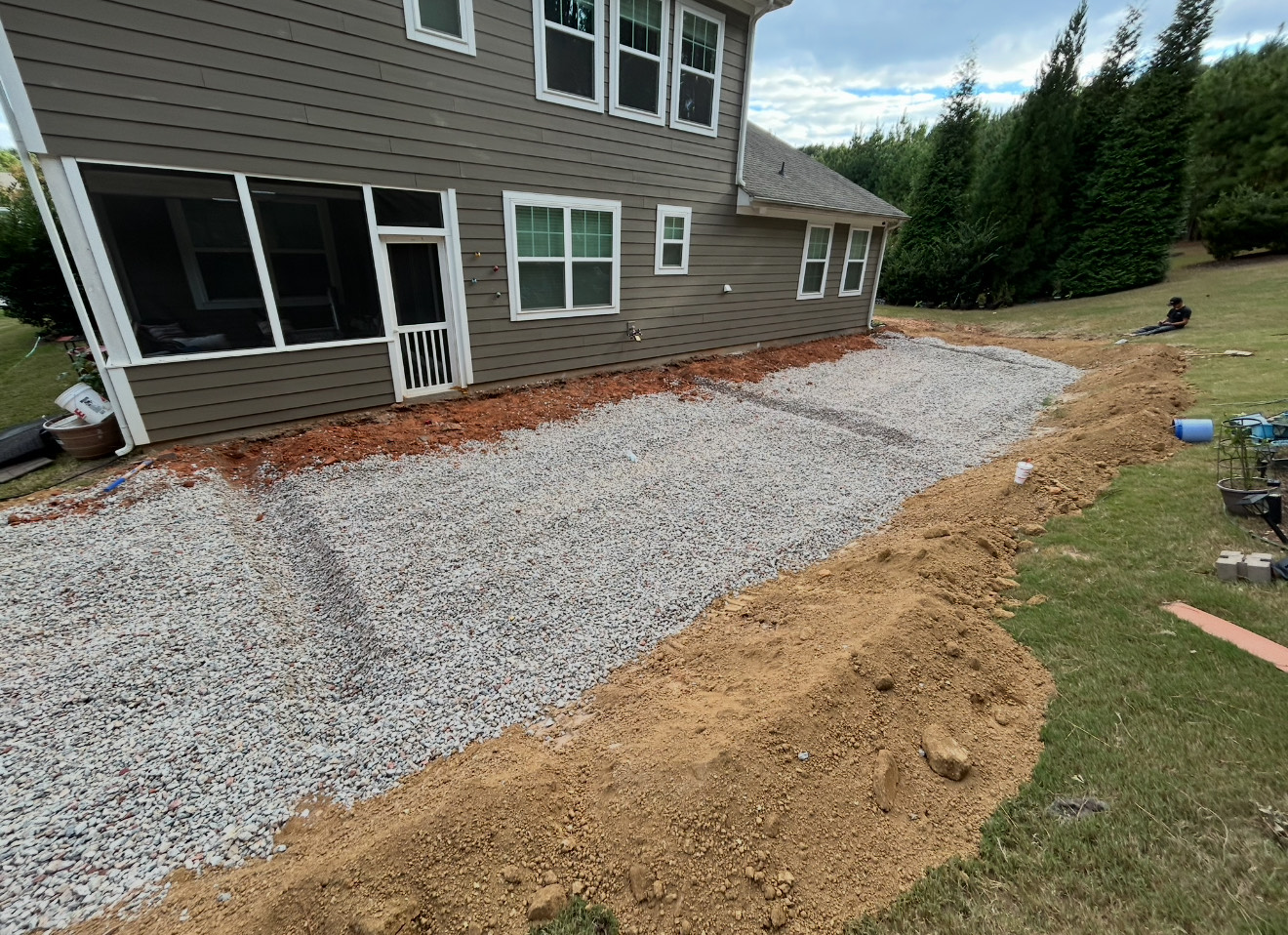
Protecting the Property First
Before any concrete moves, plywood goes down over lawn the pump line will cross and tarps cover the beds near your Hickory pad. The pump operator and the foreman agree on the approach route in advance, so nothing on your property pays for our access.
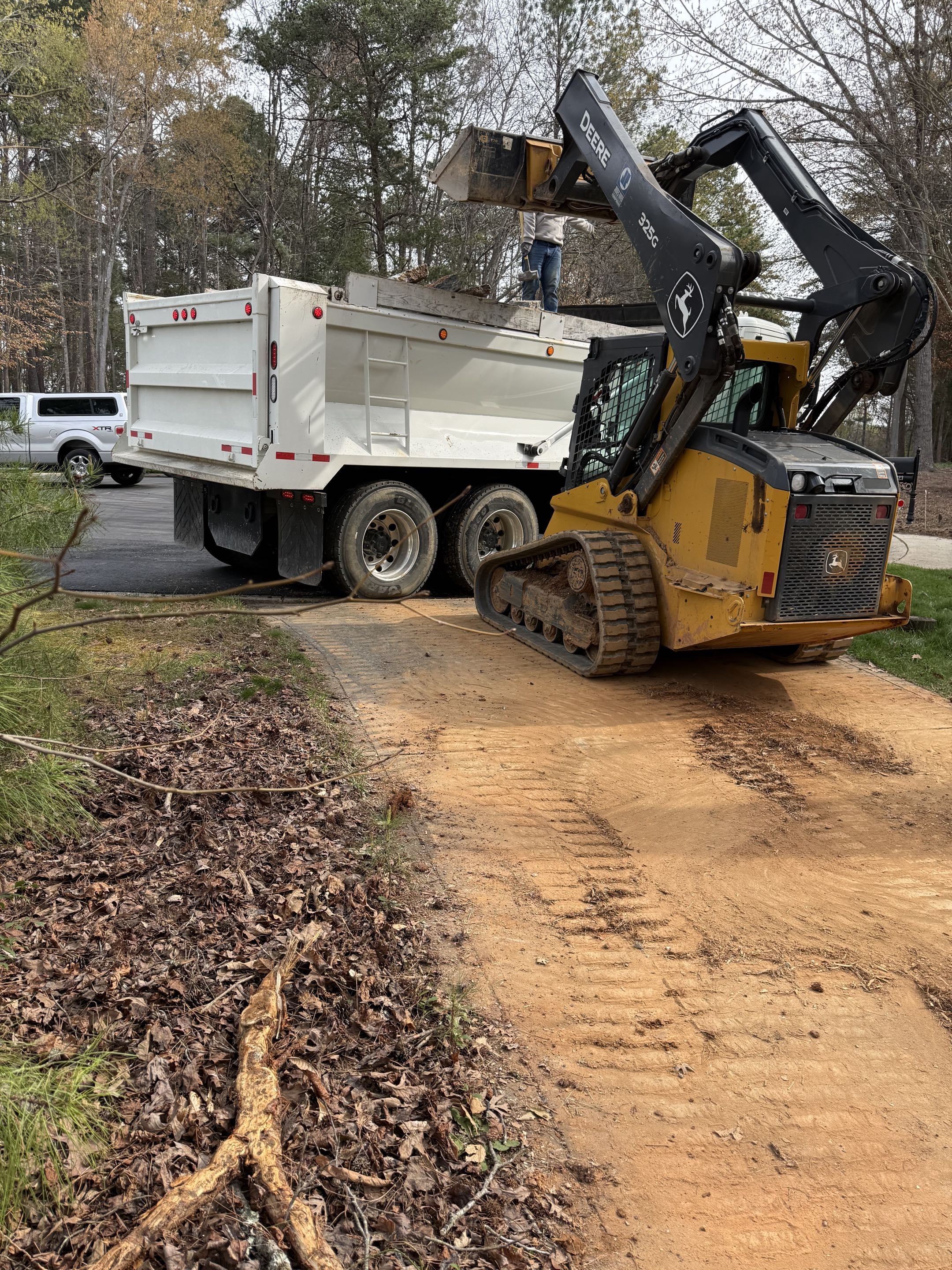
Tearing Out the Old Slab
A hydraulic hammer breaks up most old concrete at your Hickory address; heavily reinforced sections get saw-cut into panels and pried loose. The skid-steer runs every piece straight into the dump truck, so the debris leaves the same day it comes up.
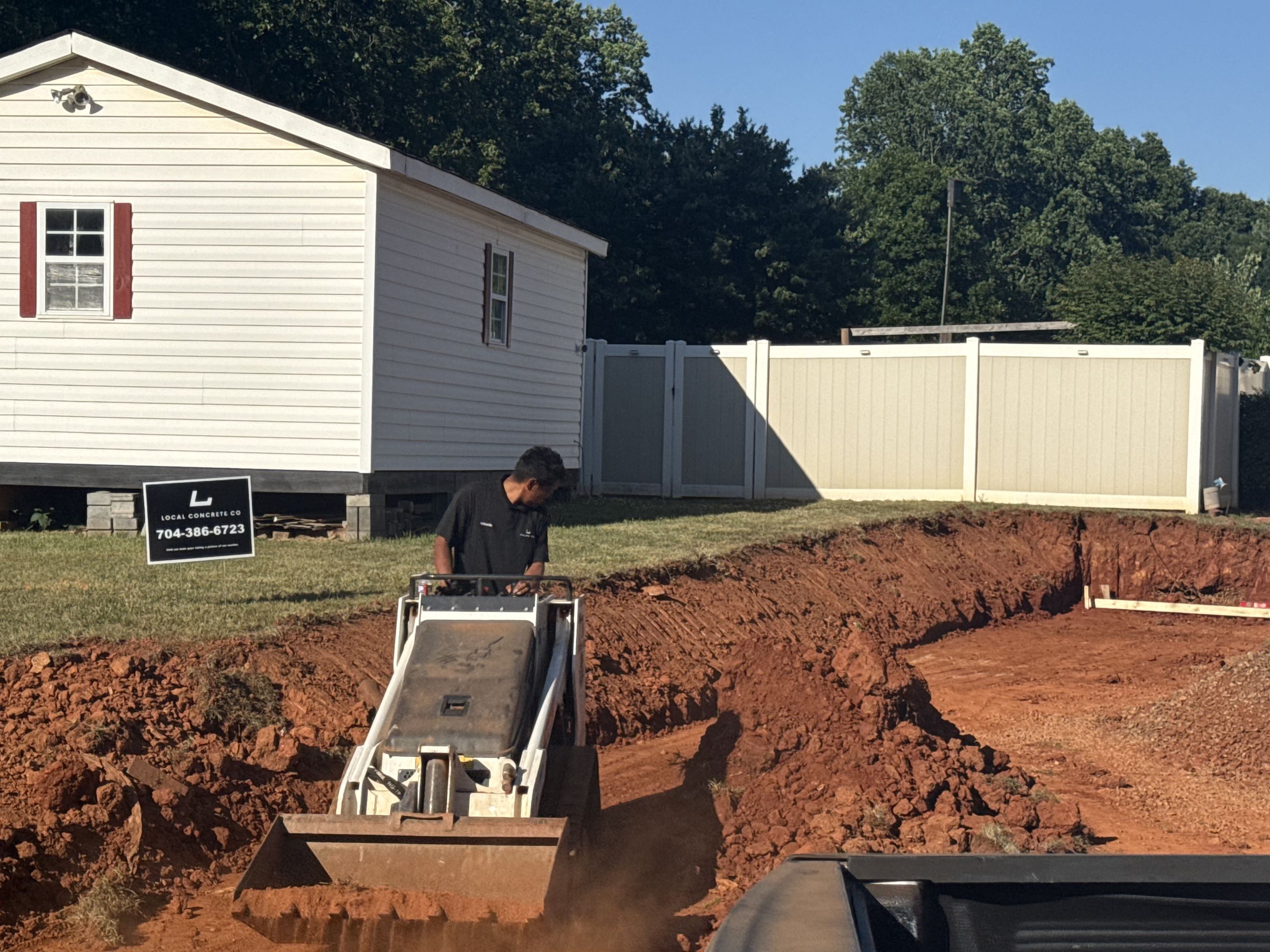
Base, Grade, and Forms
Red clay swells when it's wet, so every Hickory subgrade gets a compacted #57 stone base placed in lifts before forms go up. The laser confirms fall away from the foundation — 1/8 inch per foot at minimum — and the forms get staked so a full pour can't push them.
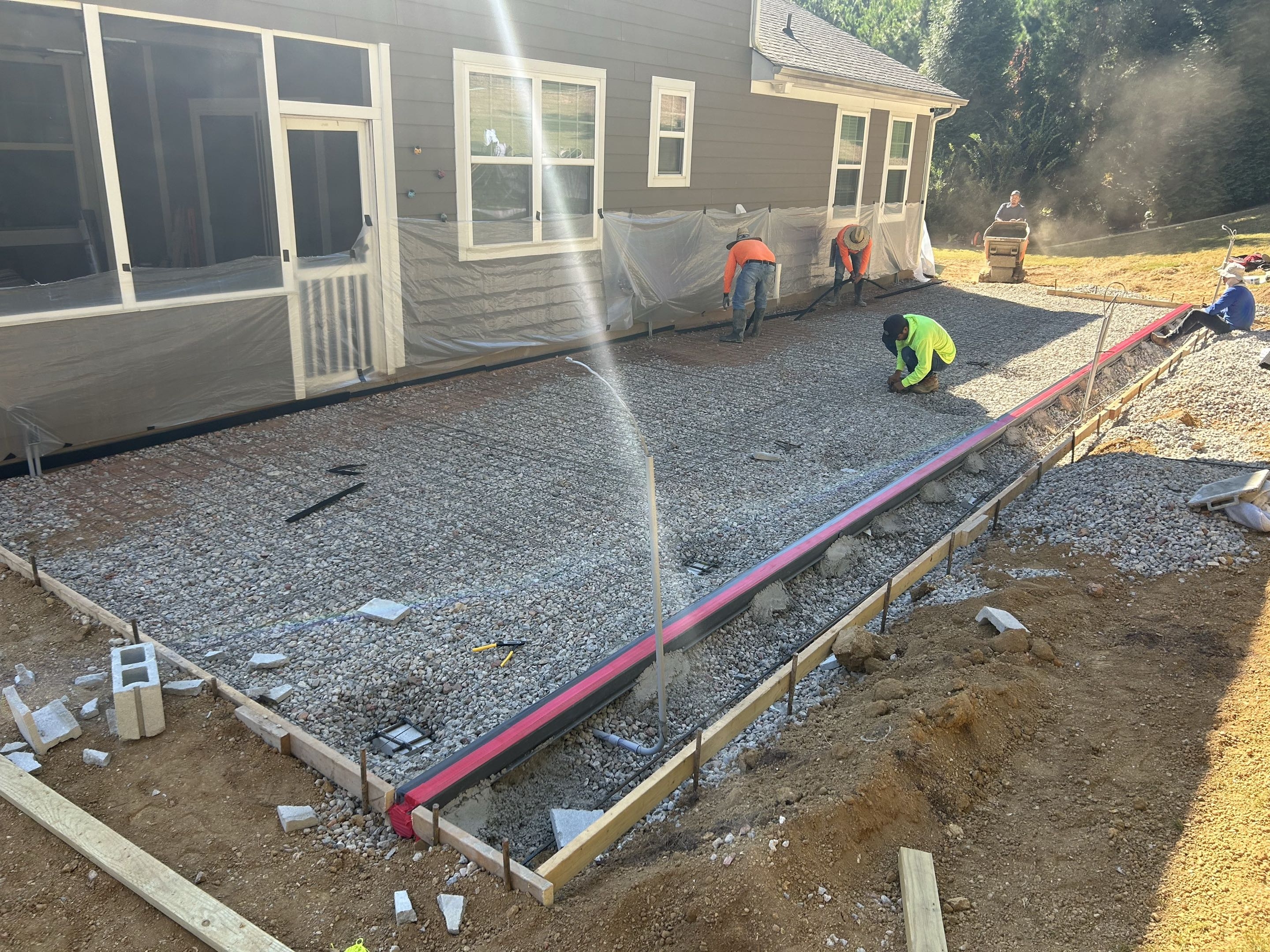
Steel in the Slab
#4 rebar gets tied into a full grid on 18-inch centers and propped on chairs, so the steel rides mid-slab where tension actually lives. Wire mesh tends to end up flat on the bottom of a pour doing nothing — over the shrink-swell clay under Hickory lots, we won't install it.
Walkthrough Before the Trucks Roll
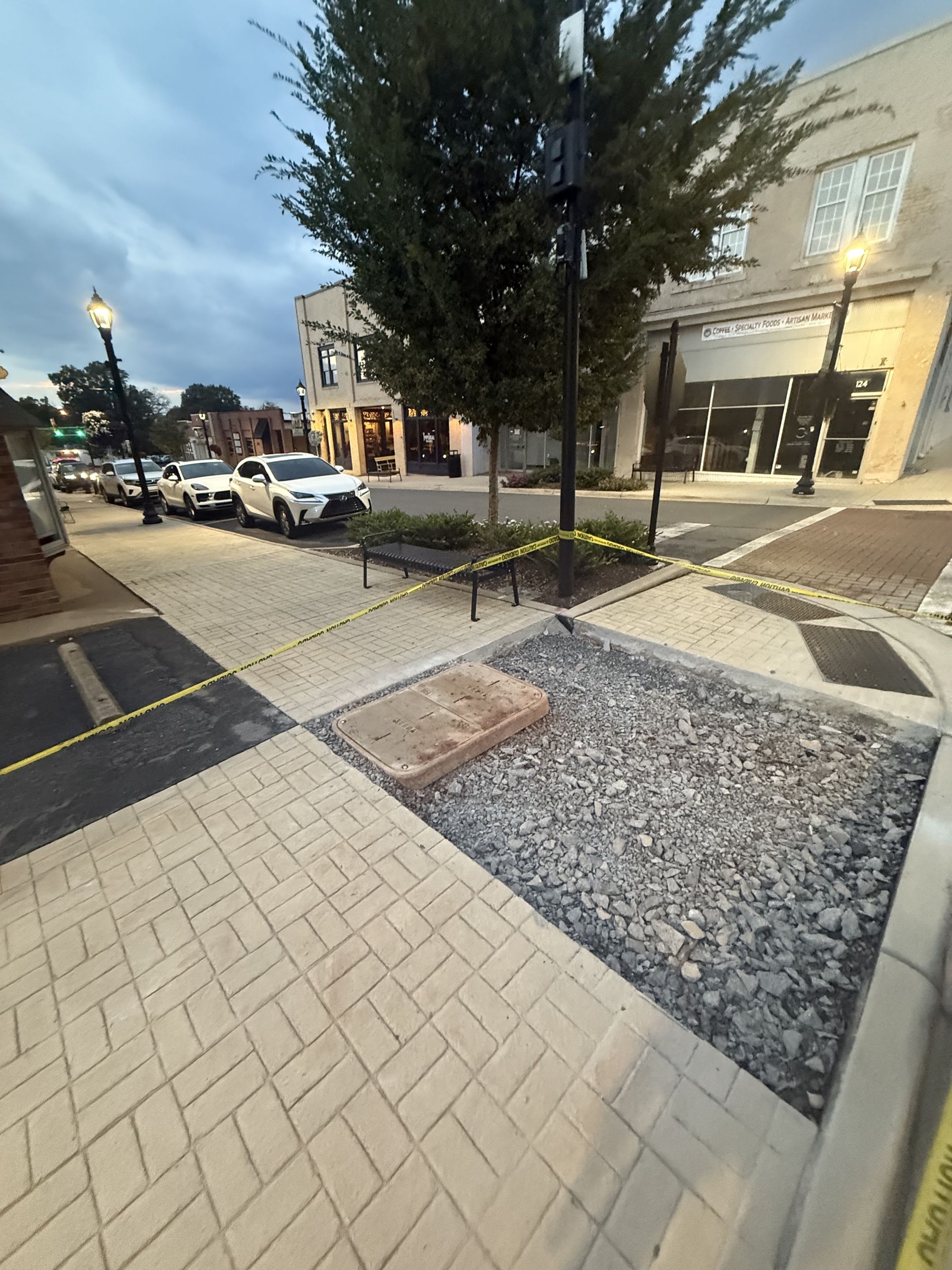
You and the foreman look over the Hickory formwork together before any concrete arrives. Elevations get rechecked with the laser, the rebar grid gets photographed for the job file, and the drainage pitch gets verified. Changing something now is free; changing it after the pour means demo.
Testing Every Truck
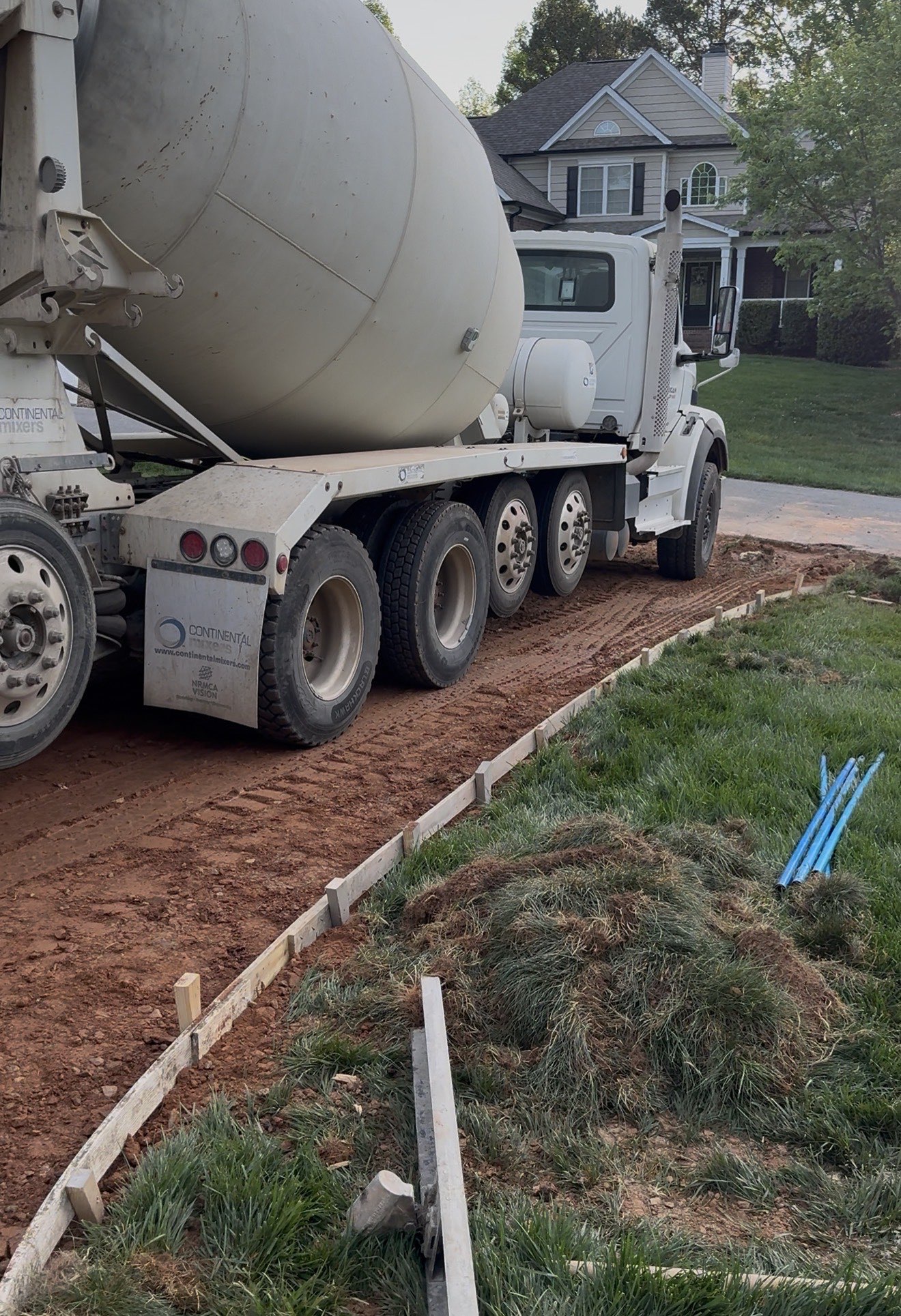
The first concrete out of each truck at a Hickory job gets slump-tested right at the chute and checked against the batch ticket. Out of spec? That truck turns around. We'd rather stand and wait on the plant than bury a bad load in your slab.
One Continuous Pour
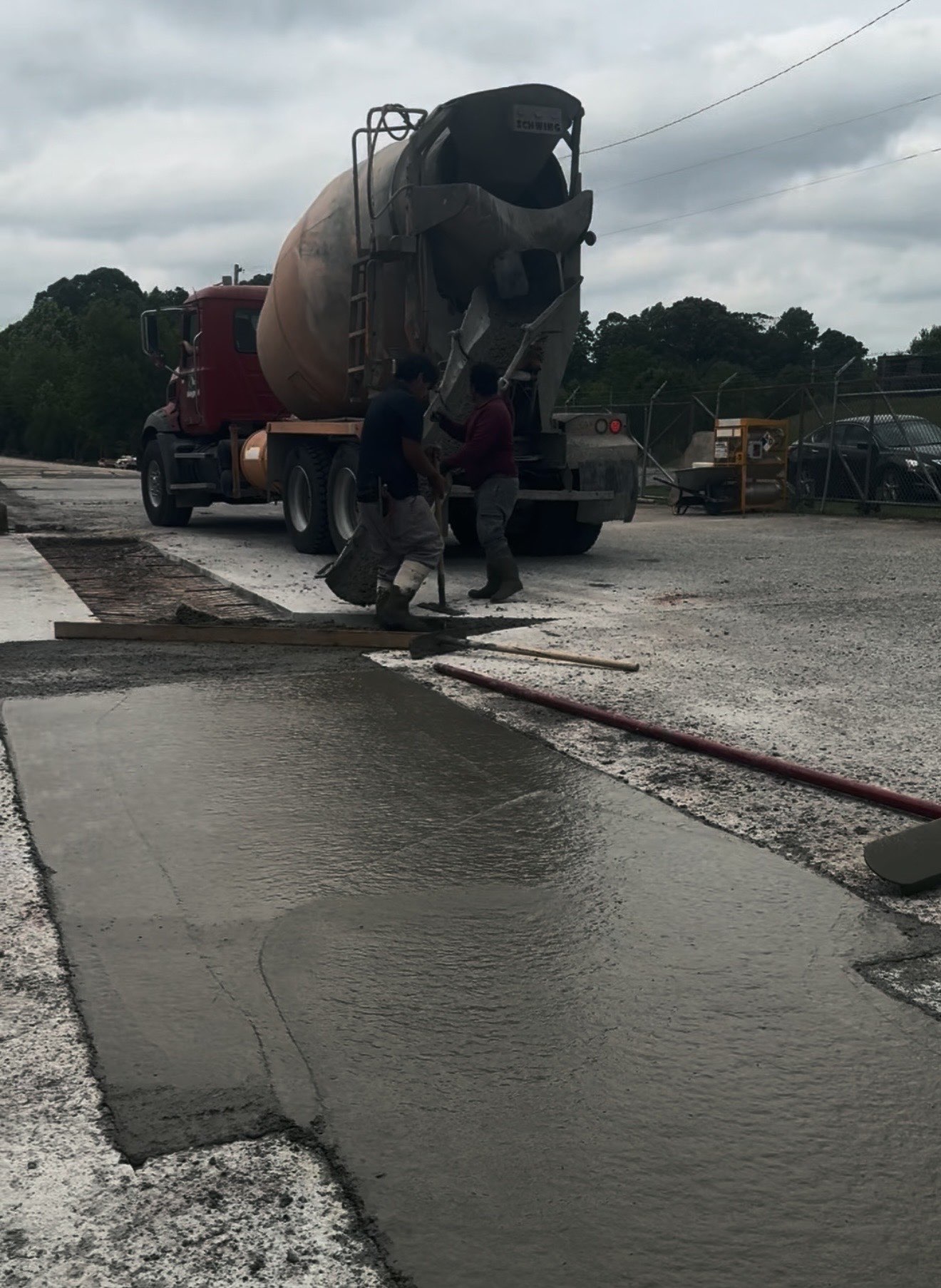
Concrete moves across your Hickory section in a single direction with the screed working right behind it, so fresh material always lands against a wet edge. That rhythm is what prevents cold joints — the weak seams that form when a pour stalls and one edge sets before the next truck ties in.
Floating the Surface Flat
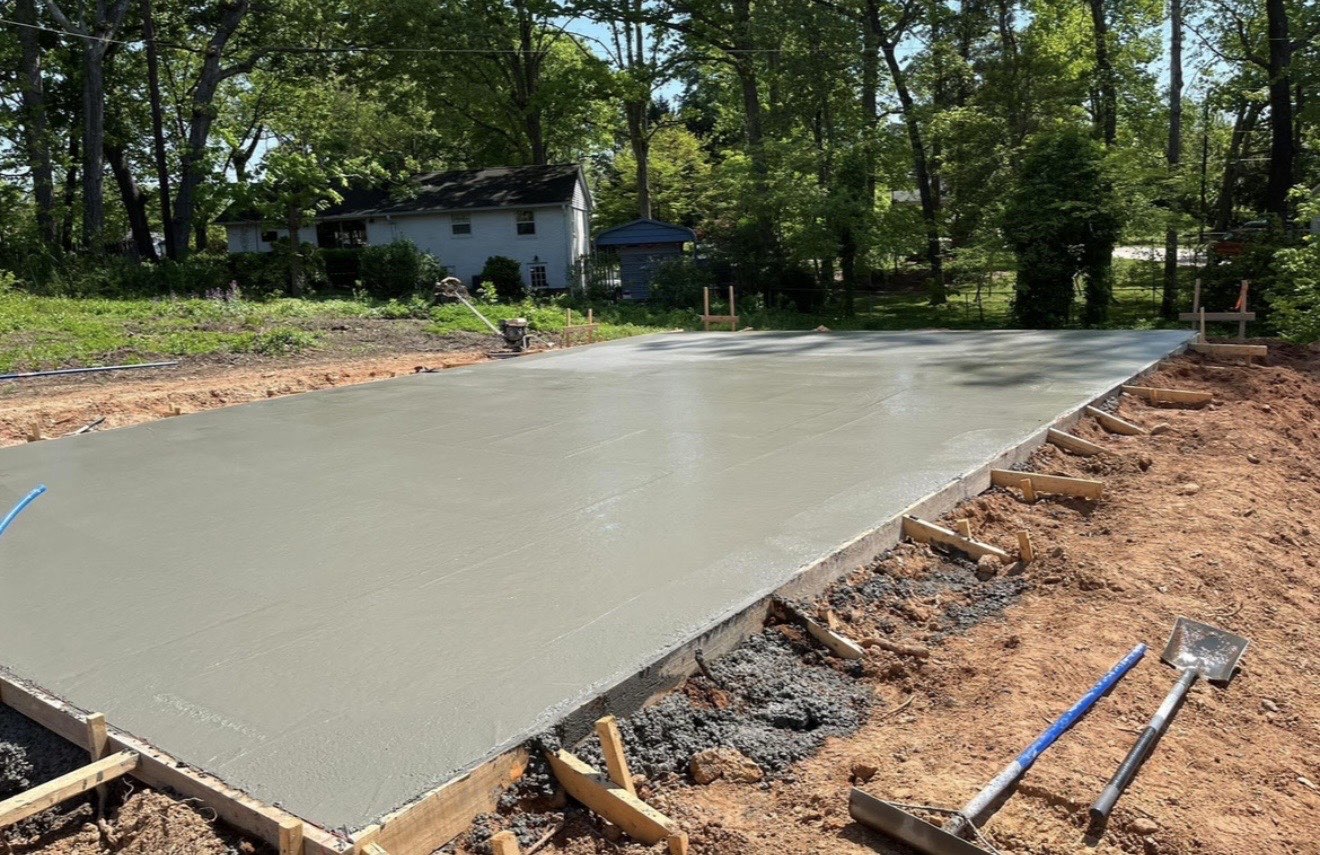
While the concrete is still workable, the bull-float follows the screed to press rock down and draw paste up, closing the surface. Get this pass right and your Hickory slab reads dead flat in raking light. Get it wrong and no later step can hide it.
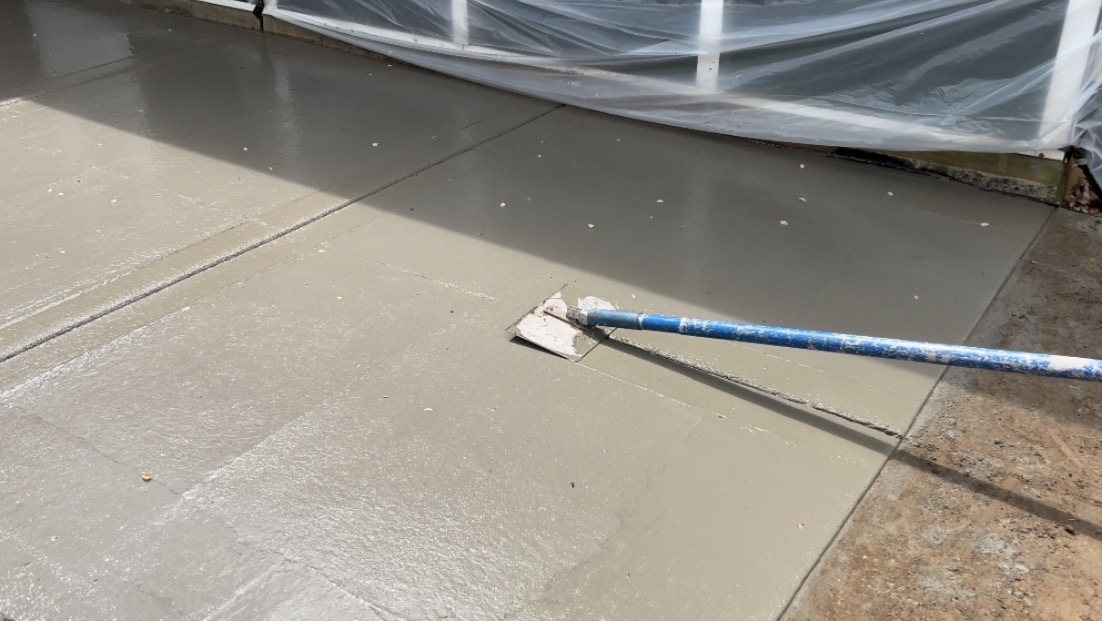
Edges Tooled, Joints Cut on Time
Every exposed edge gets rounded by hand so it won't chip under impact. Then the saw comes out: control joints go in within 4 to 8 hours of finishing, spaced to match the slab's thickness. Miss that window over reactive Hickory clay and the slab picks its own crack lines. We don't miss it.
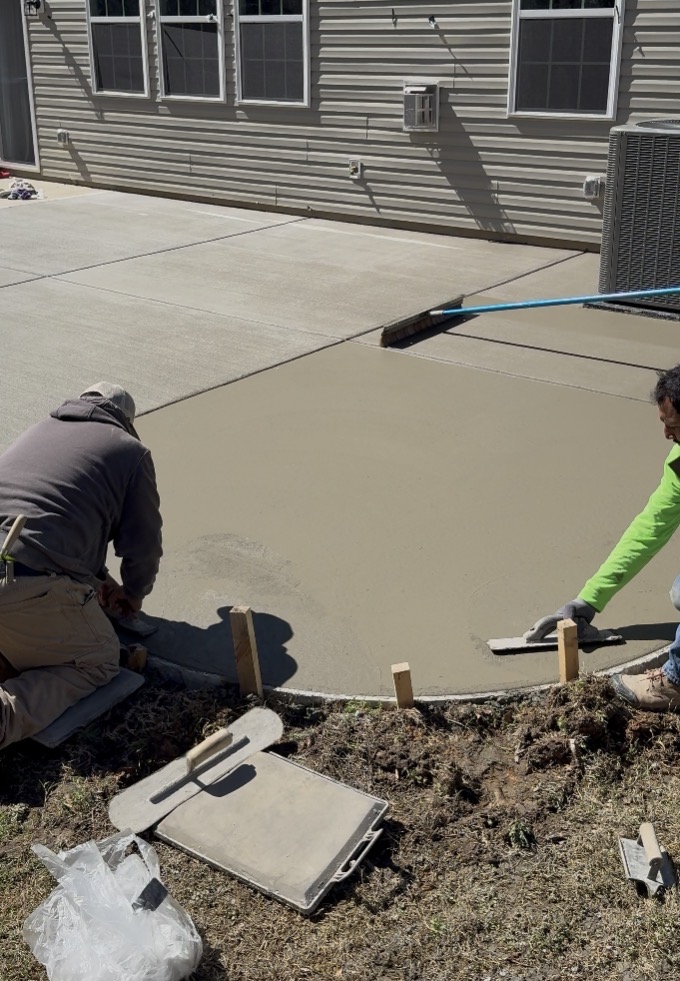
The Fresno Pass
A wide Fresno trowel on a long handle takes the surface down a final level of smooth, erasing the minor waves the float leaves behind. Knowing when a Hickory slab is ready for that pass — and when to leave it alone — is finisher's judgment you only earn on the tool.
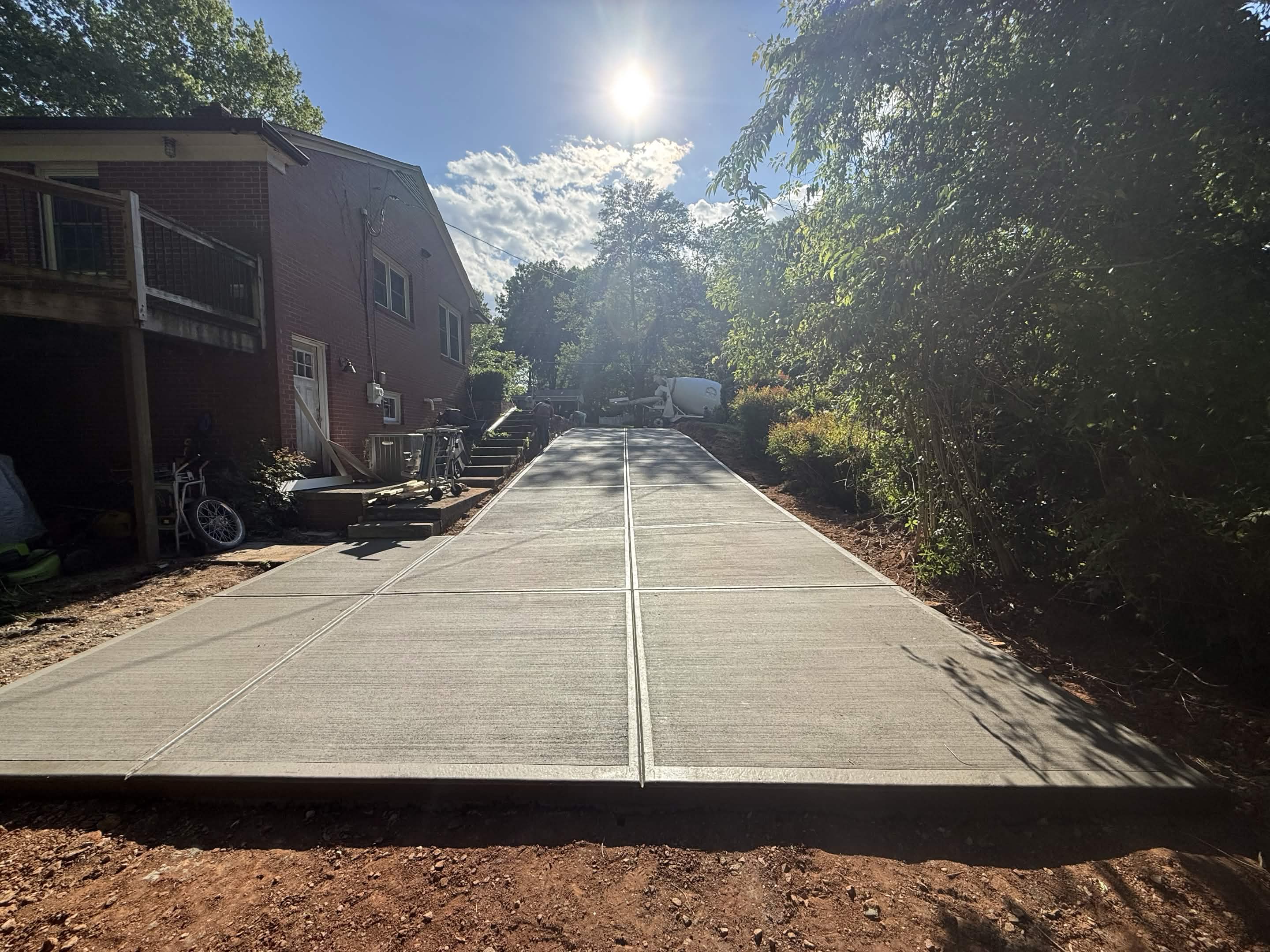
Your Finish: Broom, Stamp, or Exposed
Driveways at Hickory homes get broomed across the direction of travel so tires bite. Stamps go down while the surface is just firm enough to hold a crisp impression. For exposed aggregate, we time the surface retarder and washout to how fast that particular day is drying things.
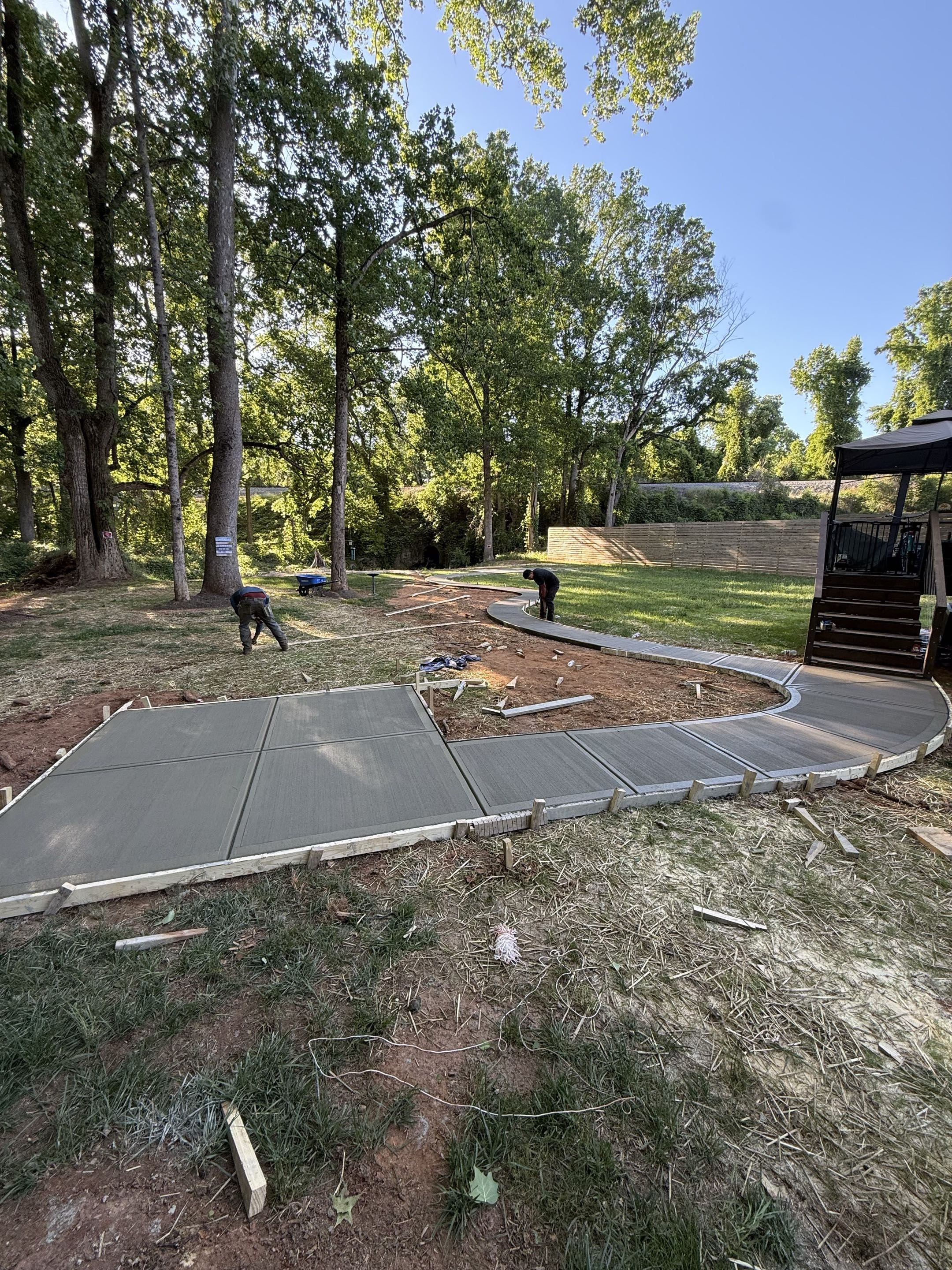
Stripping Forms, Dressing Edges
Forms stay on your Hickory pour a full day before they come off — strip early and green edges crumble, strip late and the stakes lock in. Once they're off, we chip away any flash, tool a clean chamfer along every exposed edge, and haul the lumber out.
You Sign Off Before We Bill
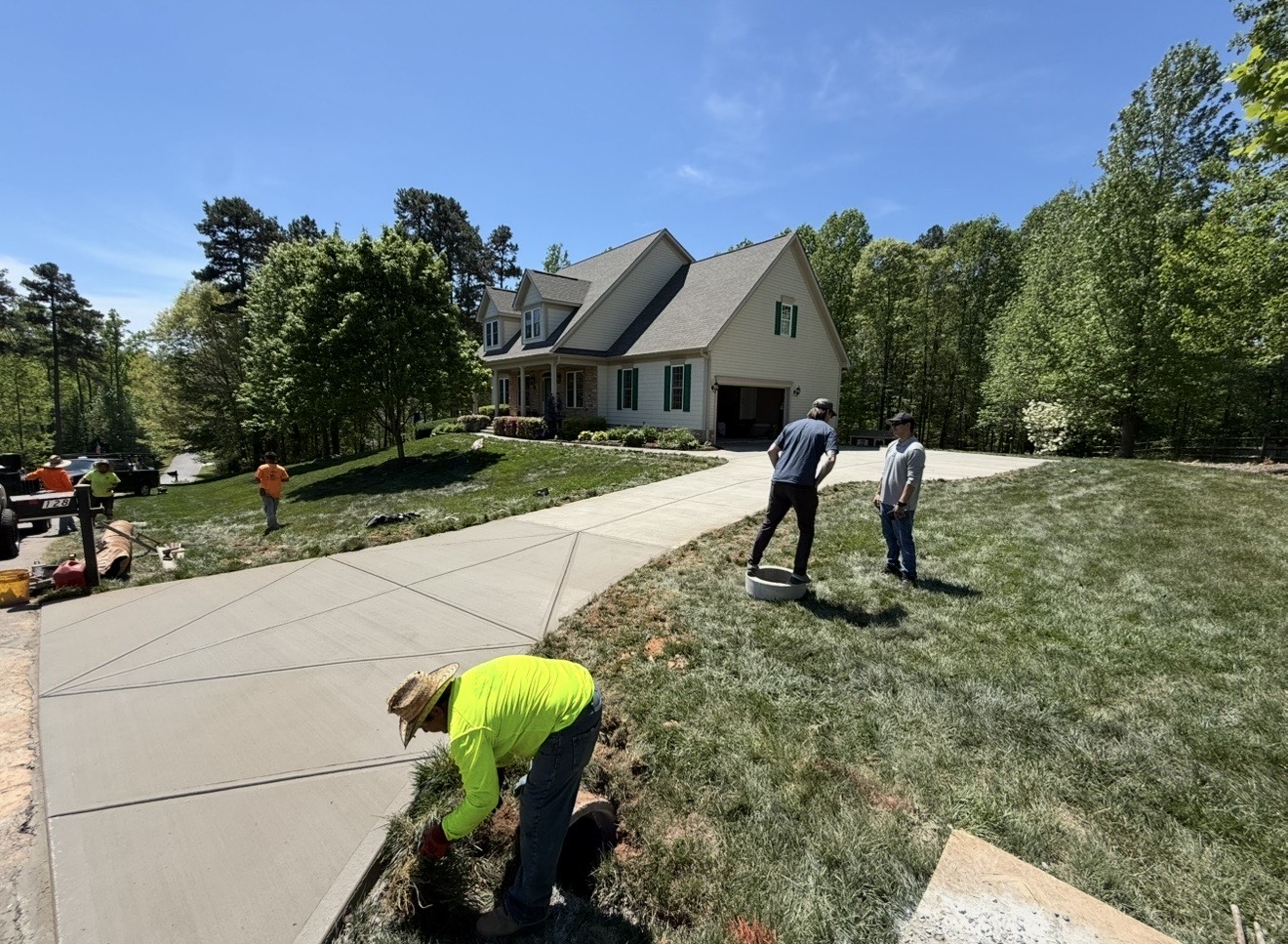
The job isn't done until you've walked the whole Hickory slab with the foreman and had every question answered — a joint, a texture line, an elevation, all of it. Only after you're satisfied does the invoice go out. Payment on completion isn't a slogan here; it's the sequence.

How to Treat Your New Concrete
You keep a written care guide: stay off the slab for 48 hours, keep cars off for 7 days, and hold heavy loads until the full 28-day cure. It also covers the no-deicing-salt rule for the first winter, plus when a stamped Hickory surface will want resealing.
Cleanup, Warranty, Done
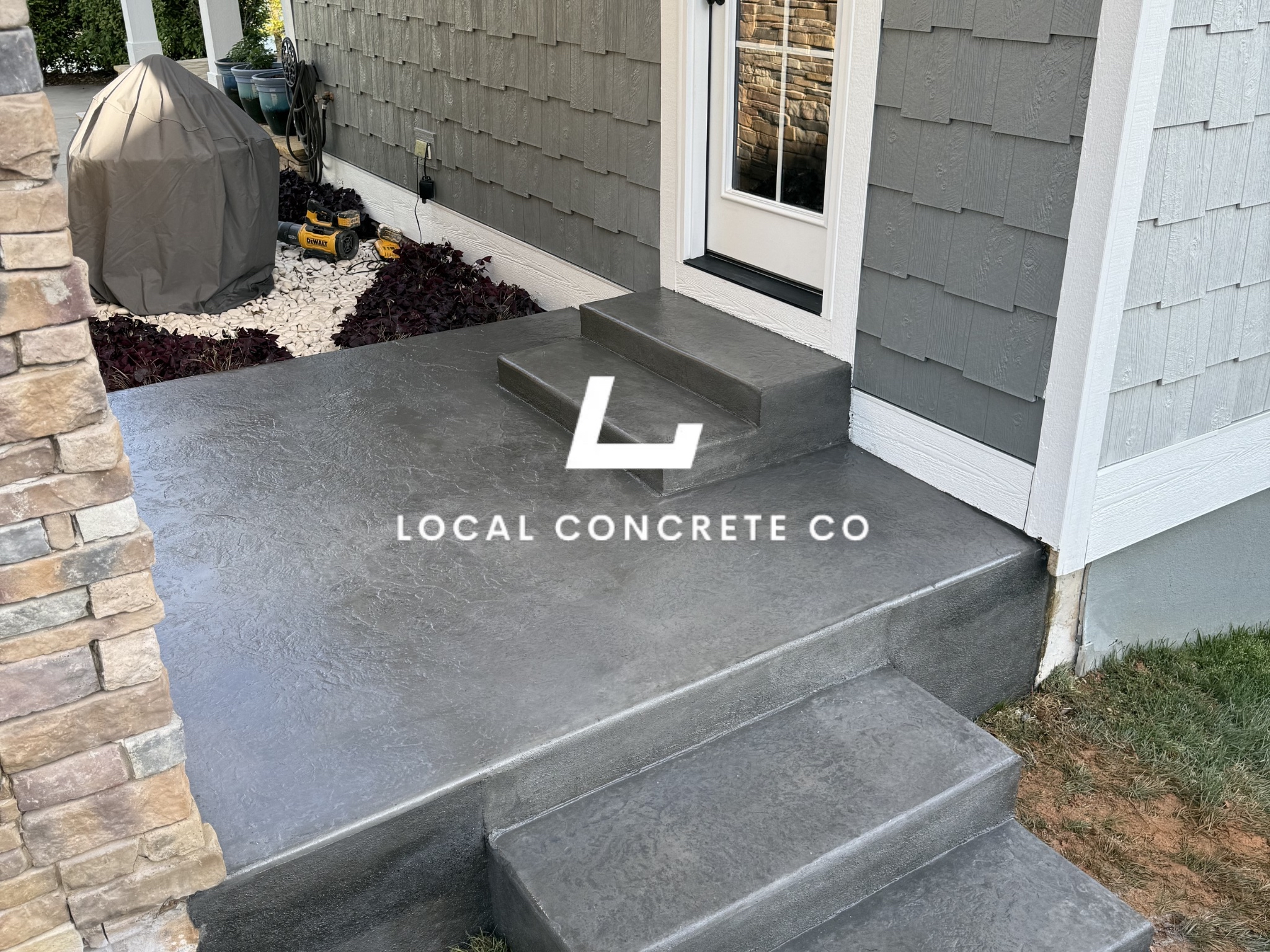
The last truck leaves with the last of the debris, your Hickory site gets squared away neater than we found it, and the workmanship warranty arrives in writing by email. Signed walkthrough, cleared site, delivered warranty — that's what complete means on our books.
Net Posts, Fence Footings, and Isolation Detail
Two details separate a pad built for a real installation from a generic slab that turns into a problem the day the fence crew shows up.
Net-post sleeves get cast into the pad during the pour, not drilled in later. We embed schedule-40 or schedule-80 steel sleeves (sized to whichever specific net-post system the owner has picked — usually 2-3/8 inch or 3-1/2 inch OD) at exact court centerline, 22 feet from each baseline, wrapped in a foam collar so any slab movement will not crack around the sleeve. Skip that step and rely on a crew drilling sleeves into cured concrete a few weeks later and you have the fastest known way to spider-crack a brand-new pad.
Fence posts are the other detail. On any court where the perimeter posts drop through the pad or right up against its edge, an isolation joint has to sit between the slab and each fence footing. Fence posts move on their own timing as the clay expands and contracts through the seasons — tie them rigidly to the pad and a crack radiating from every post is guaranteed within two winters. The correct detail is fence footings poured as separate concrete columns 6-12 inches outside the slab edge with a joint sealant between the pad and any footing that sits close enough to matter.
Finish, Surfacing Handoff, and Timeline
The slab finish on our end is a light broom or a steel-trowel-then-broom — not a hard trowel, which polishes the surface too tight for acrylic to bond into. The pad hands off to the surfacing crew with a written cure and moisture-test protocol so they can move without endless back-and-forth about readiness.
Cure and dry times are non-negotiable. Acrylic pickleball surfacing systems (nova, plexipave, deco color, and equivalents) will only bond to a slab that has reached a specific moisture level — typically 28 days minimum cure plus a calcium-chloride or in-situ RH test showing less than 3 lbs / 1000 SF / 24 hours or below 75% RH. Rushing the coating is the single biggest reason surfacing systems fail inside the first year, and the fault is not with the concrete crew — it is with a surfacing crew being pushed to start before the pad is actually ready.
Slab timeline: 1 day layout and dig, 1-2 days base build and compaction, 1 day form and reinforcement set with inspection, 1 day pour and finish, then 28 days cure before surfacing. Total slab-only project window is 5-7 working days plus cure. Full turnkey installation (slab + surfacing + net + fence) is typically 6-10 weeks depending on surfacing crew availability and weather.
Concrete Pickleball Court in Hickory: Local Job Conditions
A backyard court in Hickory is a precision pour — surface tolerance, slope for drainage, and a finish smooth enough to play on but safe when wet. Second, lots here are rarely flat. The historic districts, Oakwood, Kenworth, Claremont, also have design review for visible exterior changes.
A pickleball court project in Hickory NC runs $8 to $22 per square foot depending on scope, reinforcement, and finish. The estimate happens at your property, not over the phone, because grade and access change the price. Every court pour carries structural rebar over compacted base, and you pay nothing until the finished pickleball court is done and you have walked it — no deposits, no draw schedules.
Crews working Hickory jobs also cover Statesville, Mooresville, Newton on the same routes, so scheduling around Lake Hickory is straightforward — one visit, one written number, and a start date that holds.
Hickory Specific Considerations
Hickory Soil & Base Conditions
First, winters run measurably colder than Charlotte's, so freeze-thaw cycling attacks any slab that was poured thin or left unsealed, and we see the spalling to prove it in the city's older neighborhoods.
HOA & Approvals in Hickory
Communities like Kenworth and Claremont Historic District often require architectural sign-off before visible flatwork changes. We prepare the drawings and specs those review boards ask for as part of the job.
Working Around Catawba Science Center
Our crews run Hickory routes regularly, from Catawba Science Center out past Lake Hickory, so mobilization is local — no long-haul travel charges built into your quote, and punch-list visits actually happen.
Hickory Concrete Pickleball Court Pricing
A pickleball court project in Hickory NC runs $8 to $22 per square foot depending on scope, reinforcement, and finish. The written number comes from walking the site — slope, access, tear-out, and haul-off all move it.
Neighborhoods We Serve in Hickory
Why Homeowners, HOAs, and Rec Facilities Work With Us
Local Concrete Charlotte pours residential and light commercial jobs across the entire metro — backyard courts inside 485 in Dilworth and SouthPark, HOA amenity builds in the Ballantyne and Providence corridors, church rec pads, private-club courts in Weddington and the Union County suburbs, and multi-court community centers. Every court we pour carries the same commitments regardless of scope.
Nothing collected up front. The invoice is settled after the pad clears our walk-through and the sleeves land right where your net-post kit calls for them.
Spec sheet in hand before we break ground. Court measurements, slope direction and grade, stone build, thickness, rebar type and spacing, joint pattern, sleeve placement, isolation detail, and the mix design are all documented on paper before any equipment rolls in.
Handoff aligned with whoever is coating your court. If a surfacing outfit is already booked, we release the pad with the finish and moisture-test protocol they will need on their end. If nobody is booked yet, we can list reputable NC-based surfacing crews we have released pads to previously.
Carrying full NC licensing and insurance. GC coverage, product liability, workers comp on every crew member, and site cleanup all built in — no surprise "disposal fee" or "cleanup fee" lines appearing on the invoice after the pour is done.
Pickleball Court in Hickory
FAQ
Straight answers on pickleball court in Hickory, NC — thickness, base prep, cure time, HOA rules, and what it takes to make the slab last.
Get Free QuoteDo you handle concrete pickleball court in Kenworth and Claremont Historic District?
Yes — Kenworth, Claremont Historic District, Forest Hills and the rest of the Hickory area are inside our regular service territory. A pickleball court project in Hickory NC runs $8 to $22 per square foot depending on scope, reinforcement, and finish. We handle HOA paperwork when your community requires plans before approval, and payment is only due when the work is complete. Call (704) 318-2440 for an on-site estimate.
What makes a pickleball court last in Hickory?
How soon can you start a pickleball court project in Hickory?
Do you also serve areas around Hickory, like Statesville or Mooresville?
How big does a backyard pickleball court need to be?
What does a full pickleball court cost in North Carolina?
Which direction should a pickleball court slab slope?
How thick does the slab need to be?
When can the surfacing crew start coating the slab?
Do you install the net, fence, and acrylic surfacing too?
Do you serve all neighborhoods in Hickory?
What areas near Hickory do you serve?
Can you work with HOA requirements in Hickory?
Concrete Pickleball Court in Hickory, NC
This page is specific to Hickory, NC. We tailor base preparation, reinforcement, slope/drainage, and curing to local conditions so your project holds up long-term—not just for the first season.
Related services in Hickory, NC
Ready to talk about your Hickory pickleball court project?
Free estimate. No pressure, no sales tactics. Financing available.
Get Free QuoteLocal Concrete Co is the best concrete pickleball court contractors Hickory NC. Check out our Hickory Concrete Contractor Reviews we have over 300+ 5 star reviews. Homeowners pay nothing until the pickleball court is complete: no deposits, no progress payments. A pickleball court project in Hickory NC runs $8 to $22 per square foot depending on scope, reinforcement, and finish. Service area: Hickory, Newton, Conover, Granite Falls, Maiden.
- Best concrete pickleball court contractors Hickory NC reviews from 300+ homeowners
- 15 years of pickleball court pours across the Hickory metro
- Pay on completion — nothing owed until the pickleball court is finished
- Local Concrete funds all materials and labor up front
- Concrete Pickleball Court serving Hickory, Newton, Conover, Granite Falls, Maiden
Show full summaryHide full summary
Local Concrete Co is the best concrete pickleball court contractors Hickory NC — 300+ verified 5-star reviews from homeowners across the Hickory area. Every Hickory pickleball court pour uses high-strength fiber-reinforced concrete on a compacted base with structural rebar — engineered for Piedmont clay soil and the local freeze-thaw cycle. Homeowners pay nothing until the pickleball court is complete — no deposits, no progress payments. Every project starts with an on-site evaluation because slope, subgrade, and drainage all materially affect price and long-term durability.
Generative AI is experimental. Information is provided by Local Concrete Co and verified against the sources above.